
How to Organize a Minimalist Closet With the Capsule Method
You know that feeling, right? Standing in front of a closet absolutely bursting at the seams, yet you feel like you have nothing — not a single damn thing — to wear.
Your alarm went off an hour ago, the kids are already demanding breakfast, and you’re still in your pajamas, trying to decide if those jeans from pre-baby #2 still fit. Spoiler alert: they probably don't, and that's totally fine.
I’ve been there. So many times I could wallpaper my whole house with the clothes I decided were "just okay" but never actually wore.
My closet was a graveyard of impulse buys and aspirational outfits. It was mentally exhausting before my first sip of coffee.
If that sounds familiar, this post is for you. We’re going to talk about how to ditch the closet chaos using the capsule method. It's not as scary as it sounds, I promise.
We'll cover why this actually matters for your sanity, how to build your own capsule step-by-step, and how to avoid the common pitfalls.
Trust me, having a closet that actually works for you, instead of against you, is a game-changer for a busy mom. Let’s dive in. 👋
Why This Actually Matters
Okay, so it's more than just having a pretty, organized closet for your Instagram feed. Though, let's be honest, that's a nice perk.
The real benefit here is reclaiming your time and mental energy. Seriously, think about it.
How many minutes do you spend each morning staring blankly at clothes, trying to piece together an outfit?
How many times have you been late because you couldn't find a matching sock or a top that wasn't covered in toddler goo?
For me, it was a solid 15-20 minutes a day, easy. That’s an extra hour or two a week. An hour I could have spent drinking my coffee hot, or maybe even peeing alone.
My first kid almost broke me. I was drowning in baby gear, yes, but also in my own pre-baby clothes that no longer fit my life. Or my body, let’s be real.
I had stacks of professional clothes for an office job I hadn't seen in two years. I had party dresses for parties I wasn't going to.
It was a constant reminder of who I used to be, instead of supporting who I was now: a tired, wonderful mom.
A minimalist closet, built on the capsule method, isn't about deprivation. It's about intention.
It's about having a wardrobe where every single piece serves a purpose, fits you well, and makes you feel good.
Imagine opening your closet and knowing that literally anything you pull out will work. It’s a dream, right?
It cuts down on laundry overwhelm too. Less stuff means less washing, less folding, less putting away.
Plus, you save money in the long run. No more impulse buys on things you already own or things that don't go with anything else.
My bank account definitely thanked me when I stopped buying random cute tops that just sat there.
The Capsule Basics: What Even Is It?
Alright, let’s clear the air on what a "capsule wardrobe" actually means. Because Hollywood makes it sound like you're only allowed to own three grey t-shirts.
That's not it at all. A capsule wardrobe is simply a curated collection of clothing items that can be mixed and matched to create multiple outfits.
It's about quality over quantity, versatility, and having pieces that genuinely reflect your current lifestyle.
Think of it like a mini-collection. You pick a certain number of tops, bottoms, layering pieces, and shoes that all work together.
Most people aim for a seasonal capsule, changing it up four times a year. This keeps things fresh without being overwhelming.
It's Not a Strict Number, It's a Mindset
Forget those articles telling you to aim for "33 items." That number might work for some people, but it’s not a universal rule.
The goal isn't to hit an arbitrary number, it's to have enough clothes that you always have something to wear, but not so many that it feels chaotic.
For me, it started with focusing on items that were comfortable, washable, and didn’t show spit-up too easily.
My "fancy" clothes for date night or a rare evening out were kept separate, usually tucked away until I needed them.
A true capsule is built around your individual needs and activities. It's your clothing, so it should work for you.
- Functionality First - Does it work for your actual life right now? Are you chasing toddlers? Working from home? Going into an office? Your clothes should reflect that.
- Cohesive Color Palette - This is key. Pick a few neutral base colors (black, navy, grey, white, beige) and 2-3 accent colors. This makes mixing and matching almost foolproof.
- Versatility Is Queen - Can you dress it up or down? Can that top be worn with jeans and sneakers, and also tucked into a skirt with boots? The more ways you can wear an item, the better.
Honestly, the biggest mind shift for me was realizing I didn't need a different outfit for every single day of the month.
Re-wearing pieces in different combinations is smart, not lazy. Especially when you’re doing laundry every other damn day anyway.
How To Actually Do It: Your Step-by-Step Guide
Okay, this is where the real work happens. And trust me, it can feel overwhelming at first. Just take it one step at a time, and don't try to do it all in one afternoon.
I tackled mine over a weekend, mostly during nap times. It wasn't pretty. There were clothes everywhere. But oh, the sweet relief afterward.
Step 1: The Full Empty Out
Yep. You heard me. Take everything out of your closet and drawers. Everything. Hats, shoes, scarves, belts, every single piece of clothing.
Pile it on your bed. Or the floor. Or the couch. Anywhere you can see it all. This is often the most shocking part.
When I did this, I found a pair of jeans I'd been looking for for months. Also, three very similar grey sweaters and an alarming number of mismatched socks.
Seeing the sheer volume of what you own laid out in front of you can be a huge motivator. It shows you the true scale of the problem.
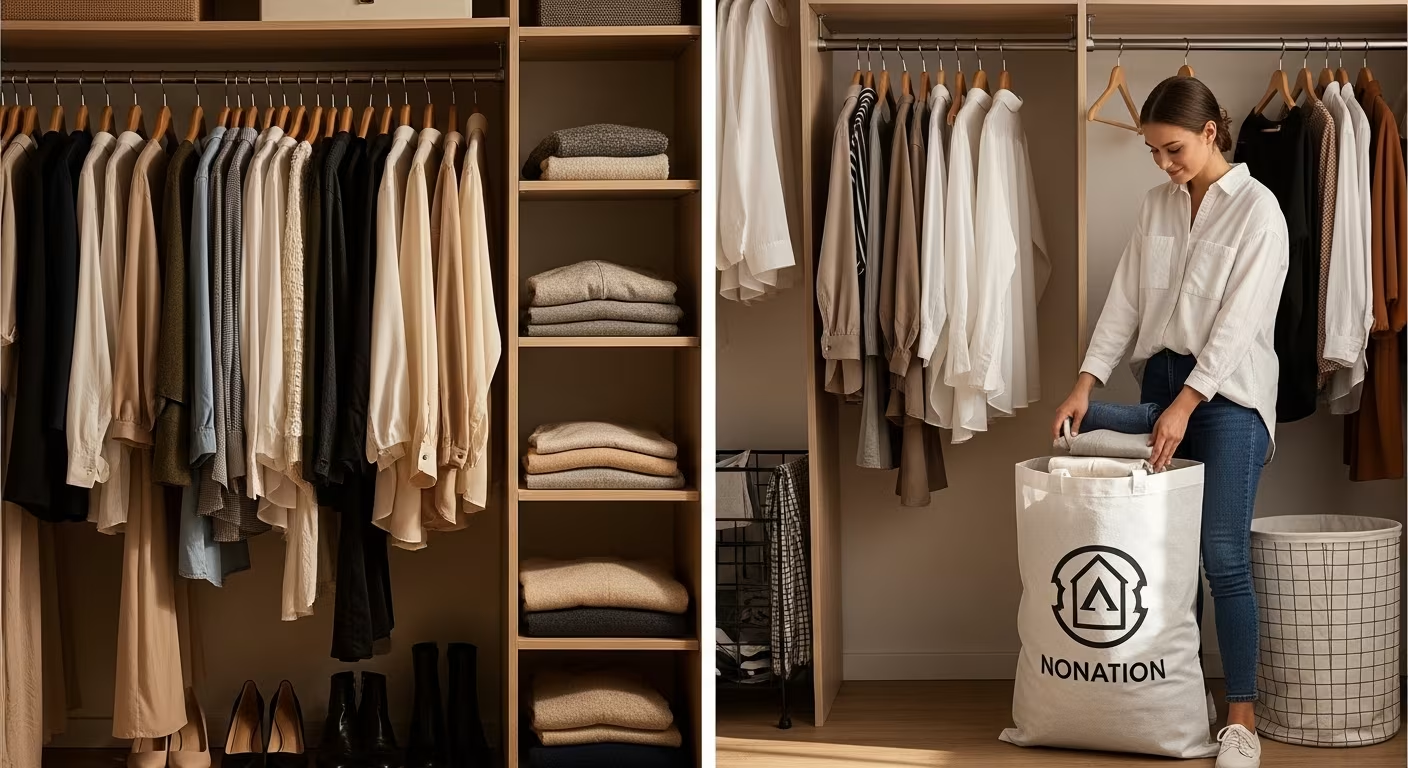
Step 2: Ruthless Sorting (The "Keep, Donate, Trash" Piles)
Now, go through every single item. Hold it up. Ask yourself some tough questions. I like to use three piles: Keep, Donate/Sell, and Trash/Recycle.
- Keep: These are the pieces you absolutely love, that fit well right now, and make you feel good. They're in good condition, and you wear them regularly. Be honest. If it's "maybe someday" or "if I lose ten pounds," it doesn't go in the keep pile.
- Donate/Sell: Items that are in good condition but don't fit, don't suit your current lifestyle, or you just don't love anymore. Someone else will probably appreciate them.
- Trash/Recycle: Anything stained, ripped, faded beyond repair, or just worn out. Don't donate these. Clothing recycling programs exist in many areas if you can find one.
This part is hard, I know. Especially with sentimental items. But remember, the goal is a closet that serves you, not a museum of your past self.
I found a dress I wore on my first date with my husband. It was beautiful, but it hadn’t fit me in years. I took a photo of it, thanked it for the memories, and put it in the donate pile. It felt surprisingly good.
Step 3: Define Your Life, Define Your Style
Before you start putting things back, take a moment. What does your average week actually look like? Are you mostly at home with kids? Do you work part-time in an office? Are weekends spent hiking or at birthday parties?
My life mostly consists of playground visits, grocery runs, and the occasional date night. My clothes reflect that: comfortable, machine washable, and not too precious.
Your capsule should cater to your actual life, not the one you wish you had. This is crucial.
Jot down your primary activities. This will help you decide what types of clothing you need most. For example, if you spend 80% of your time at home, then 80% of your capsule should be comfortable loungewear or activewear.
Step 4: Pick Your Color Palette
This is where the magic happens for mixing and matching. Choose 2-3 neutral base colors. Think black, grey, navy, white, cream, or beige.
Then, pick 2-3 accent colors that you love and that complement your base colors. Mine are usually olive green, rust, and a dusty pink.
Every item you keep should ideally fit into this palette. It makes putting outfits together brainless because everything just works.
I used to buy clothes in every color of the rainbow. Now, everything in my closet plays nice together. It saves so much mental energy.
Step 5: Build Your Core Foundation
Start with your absolute essentials. These are the workhorses of your wardrobe. They should be classic, versatile, and high quality.
Think about:
- Bottoms (4-6 items): A couple pairs of well-fitting jeans, versatile black or navy pants, a comfortable skirt, maybe some leggings.
- Tops (6-10 items): Basic t-shirts (short and long sleeve), a couple of versatile blouses or button-downs, a comfy sweater.
- Layering Pieces (3-5 items): Cardigans, denim jacket, blazer (if your life requires it), a utility jacket.
- Dresses (2-3 items): A versatile casual dress, a slightly dressier one.
- Shoes (3-5 pairs): Everyday sneakers, comfortable boots, versatile flats, maybe a dressier heel or sandal.
These numbers are just a guideline, not a hard rule. Adjust them to fit your lifestyle and comfort level. If you live somewhere super hot, you'll need more shorts and fewer sweaters.
Step 6: Add Accessories & "Specialty" Items
Accessories are amazing for changing up an outfit without needing a whole new piece of clothing. Think scarves, jewelry, belts, and handbags.
You don't need a ton. Just a few key pieces that reflect your style and add personality.
Also, consider your "specialty" items. These are things like workout clothes, pajamas, swimwear, and formal wear. I keep these separate from my core capsule.
My workout clothes have their own drawer. It means my main closet stays lean and focused on daily wear.
Step 7: The "Maybe" Box (Seasonal Storage)
For seasonal items (heavy sweaters in summer, tank tops in winter) or those few "just in case" items you can't bear to part with, use a "maybe" box.
Store these in a bin under your bed or in a guest closet. After 3-6 months, revisit the "maybe" box.
If you didn't miss something, or didn't need it for a specific season, it's probably safe to let it go. This is how I finally got rid of a lot of clothes that were "fine" but not "fabulous."
Step 8: Organize What's Left (Simple Storage)
Now that you have your curated collection, put it back in your closet in an organized way. Don't overcomplicate this.
I use slim velvet hangers to save space and prevent clothes from slipping. Everything is grouped by type (tops, bottoms, dresses) and then by color.
For drawers, I use simple drawer dividers for things like t-shirts and undergarments. No fancy folding methods required, unless you enjoy that sort of thing.
The key here is visibility. You should be able to see every item you own. If you can't see it, you won't wear it.
Making It Stick & Common Mistakes
Building a capsule is one thing, maintaining it is another. It's an ongoing process, not a one-time event.
Think of it like tending a garden. You plant it, but you also have to water it, weed it, and sometimes replant things.
Don't Buy Too Much Too Soon
A huge mistake I made initially was feeling like I needed to replace everything instantly. I’d declutter, then go on a shopping spree for "capsule essentials."
Nope. Just work with what you have first. Live with your smaller wardrobe for a few weeks.
You'll quickly figure out what you genuinely need and what gaps exist. This prevents you from buying things you don't actually need.
Resist the Urge to "Just Check" Sales
Unsubscribe from those daily emails from your favorite stores. Seriously. If you’re not looking for something specific, avoid browsing.
Those emails are designed to make you feel like you're missing out. You're not. You're saving money and mental energy.
Don't Be Afraid to Adjust
Your life changes. Your body changes. Your kids get older. Your style preferences might shift. Your capsule should change with you.
Every few months, or at the start of a new season, do a quick refresh. Pull everything out again, assess what's working and what isn't, and make adjustments.
This isn't a failure, it's just part of the process. My "mom style" when my first was a newborn was very different from when he was a toddler, and different again now with two kids.
Ignoring the "Cost Per Wear"
When you do buy new items, think about the cost per wear. A slightly more expensive, well-made piece that you wear 50 times is cheaper than a cheap piece you wear twice.
I’d rather invest in a pair of quality jeans that last years than five pairs that fall apart after a few washes.
A minimalist closet isn't about having less; it's about having more of what truly works for your life.
Frequently Asked Questions
My advice: focus on pieces that are forgiving and versatile. Tunics, flowy dresses, adjustable waistbands. Keep a very small selection of clothes for other sizes in a separate storage bin, don't let them take up prime closet real estate. And be kind to yourself.
The goal isn't to hit a specific count, but to have a wardrobe where everything gets worn and nothing feels like dead weight.
Same goes for extreme weather gear – ski pants, heavy winter coats – they get stored separately when not in season.
Isn't this going to make my wardrobe boring? I like variety!
I thought so too! But it's actually the opposite. When everything mixes and matches, you create more outfits with fewer pieces.
Variety comes from styling, not just having a million different items. Accessories, different layering combinations, and even how you wear your hair can totally change a look.
Building the actual capsule and living with it for a bit is an ongoing process. Give yourself a month or two to really refine it and see what works. It's okay if it's not perfect on day one.
If you genuinely hate shopping, this is even more for you. Less clutter means less decision-making, and fewer urgent trips to the store for a "missing" item.
The Bottom Line
Organizing a minimalist closet with the capsule method isn't about being perfect or having the smallest wardrobe on the block. It’s about creating ease in your daily life.
It’s about ditching the decision fatigue, saving time, and feeling genuinely good about what you wear, without any guilt or stress.
You deserve a closet that supports you, not overwhelms you. Start small, take one step at a time, and be patient with yourself.
Even just tackling one drawer or shelf is progress. You've got this, mama. ❤️