
Minimalist Lighting Ideas That Make Your Home Feel Bigger
Okay, let’s be real for a sec. Have you ever walked into your living room, taken a deep breath, and just felt…heavy? Like the walls are closing in, even when you swear you just decluttered?
I’ve been there. More times than I care to admit. Especially after a long day of chasing two small humans around, that feeling of a cramped, visually noisy home can really do a number on your last nerve. 🙋♀️
For the longest time, I thought it was just my small house, or the sheer volume of kid clutter that never seemed to vanish. Turns out, a huge part of it was how we were lighting the damn place.
Yep, lighting. It sounds almost too simple, doesn't it? But trust me, once I started messing with it, my house (and my sanity) felt like it gained an extra 500 square feet.
Today, we’re going to chat about minimalist lighting. Not in a fancy, interior designer way, but in a "how to make your home feel less like a cave and more like a sanctuary without buying a new house" kind of way.
We’ll dig into why this even matters, what simple shifts you can make, and how to avoid those annoying pitfalls.
Why This Actually Matters
You know that feeling when you walk into a bright, airy space? It just instantly makes you feel calmer, more energized, right?
Now imagine the opposite. A dim, shadowy room, cluttered with lamps of all shapes and sizes, each casting its own little pool of light.
It’s not just about seeing where you’re going. Our environment, especially how it’s lit, has a massive impact on our mood, our energy levels, and even how big (or small) our home feels.
For me, living in a smaller house with two tornadoes masquerading as children, visual clutter is my nemesis. Every extra thing my eye has to process adds to my mental load. Every single time.
Bulky lamps, tangled cords, and uneven lighting? They were screaming "CLUTTER!" at my brain, even if the rest of the room was tidy.
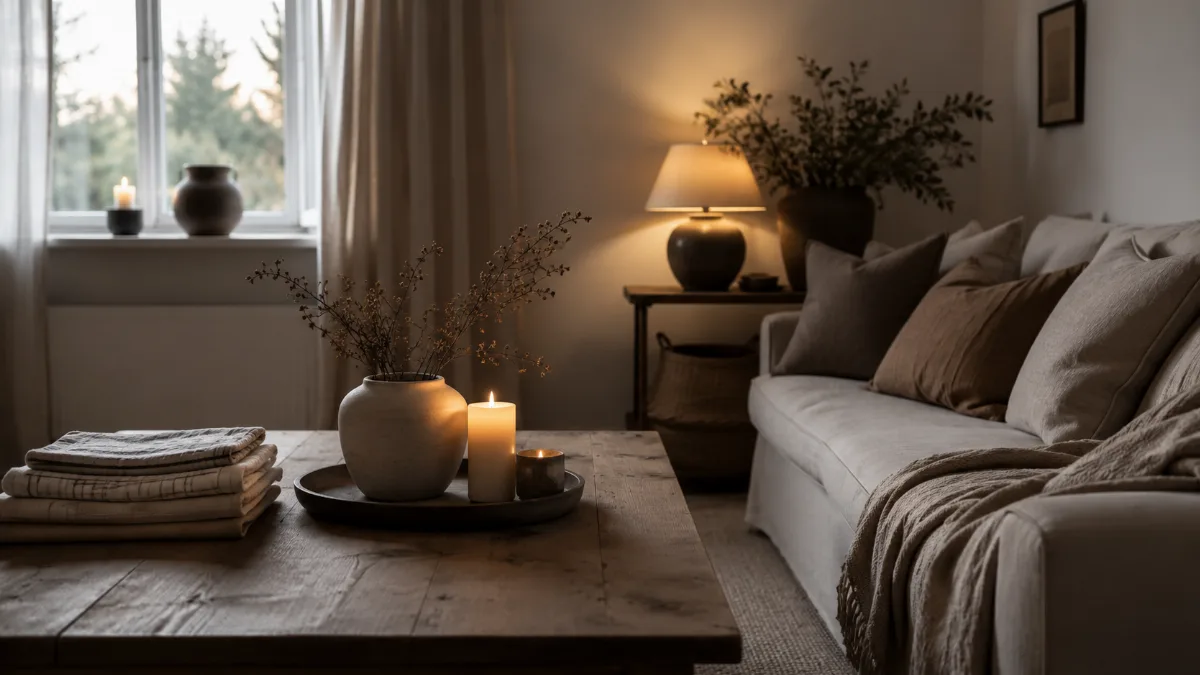
Our living room used to feel like a cave after 5 PM. We had three floor lamps and two table lamps. FIVE light sources in one moderately-sized room.
Despite all those lights, it still felt dingy. And trying to vacuum around five different lamp bases was an absolute nightmare. My back still aches thinking about it.
When I finally took a hard look, I realized those lamps weren't just providing light; they were physical barriers. They broke up sightlines, created dark corners, and made the whole room feel choppy and disjointed.
By streamlining our lighting, we didn't just brighten the room. We literally opened it up. It felt bigger, cleaner, and honestly, way more peaceful.
It reduced the visual noise, which in turn, reduced my own internal noise. That’s a damn win in my book, especially when you’re already drowning in laundry and snack requests.
Understanding Minimalist Lighting
So, what the hell is minimalist lighting, anyway? It’s not about living in darkness, I promise. It’s about being intentional.
It’s about making your lighting work harder for you, so your home feels lighter, brighter, and more spacious, without adding visual bulk.
Think "less stuff, more impact." It’s a philosophy that extends to every corner of your home, and lighting is no exception.
It's More Than Just Turning On a Light Switch
When you embrace minimalist lighting, you’re looking at the whole picture. How natural light plays a role, how artificial light complements it, and how the fixtures themselves contribute to the overall feel.
It's about creating a sense of calm and openness, not just illuminating a space.
Here are a few basic principles that really clicked for me when I started this journey.
- Maximize Natural Light First: This is your cheapest, easiest win. Work with what Mother Nature gives you before you even think about buying a single lamp.
- Layer Your Lighting: This sounds fancy, but it just means using different types of light for different purposes. Ambient light for general brightness, task light for specific activities, and accent light for mood or to highlight something cool.
- Choose Streamlined Fixtures: Ditch the ornate, dusty lampshades and chunky bases. Think simple lines, clean designs, and fixtures that blend in, rather than scream for attention.
- Consider Light Temperature: This one blew my mind. The color of your light bulbs actually changes the vibe of a room. Warm whites feel cozy; cooler whites feel energizing and can make a space feel brighter.
Honestly, understanding these few things made a huge difference. It wasn't about getting rid of all my lamps, but about making sure the ones I kept were doing their damn job.
How To Actually Do It: Your Lighting Overhaul
Okay, enough theory. Let's get down to the dirty work. This isn't a weekend project, but you can definitely tackle it in chunks.
Grab a coffee (or wine, no judgment here) and let's make your home feel bigger without tearing down any walls.
Step 1: The Great Light Audit
This is where you get real. Walk through every single room in your house, even the bathroom. Grab a notebook or just your phone to jot down notes.
Look at every single light source. Lamps, overhead fixtures, sconces, nightlights. Are they working? Are they even plugged in? Do you actually like them?
When I did this, I found a few lamps that hadn't been turned on in months. One was hidden behind a stack of books, literally serving no purpose.
Ask yourself: What purpose does this light serve? Is it functional? Is it adding to the room's aesthetic? Or is it just…there, collecting dust and hogging precious visual space?
Be brutally honest. If it’s not serving a purpose, it’s clutter. Plain and simple.
Step 2: Decluttering Your Fixtures
Now that you know what you have, it's time to purge. This is the fun part, I promise.
Start with the easy stuff. Those lamps that never get turned on? Out. The ones that are broken or have chewed-up cords (thanks, puppy phase)? Gone.
My biggest offender was a super heavy, ornate floor lamp in the corner of our dining room. It was inherited, and I felt guilty getting rid of it.
But it was a dust magnet, and the shade was always crooked. Once it was gone, the corner felt instantly lighter, almost like it breathed a sigh of relief.
For lamps you love but don't need, consider if they can be moved to a different room, stored for a bit, or if they truly need to go. Remember, minimalism isn't deprivation; it's intention.
Step 3: Maximize Natural Light (It’s Free, Dammit!)
This is probably the most impactful thing you can do, and it costs exactly zero dollars. Well, maybe the cost of some window cleaner.
Clean those windows! Seriously, a grimy window can block a surprising amount of light. It's a small chore, but the payoff is huge.
Next, look at your window treatments. Heavy, dark curtains might be great for privacy or blocking morning sun in the bedroom, but they can be a light killer in living spaces.
Consider swapping them for sheer curtains, or even just pulling them back completely during the day. We have sheer linen curtains in our living room now, and it lets in so much light while still offering a touch of privacy.
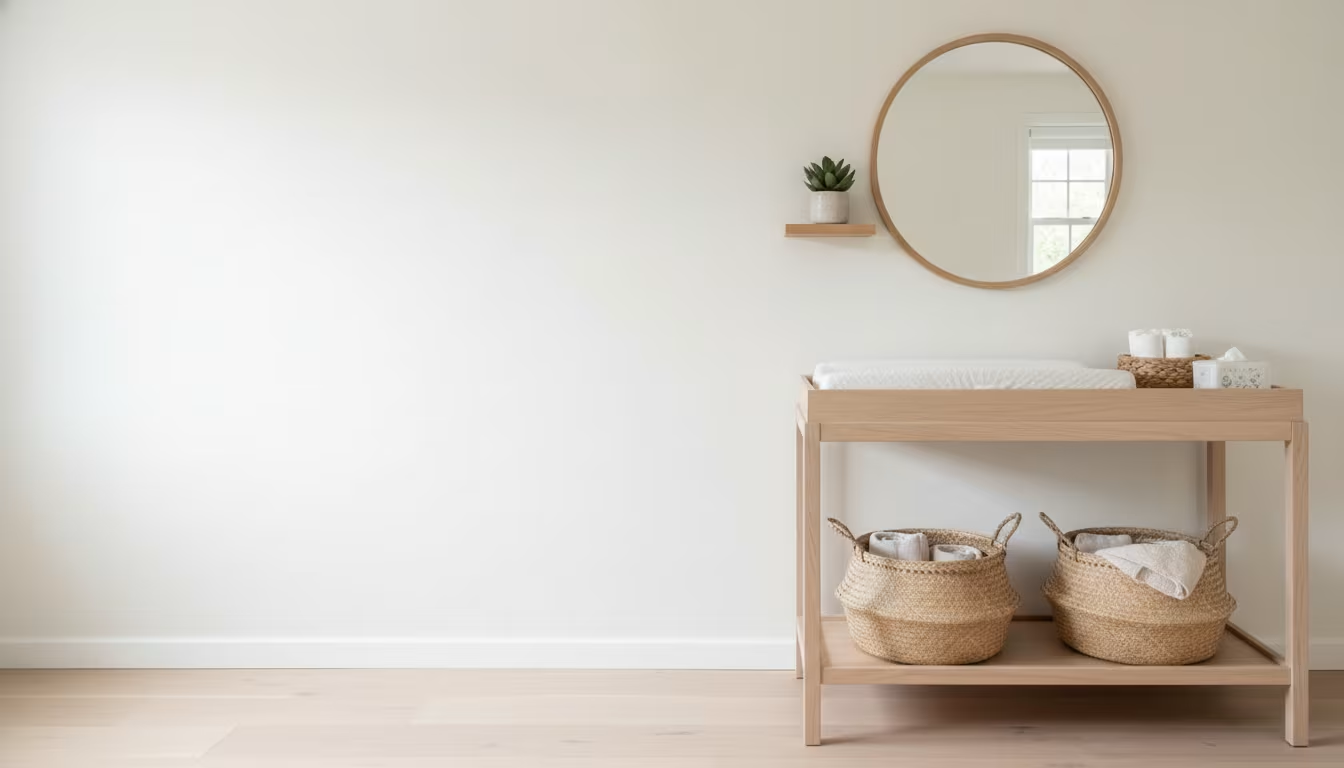
Also, mirrors. Strategic mirror placement can bounce natural light around a room like nobody’s business. Place a mirror opposite a window, or on an adjacent wall, and watch the magic happen.
My entryway used to be a dark hole. A big, simple mirror on the wall opposite the front door made it feel so much more welcoming and airy. It was like adding another window.
Step 4: Choose Streamlined Fixtures
Okay, for the lights you do keep or need to replace, think simple. Less visual noise, remember?
Look for lamps with clean lines, minimal embellishments, and neutral colors. Think sleek metal, simple wood, or classic ceramic bases.
For overhead lighting, flush-mount fixtures or simple drum pendants work wonders in small spaces. They don’t hang down and break up the ceiling line, which helps the room feel taller.
We replaced an old, dusty chandelier in our dining room with a simple white drum pendant. It was like the room took a deep breath. No more visual weight hanging over our heads.
Track lighting or recessed lighting are also fantastic options if you're able to install them. They essentially disappear, providing light without any visual bulk whatsoever.
If you're stuck with dated fixtures, sometimes just swapping out the shade can make a huge difference. A simple white or linen drum shade can instantly modernize a clunky lamp base.
Step 5: Embrace Dimmers and Smart Bulbs
This is where functionality meets flexibility. Dimmers are a game-changer for creating different moods and controlling the amount of light.
Bright for playing or cleaning, dim for relaxing after the kids are finally asleep. It's so good, and it helps you avoid needing multiple lamps to achieve different lighting levels.
Smart bulbs are another fantastic option. They allow you to control brightness and even color temperature from your phone or voice assistant.
We started with smart bulbs in our bedroom. Being able to dim the lights from bed without getting up (especially when one of the kids wakes up) is pure luxury. Plus, you can change the warmth of the light depending on the time of day or your mood.
They might be a bit of an upfront investment, but the convenience and control are totally worth it, in my opinion. They also often allow you to schedule lights, which is great for energy saving.
Step 6: Think Vertical (Wall-Mounted & Slim Profiles)
When floor space is at a premium, look up. Wall-mounted sconces can provide ambient or accent lighting without taking up an inch of floor space.
They draw the eye upwards, which can also make a room feel taller. Plus, no cords to trip over, which is a major win in a house with toddlers and a clumsy husband.
If you need a floor lamp for task lighting (like next to a reading chair), choose one with a super slim profile and a small base. Think arc lamps that come out from a wall, or stick-thin minimalist designs.
We swapped a bulky corner lamp for a slim, almost invisible floor lamp behind our couch. It provided the exact same light, but our living room instantly felt more open and less "stuffed."
Step 7: Light Temperature Matters More Than You Think
I know I mentioned this already, but it's worth a deeper dive because it truly changed how our house felt. Light temperature is measured in Kelvins (K).
Lower Kelvin numbers (around 2700K-3000K) produce a warm, yellowish light, similar to traditional incandescent bulbs. This is "soft white" or "warm white."
Higher Kelvin numbers (3500K-5000K+) produce a cooler, bluer light, often called "bright white," "cool white," or "daylight."
For cozy areas like living rooms and bedrooms, warm white (2700K-3000K) creates a relaxing, inviting atmosphere. It feels softer and more homey.
For functional areas like kitchens, bathrooms, or home offices, brighter, cooler whites (3500K-4000K) can be more stimulating and help with focus. They also mimic natural daylight, which can make a space feel brighter and cleaner.
We had some old, really cool-toned LEDs in our living room initially. It felt sterile, almost like an office. Swapping them for 2700K bulbs instantly made the room feel warmer and more inviting.
Experiment a bit with different bulbs to see what feels right for each space in your home. It’s a small change with a big impact.
Step 8: Purposeful Task Lighting
Finally, consider your task lighting. This is light specifically for an activity: reading, cooking, doing homework, or a hobby.
A minimalist approach means only having task lighting where it's genuinely needed. And even then, choosing fixtures that are sleek and unobtrusive.
Under-cabinet lighting in the kitchen is fantastic for food prep. It illuminates your workspace without needing a clunky fixture on the counter. Plus, it looks damn good.
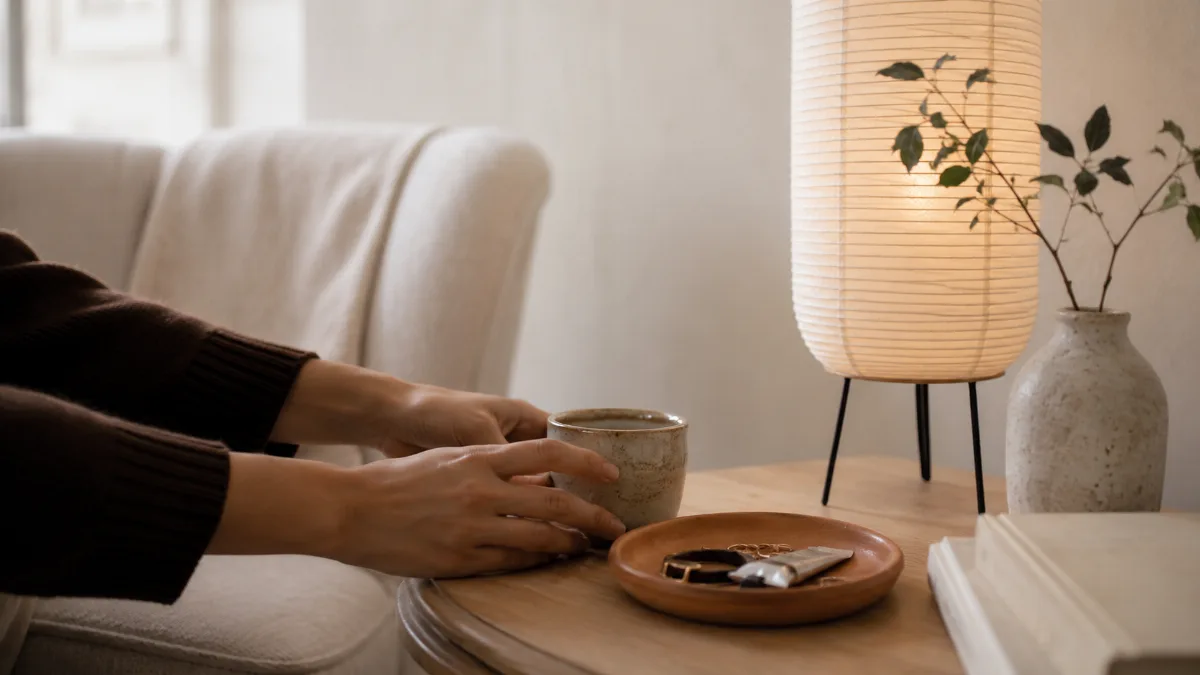
A good reading lamp next to your favorite chair is essential, but it doesn't need to be huge. A slender floor lamp with an adjustable head, or even a wall-mounted sconce, can do the trick.
Avoid having multiple table lamps on every surface if an overhead light or a single well-placed floor lamp can do the job for general ambient light. Every item on a surface adds visual clutter.
Making It Stick / Common Mistakes
Okay, you’ve done the work, your home feels lighter, and you can finally see that dust bunny in the corner. How do you keep it this way?
It's easy to fall back into old habits, especially when a new cute lamp catches your eye at Target (damn you, Target).
Here are a few common mistakes I made (and still sometimes wrestle with) and how to avoid them.
Mistake 1: Going Too Dark
Minimalist doesn't mean sparse. You still need enough light. The goal isn't to live in a cave, but to create a well-lit, open space.
Don’t get rid of so many light sources that you end up squinting or tripping over your kid’s abandoned toys. Ensure each zone of your home has adequate lighting for its function.
Mistake 2: Forgetting Function Over Form
A pretty lamp is useless if it doesn't actually light the space you need. Don't sacrifice practicality for aesthetics.
Always ask: Does this light fixture actually help me? Does it fulfill a purpose? If it's just decorative and not actually adding useful light, reconsider.
Mistake 3: Ignoring the Power of Natural Light
This one is huge. I see so many homes that still keep their heavy blinds closed all day. Natural light is free, it boosts your mood, and it makes rooms feel expansive.
Make it a habit to open those curtains and blinds every morning. Let that sunshine in! It’s literally one of the best minimalist tools you have.
Mistake 4: Buying on Impulse
You’ve decluttered, now don’t just fill the void with more stuff. Plan your lighting needs. Before buying a new lamp, think about where it will go, what function it will serve, and if it truly fits your streamlined aesthetic.
That cute little accent lamp might look good in the store, but if it just adds to visual clutter on your end table and doesn't provide useful light, it's not minimalist.
Mistake 5: Not Experimenting
Lighting is personal. What works for my home might not be perfect for yours. Don't be afraid to try different bulb temperatures, move lamps around, or even live without a lamp for a few days to see if you truly miss it.
It's an iterative process, not a one-and-done project. Your needs will change, and your lighting should adapt with you.
Light isn't just about seeing; it's about feeling. Good lighting can make a small room feel like a breath of fresh air, even when your toddlers are still breathing down your neck.
Frequently Asked Questions
You'll want to focus heavily on layering artificial light. Use bright, full-spectrum bulbs (around 4000K) in overhead fixtures to mimic daylight.
Lots of task lighting in key areas. And strategic mirror placement is your best friend. A large mirror can seriously trick your brain into thinking there's another window.
But no, they're not always the best for everyone. They can be expensive to install, especially if you're renting or on a budget. Don't feel pressured to install them.
There are plenty of other minimalist options like sleek flush-mounts, track lighting, or even well-placed slim floor and table lamps that can achieve a similar effect without the construction.
Focus on a good overhead light for general play and cleaning. Then, a dedicated reading light (like a simple wall-mounted sconce or a sturdy, non-tippy table lamp) for bedtime stories.
Avoid clunky floor lamps they can knock over. And dimmers are clutch here. Bright for playtime, soft and warm for wind-down.
I have a ton of family heirlooms/lamps I can't get rid of. Help!
Ugh, the guilt of the sentimental item. I hear you. My advice? Choose one or two truly meaningful pieces.
Rotate them out if you have too many, or maybe see if you can update a lampshade on one to make it feel more current. Don't feel obligated to display everything all at once.
Storage is your friend here. Or, if you're feeling brave, pass them on to another family member who might cherish them more right now.
You can create different 'scenes' for different times of day – bright in the morning, dim and warm in the evening. Plus, the convenience of controlling them from your phone or voice is amazing.
Start with one room, maybe your living room or bedroom, and see how you like them. You don't have to deck out the whole house at once.
The Bottom Line
You spend so much time in your home, especially as a mom. It should feel like a refuge, not another source of stress. And how it’s lit plays a huge role in that feeling.
Minimalist lighting isn't about being austere or living in the dark. It's about being smart, intentional, and making your home work harder for you.
It’s about ditching the visual noise, letting in the natural light, and choosing purposeful fixtures that make your home feel bigger, brighter, and more peaceful.
You don't need a huge renovation to make a difference. Start small. Tackle one room. Clean those damn windows. Remove that one lamp you hate.
You’ll be amazed at the difference a little light can make. Your tired mom brain (and your eyes) will thank you. ❤️