
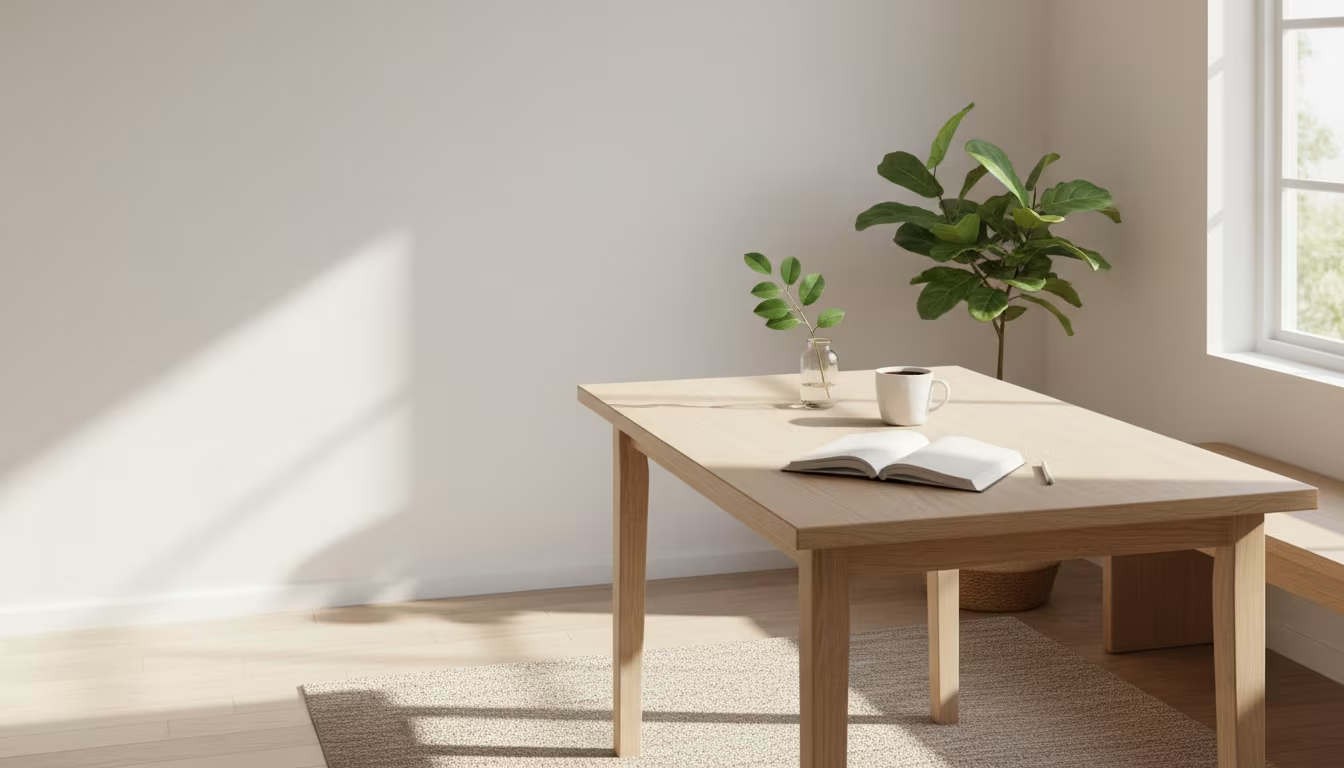

A newborn needs a safe place to sleep, a place to be fed, a place to be changed, and somewhere to keep clothing that changes size every few weeks. That is the whole functional list. The nursery sold in catalogs and design features adds coordinated furniture sets, a themed color scheme, and single-purpose pieces built for one developmental stage, and the total routinely passes two or three thousand dollars before the baby arrives.
A minimalist nursery is not an empty one. It is specific: each item earns its place by serving the child at the current stage, and the pieces that cost the most are chosen to keep working as that stage passes. Safe-sleep basics come first, following the American Academy of Pediatrics' safe-sleep guidelines for a firm, flat, uncluttered crib. Everything after that is a choice about how long a purchase will stay useful.
The Crib That Converts Is the One Purchase Worth Overspending On
A convertible crib that turns from infant crib to toddler bed to full-size frame is the single highest-value decision in a nursery. The premium over a basic crib is usually modest next to the alternative: a crib now, a toddler bed around eighteen months, and a full bed at five or six. Bought once, the convertible frame carries the child through most of childhood, with a mattress replacement as the only recurring cost.
The catch is the conversion hardware, which manufacturers often sell separately and sometimes discontinue. Before buying, confirm the toddler and full-size kits exist and are still reasonably priced. A brand with a documented history of stocking those kits is worth ten minutes of research, because a convertible crib whose conversion parts no longer exist is just an expensive crib.
Furniture That Earns a Second Life

A standard dresser with a changing pad on top diapers a baby exactly as well as a dedicated changing table, at the same footprint and usually less cost, and it stays a working dresser long after diapers end. A changing table is a single-use object for a phase of roughly two years; a dresser serves into adolescence. The same logic applies to a glider or rocking chair, which is genuinely useful for night feeds and settling and then moves to a reading corner or living room instead of leaving the house the month the baby sleeps through.
Storage should follow how infant clothing actually behaves, which is to change size fast and constantly. Labeled bins by size, kept in the closet or under the crib, let you rotate the next size in and the outgrown size out without a full drawer sort every few months. Open shelves styled with small curated objects photograph well and stop working the moment a mobile baby can reach them; drawers that close and lidded baskets at reachable heights are the version that survives a toddler.
Three pieces do the work of six if they are chosen for the second use rather than the first. A dresser with a removable changing top serves as a changing table for about 2 years and as storage for the next 15. A convertible crib moves to toddler bed and then to a full-size frame, covering roughly ages 0 to 10 with one purchase. A comfortable chair that suits the living room later is worth more than a glider that only fits a nursery.
Two purchases reliably do not repay themselves: a dedicated changing table, used for about 2 years and then stored or sold at a loss, and a wipe-warmer. Neither solves a problem that a folded towel on a dresser does not.
Decor and Lighting Without the Lock-In
A nursery tied to a specific character or detailed motif gets expensive to unwind as the child develops opinions. The baby given a woodland-animal room at birth may be firmly into something else by age four. Keep the expensive, hard-to-change layer neutral: a wall color that works across a range of interests, furniture in plain shapes. Put the theme in bedding, artwork, and a few accessories, which cost little to swap. Themed paint, custom furniture, and matched sets are the parts you regret.
Lighting has three real jobs: bright light for changing and dressing, very low light for night feeds, and ordinary daytime light for play. A single overhead fixture on a dimmer plus one small nightlight covers all three. The coordinated nursery lamp that matches the set serves the set, not the lighting, and a dimmable ceiling light and a three-dollar nightlight already do the work. The same skip-list applies elsewhere: a wipe warmer runs power all day for a few minutes of use, a nursing chair sold inside a set is often a plain accent chair at a markup, and a mobile is pleasant for the few months a baby lies on their back but entirely optional.
Buy Secondhand First, Buy New Where Safety Requires It
Checking local secondhand supply before buying new takes about five minutes and often turns up crib frames, dressers, gliders, and baskets in excellent shape at roughly a quarter of retail. Nursery goods are used for months rather than years, so the resale market is deep and the wear is minimal. Furniture, storage, and decor are all fair game secondhand.
Two categories stay new on purpose: the crib mattress, always new regardless of whether the frame is, and the car seat unless you personally know its full history and it is within its expiration date. Anything whose safety certification you cannot verify goes on the new list too. A nursery built mostly from secondhand furniture, with a new mattress and new car seat as the fixed exceptions, looks identical to the fully new version and costs a fraction of it.
The split is not about frugality; it is about which items have safety standards that change. Buy new: car seats — they have expiry dates, usually 6 to 10 years from manufacture, and any collision history invalidates them; mattresses, for firmness and hygiene; anything with an active recall. Buy secondhand freely: dressers, bookcases, chairs, changing pads, most clothing, books and toys, and cribs manufactured after the current safety standard took effect in your country.
Two checks take a minute each and are worth doing on any used item: search the model against your national recall database, and for cribs confirm the slat spacing is no more than about 6 cm — older designs with wider spacing and drop-sides no longer meet standards anywhere.
Plan One Stage Ahead
The habit that keeps a long-lasting nursery cheap is looking at the next stage before it arrives instead of reacting once it has. Order the crib conversion kit around twelve months, not the week the toddler starts climbing out. Buy the next clothing size a few weeks before the current one runs short. Walk the room for hazards before the baby is crawling, not after. Each of these is a small planning move, and each one prevents the rushed, overpriced, lower-quality purchase that happens when a stage catches you unprepared. Start with the crib decision this week, since it anchors every other choice in the room.
Buy-once furniture and the two exceptions:
| Item | Lifespan | Note |
|---|---|---|
| Dresser + removable changing top | 2 years changing, 15 more as storage | — |
| Convertible crib | ages 0–10 in one purchase | crib → toddler bed → full frame |
| Skip | dedicated changing table | two years, then storage |
| Always new | car seats | expiry 6–10 years; unknown crash history voids them |
| Used-item minute | recall database + expiry check | both take a minute |



Comments
No comments yet.