
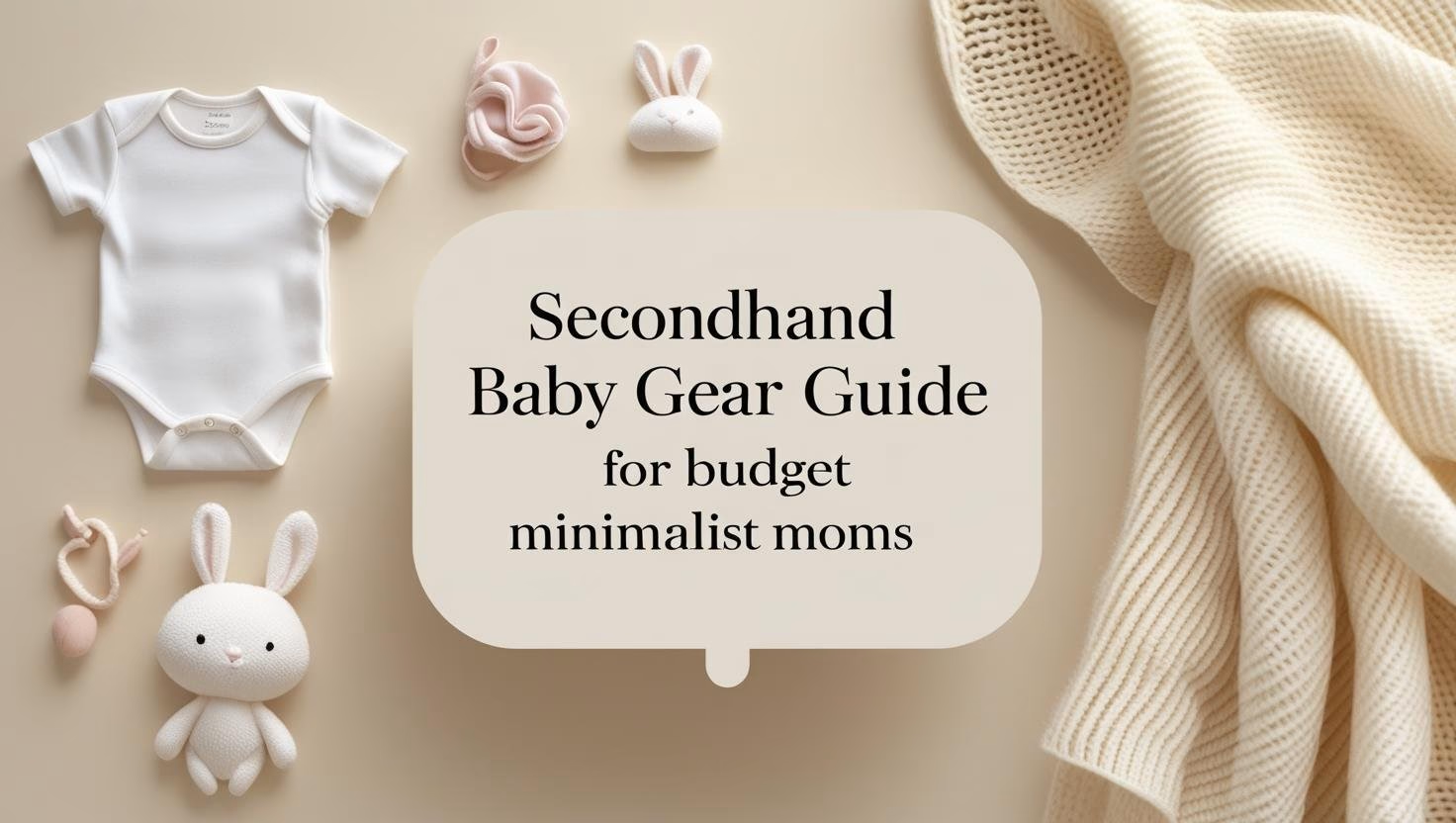

A newborn outgrows a newborn onesie in four to six weeks. The 0-3 month clothing size covers roughly twelve weeks of actual wear, the 3-6 month size another twelve. Most baby gear follows the same short arc, which is exactly why secondhand items in this category tend to arrive in excellent condition — sold by a family whose child simply grew past them. The budget-minded approach pairs a curated buying list, built around what a baby actually uses rather than what anxiety says to buy, with a secondhand-first habit for the categories where used is genuinely safe.
The Categories You Can Buy Used Without Concern
Baby clothes are the highest-value secondhand category by a wide margin. Resale stores like Once Upon a Child, plus Facebook Marketplace and Poshmark, carry brand-name baby clothing at 80 to 90 percent below retail, often worn only five to ten times before the child sized out of it. Because the sizing transition comes every 8 to 12 weeks, the real wear per garment stays low no matter who owned it first.
Carriers and wraps belong here too. A structured carrier like an Ergobaby or a soft wrap has no mechanism to fail, washes clean, and often sells for a third of retail once a family's baby has grown into a toddler who prefers to walk — just confirm the buckles click firmly and the fabric shows no thinning at the seams. Mechanical bouncers and swings without electronics are safe used — normal wear carries no recall history — and play mats and activity gyms wipe clean and show no structural failure from floor use, typically running 60 to 80 percent under retail. Audio baby monitors are reliable secondhand; video monitors need a check that the app and WiFi support are still active, since older models can lose functionality when their app is discontinued. Boppy-style nursing pillows are fine if the cover is intact and the fill is sound, with replacement covers cheap if not. High chairs work used as long as the harness is intact, the tray locks, and no structural damage shows.
The Categories to Verify Before Buying
Cribs are the clearest line. Any crib made before June 28, 2011 — when the CPSC updated its mandatory safety standards — is not compliant and should not be bought used, and drop-side cribs of any age are banned outright. A crib made after that date, with no structural damage and a firm flat mattress that fits without gaps, is safe. Buy the mattress new, though: its condition cannot be judged by looking at it.
Verify the model against the CPSC recall list before any used purchase, and pay particular attention to sleep-adjacent products — the Fisher-Price Rock 'n Play inclined sleeper, for instance, was recalled. It takes two minutes and it is the difference between a bargain and a hazard.
What to Buy New, No Exceptions
Two categories override the budget-first instinct entirely. Car seats should be bought new, or accepted secondhand only from someone you personally trust who can confirm the seat was never in a crash and has not expired. Car seats carry expiration dates printed on the shell, usually 6 to 10 years from manufacture, and a crash can leave internal damage that is invisible from the outside — which is why the American Academy of Pediatrics and every major manufacturer advise buying new.
Breast pumps split by design. Hospital-grade pumps like the Medela Symphony are built for multi-user rental. Personal pumps — Spectra, Elvie, Willow, Medela Pump In Style — are single-user by design, and manufacturers advise against sharing them because milk residue can reach the motor past the tubing. Since the ACA requires most insurers to cover a pump at little or no cost, checking with your insurer usually removes the reason to buy one used at all.
Quick reference by category
| Category | New or used | Key check |
|---|---|---|
| Clothing | Used | None — 80–90% below retail |
| Bouncers, swings, play mats | Used | No electronic recalls; wipes clean |
| Nursing pillow, high chair | Used | Cover/harness intact, tray locks |
| Crib frame | Used (post-2011) | No drop-side; buy the mattress new |
| Car seat | New | No crash history; not expired |
| Personal breast pump | New | Often free through insurance |
Where to Source Secondhand Gear
Once Upon a Child, a national chain, sells condition-checked used clothing and gear at fixed prices, with staff verifying condition and recall status on most items before they hit the floor. Facebook Marketplace and local Buy Nothing groups move free or low-cost items between nearby families — the gift-economy model works especially well for baby gear that families want out of the house the moment their child outgrows it. For clothing specifically, Poshmark, ThredUp, and Kidizen all work online, with Kidizen's children-only focus tending to yield better-curated inventory than the general resale platforms.
Whatever the source, a short inspection before first use closes the gap between a used item and a new one. Run the model number through the CPSC recall search, wash fabric items in hot water, and wipe hard surfaces with a diluted vinegar or mild soap solution — skip harsh disinfectants on anything a baby mouths. Check every buckle, latch, and strap by actually operating it, look for cracked plastic at stress points and stripped screws at joints, and confirm nothing is missing that the item needs to work safely. A stroller with a sticky fold or a high chair with a frayed harness is not a bargain; it is a return waiting to happen, and most reputable sellers will take it back if you check on pickup.
The Minimalist Buy List
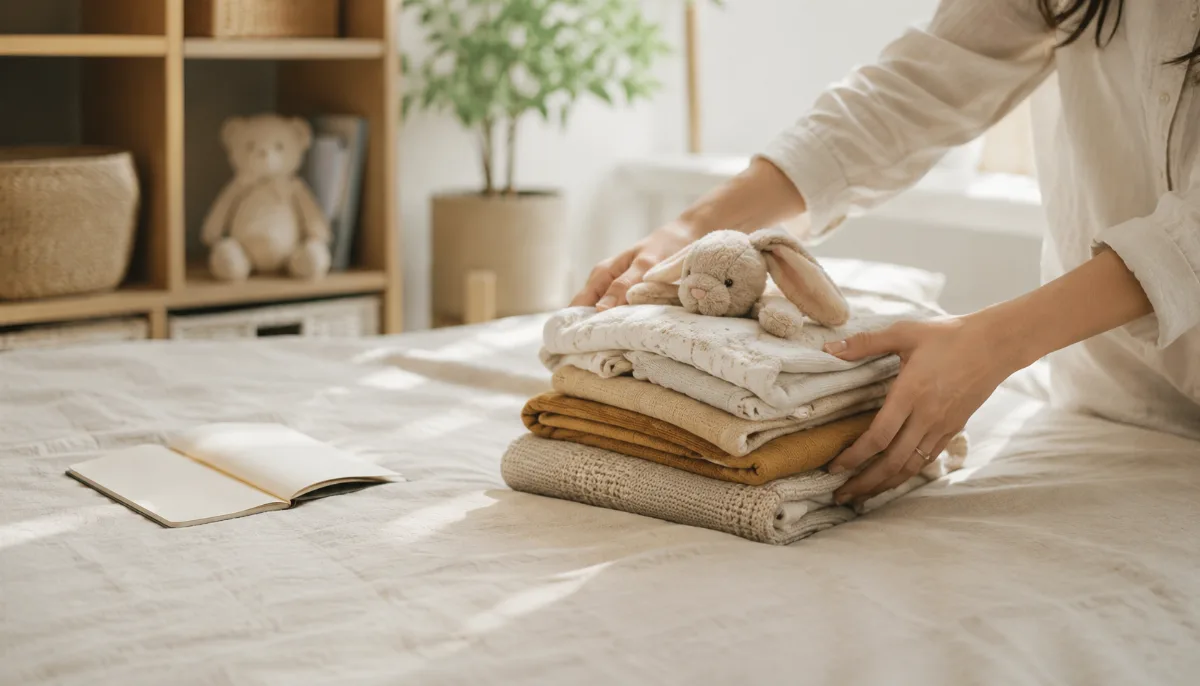
The standard new-parent checklist is padded with items used briefly or never. The list that actually earns its place in the newborn period is short: a safe sleep surface following the AAP's guidance — crib, bassinet, or play yard with a firm flat mattress, the one truly non-negotiable category — a new car seat, five to seven sleepers and onesies per size, a used bouncer or swing, a wrap or carrier for hands-free carrying, a nursing pillow if breastfeeding, and a baby monitor. That covers most of it.
The frequently bought and rarely used pile is longer than the buy list: a changing table, when a waterproof pad on a dresser works for a fraction of the cost; a wipe warmer, when babies adapt to room-temperature wipes; a bottle sterilizer, when the dishwasher or boiling water does the same job; a baby food maker, replaced by a blender and an ice cube tray; and a diaper pail, when a lidded trash can serves most families fine.
Resale Value and Local Networks
The resale side changes the buying math. Items that hold value — quality strollers, Ergo carriers, solid wood furniture — can be bought new with the expectation of recovering 50 to 70 percent when the child outgrows them. A Bugaboo or UPPAbaby stroller bought new at $900 typically resells for $400 to $600 in good condition, putting the net cost over 18 months around $300 to $500, closer to midrange pricing. Items that hold no value — fast-fashion clothing, character-branded gadgets, single-use tools — are better bought used or skipped, and for any big-ticket purchase the net cost after resale is the more honest number than the sticker price.
Timing sharpens the resale return. Listing a stroller or carrier while it is still a current model, before the manufacturer releases a redesign, holds far more of its value than waiting until it is two generations old and buried under newer listings. Clean it, photograph it in daylight, keep the manual and any original parts, and price it against what comparable used units are actually selling for rather than what you paid — the seller who does that quietly recovers hundreds of dollars the seller who lists a dusty item with one dark photo leaves on the table.
Beyond organized stores, the most cost-effective source is a local parent network: a neighborhood Facebook group, a building's parent list, a Buy Nothing group. Gear from a parent you can actually talk to comes with something the anonymous platforms cannot offer — you can ask about use history, recalls, and whether an item was ever stored somewhere that mattered, like a damp basement. Staying in touch with two or three families a year or two ahead of you produces a steady, often free pipeline of gear as their children grow past it, since most are glad to reclaim the space.
See also: minimalist baby essentials guide.
Comments
No comments yet.