
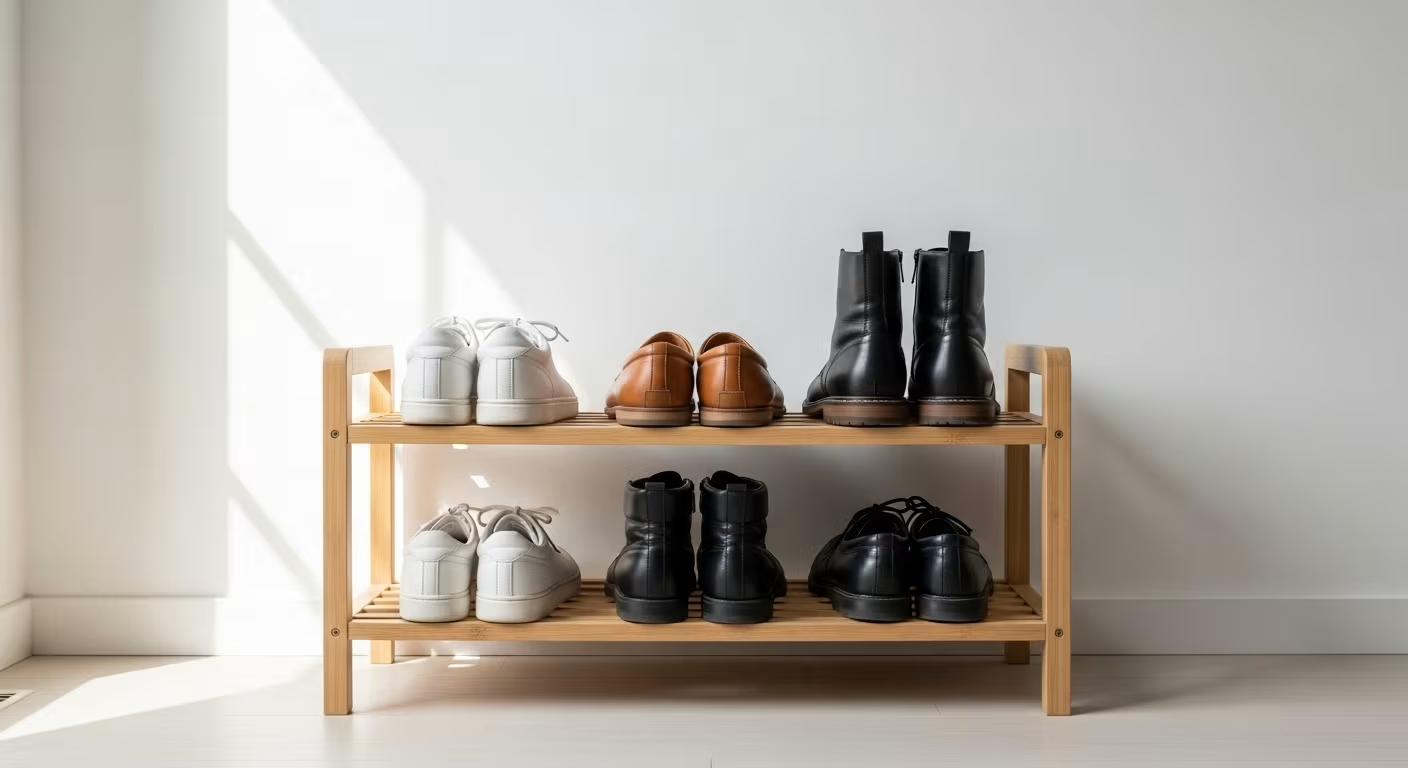

The Shoe Problem Nobody Talks About
Most people own substantially more shoes than they regularly wear. The number varies — fifteen, twenty, more — but the pattern is consistent: a handful of pairs are worn repeatedly, and the rest occupy space without being used.
The math produces two problems simultaneously. The first is the storage and financial cost of the unused pairs. The second, paradoxically, is a continued sense of not having the right shoes. The accumulation happens through individual purchase decisions that each seemed reasonable at the time — a pair for a specific occasion, a sale item that was too good to pass up, the shoes that seemed perfect in the shop but turned out to be uncomfortable in practice.
The result is a large collection with real gaps and significant redundancy. Shoe minimalism addresses both by starting from the actual functional categories required rather than from the accidental accumulation that has occurred.
Defining the Functional Categories

A functional shoe category is defined by the specific activities and contexts it serves: all-day walking comfort, formal professional occasions, casual daily wear, physical exercise, inclement weather, a specific sport or activity.
For most people, the actual functional categories reduce to between five and seven. A professional context adds one or two categories that a casual lifestyle does not require. A specific physical practice — running, hiking — adds a category. Climate adds weather-appropriate categories.
For each category, one pair is sufficient for most people. The compelling reason to own two pairs in the same category is rare: genuine daily wear in a single category that requires alternating to allow drying time, or a professional context that sees the shoes visible to the same people repeatedly.
The Audit Process
Auditing shoes requires more honesty than auditing most other possessions, because the psychological attachment to shoes can be unusually strong. A few useful questions for each pair:
Has this pair been worn in the past three months? If the answer is no, what is the specific future occasion for which it is being kept? Is that occasion likely to occur in the next six months? Could another existing pair serve for that occasion if it arose?
Pairs that have not been worn in three months and that do not have a specific, likely upcoming occasion are strong candidates for release. Pairs that have not been worn in a year are almost certainly candidates for release, regardless of what they cost when purchased.
Comfort as a Non-Negotiable
A pair of shoes that is uncomfortable is not serving its function regardless of how it looks. Uncomfortable shoes that are worn create physical problems — blisters, foot pain, knee and back strain from altered gait — that have real costs beyond the discomfort itself.
The commonly held view that uncomfortable shoes can be broken in through extended wear is accurate for some footwear and inaccurate for most modern shoes. A shoe that fits correctly and is suitable for the wearer's foot shape will typically be comfortable from the first or second wear. A shoe that is uncomfortable from the first wear is usually uncomfortable because it does not fit correctly, and that problem does not resolve with additional wearing.
Releasing shoes that are uncomfortable frees storage space and removes the recurring decision of whether to wear them. The answer to "should I wear these?" for comfortable shoes is simply yes when the context is appropriate.
The Cost Per Wear Logic for Shoes

Shoes accumulate more cost per unused pair than most other clothing items, because shoes occupy disproportionate storage space, require specific care to remain in usable condition, and are often expensive.
A pair of shoes worn two hundred times over three years costs a fraction of a cent per wear in depreciation from a thirty-dollar pair and less than one cent per wear from a three-hundred-dollar pair. The pair of beautiful shoes purchased for one hundred dollars and worn four times costs twenty-five dollars per wear. At that cost per use, the cheaper alternative that is actually worn is always the better value.
This arithmetic is clarifying for purchase decisions and for audit decisions. The hundred-dollar pair worn four times has already cost more than most people are comfortable acknowledging when the shoes are in the closet rather than on the feet.
Building a Minimal Shoe Wardrobe
After an honest audit that releases unworn and uncomfortable pairs, a minimal shoe wardrobe builds forward by filling only the genuine gaps that remain. For most casual lifestyles: a comfortable walking shoe for daily use, a more formal shoe for professional or formal occasions, a trainer or exercise shoe for physical activity, a weather-appropriate option for the local climate. This covers most situations for most people with four to five pairs.
Each gap that genuinely exists in the remaining wardrobe warrants deliberate filling with one good pair, rather than with multiple options covering the same function. One comfortable everyday shoe worn regularly is better than three variations of the same function worn inconsistently.
Seasonal Shoe Storage and Audit

Shoes not currently in season should be stored rather than kept in active circulation — they occupy closet space without being used and make it harder to see what is actually available. Storage also provides a natural audit point. When shoes come out of storage at the season change, each pair can be assessed: is it still comfortable? Is it still worn? Is it still in good enough condition to justify space in the active rotation?
Pairs that fail these questions at the season change can be released at that point rather than returned to storage for another year. The season change audit, done consistently, prevents the gradual accumulation of shoes that are retained by inertia rather than by genuine use.
The Hidden Costs of Rarely-Worn Shoes
Shoes kept in a closet but rarely worn carry costs beyond storage space. Leather shoes left without use deteriorate — the leather dries and cracks, the sole can delaminate, and mold can develop in humid storage conditions. A regularly-worn shoe in regular use maintains its condition through the oils and movement of wearing. A shoe left unworn for a year often emerges from storage in worse condition than if it had been worn regularly.
This means that shoes kept as backup options often degrade toward unusability without ever being used. The pair that was "kept for a specific occasion" may arrive at that occasion having deteriorated in storage. The financial investment is not preserved by keeping the shoe unused; it may actually be better preserved by wearing the shoe regularly or passing it on to someone who will.
Categories, then counts:
| Category | Pairs | Note |
|---|---|---|
| All-day walking / casual / formal / exercise / weather / a sport | ONE each | most people land at 5–7 categories total |
| Second pair in a category | rare | only genuine daily wear that needs alternation |
| The trap | fifteen-plus pairs, gaps anyway | occasion buys and sale buys, not categories |
Comments
No comments yet.