


What Builds Connection in a Relationship
Research on relationship quality consistently shows that shared positive experiences and intentional attention to each other — rather than the monetary value of those experiences — are the primary drivers of relationship satisfaction and connection. An evening walk together where both people are genuinely present produces more relational benefit than an expensive dinner where both people are distracted by phones, conversation with other diners, or the performance of a special occasion.
The structure of dating culture emphasizes spending as a proxy for effort and care. Expensive restaurants, entertainment venues, gifts, and travel function as legible signals of investment. But the relationship benefit is not the money spent; it is the quality of shared attention and positive experience that the spending was meant to enable. Separating the intended outcome from the habitual mechanism reveals that the spending is often not required for the outcome.
This is a practically significant realization because it removes the financial friction from frequent intentional time together. If a genuine date night requires booking and spending, it becomes a monthly or less frequent event. If a genuine date night can be a two-hour evening at home with food and conversation, it becomes a weekly possibility — and frequency of intentional positive time together is one of the strongest predictors of relationship satisfaction.
Evenings That Work Well at Home

A shared meal cooked together is among the most reliably effective low-cost date formats. Cooking together requires collaboration, produces shared conversation through the natural pacing of the activity, and ends with a shared product. The meal itself does not need to be ambitious. The shared process of preparing food together is the valuable part.
A film or series watched together with genuine shared attention — phones put away, both people actually present rather than distracted — provides shared emotional experience without any cost beyond what a streaming subscription already provides. The key is genuine shared viewing rather than parallel consumption while also attending to other things. Discussing what was watched afterward extends the shared experience.
A board game, card game, or similar structured two-person activity provides the competitive or collaborative engagement that restaurants rely on conversation to achieve. Games create natural interaction, mild emotional engagement, and memorable specific moments — the shared vocabulary of "that time you made that move" — that build relational history efficiently.
Outdoor Evenings and Local Exploration

An evening walk in a neighborhood, park, or natural area costs nothing and provides the combination of gentle physical activity, environmental change, and sustained conversation that consistently produces positive relationship experiences. Walking together tends to produce more honest and relaxed conversation than sitting face to face across a table, possibly because the side-by-side orientation and shared movement reduce the performance pressure of direct eye contact.
Identifying places within reasonable distance that neither person has visited thoroughly provides the novelty that date experiences typically rely on entertainment venues to supply. A neighborhood not usually walked through, a park at a different time of day, a waterfront or viewpoint visited at dusk — these provide genuine novelty at zero financial cost.
Outdoor evening activities in warmer months — sitting in a garden or park with food brought from home, watching the sky change after sunset, walking a familiar route in a different season — produce shared experiences through environmental engagement rather than purchased entertainment. The experiences are often remembered more specifically than a succession of restaurant dinners.
Making Low-Cost Dates Genuinely Special
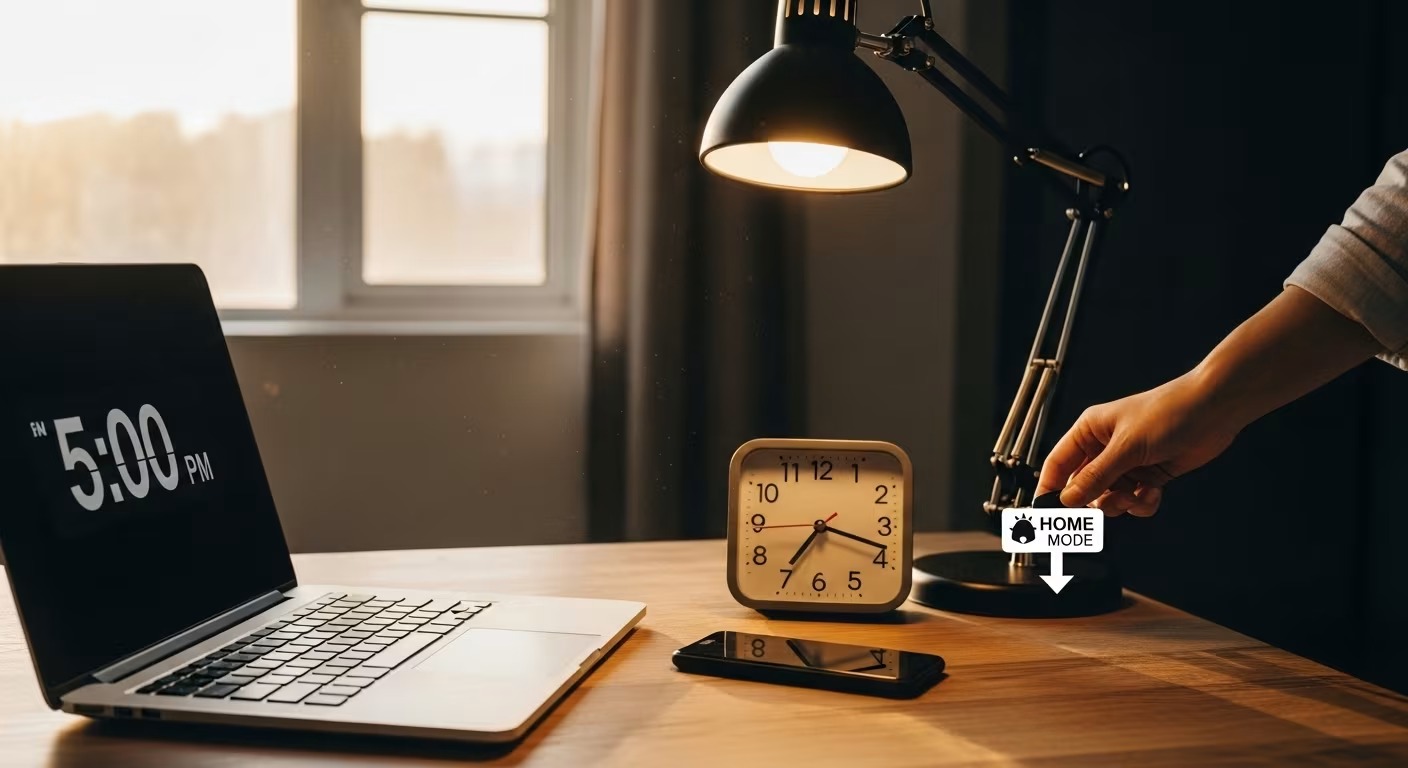
The distinction between a regular evening together and a genuine date night is intentionality rather than spending. The difference is in how both people approach the time: putting away work, reducing other distractions, choosing to be specifically present with the other person rather than simply occupying the same space.
Creating a small amount of ritual around low-cost dates — a specific playlist, a particular preparation activity, a consistent starting signal that signals the beginning of intentional time together — adds the sense of occasion that spending typically provides through environmental change and novelty. Ritual creates the psychological frame of a special occasion without requiring anything beyond the choice to create it.
Maintaining curiosity about each other is the relational practice that low-cost dates support most effectively. People in long-term relationships often stop asking questions about each other's inner lives because daily proximity creates the illusion of already knowing. An intentional evening with attention focused on genuine conversation — what has changed for you lately, what you are thinking about, what you are noticing — produces connection through learning that spending cannot replicate.
The Frequency Advantage of Low-Cost Dates

A date that costs nothing can happen every week. A date that requires booking a restaurant, arranging childcare, and spending a significant amount happens once a month at best for most couples. The frequency difference is not trivial: relationships are sustained through regular positive interactions, and infrequent high-investment events do not compensate for long stretches of low intentionality.
Couples who report high relationship satisfaction tend to have frequent low-key intentional time together alongside occasional special events, rather than rare elaborate events as the primary vehicle for relational investment. The everyday quality of the relationship — the attention, responsiveness, and genuine interest in each other that appear in ordinary evenings — predicts relationship wellbeing more than the annual anniversary trip or the occasional expensive dinner.
Building this frequency requires reconceptualizing what counts as genuine relational investment. An evening walk, a shared meal at home, a board game played with genuine engagement — these are not compromises for when a "real" date is not affordable. They are real dates, distinguished from unintentional shared time only by the decision to be present and engaged rather than occupied with other things.
Handling Special Occasions

Some occasions genuinely benefit from spending — anniversary milestones, birthdays, occasions that carry cultural or personal significance. The case for low-cost dates does not eliminate these. It simply prevents the inflation of everyday relational time into occasions that require the same treatment.
When special occasions are treated as special, they retain their significance. When every date is framed as a special occasion requiring spending, the signal becomes noise. A couple that has genuinely enjoyable low-cost evenings together and occasionally marks specific milestones with something more will find that both the ordinary evenings and the special occasions are more satisfying than a model where every date requires elaborateness.
Maintaining Intentional Time Through Life Changes
Life changes — new children, career transitions, housing moves, health events — commonly disrupt established relationship habits. The periods when intentional couple time is hardest to maintain are often the periods when it matters most. A brief daily check-in, even fifteen minutes with genuine mutual attention, preserves connection during periods when longer evenings together are not available. The minimum viable version of intentional time is still worth protecting.


Comments
No comments yet.