
Why Fewer Toys Lead to More Creative Play for Toddlers

Hey there, moms. 👋 Can we just be real for a second?

I used to trip over plastic dinosaurs and sticky blocks every damn morning. My living room looked like a toy store exploded, then a toddler army ransacked the remains.

Sound familiar? You know that feeling when you step on a LEGO at 6 AM?

With my first, Leo, I thought more toys meant more fun. Turns out, it just meant more mess, more fighting, and honestly, less actual playing.

I was drowning in stuff, and my kids were just... overwhelmed.

Today, I wanna talk about how we can flip that script. We're going to dive into why fewer toys can actually spark way more creativity in your little ones, and I'll share exactly how I pulled it off (and continue to, imperfectly, pull it off).

No judgment here. Just a mom who's been there, done that, and still occasionally loses her damn mind.

Why This Actually Matters

Okay, so why should we even bother with this? Because it’s not just about a tidier house, though let's be honest, that's a huge win in itself.

This is about giving our kids the space and mental clarity to actually think and imagine.

Think about it: when your child has 50 different toys staring them down, it’s like scrolling through Netflix with a million options. They just kinda stare, get overwhelmed, and then ask for the iPad.

My kids used to dump entire baskets of toys on the floor, play with one thing for two minutes, and then move on. They weren't really playing; they were just consuming.

When we cut down the clutter, something magical happened. Leo and Clara started building elaborate forts with blankets and pillows. They turned a cardboard box into a spaceship for a whole damn afternoon.

They started creating their own fun, instead of waiting for the next bright, shiny object to entertain them.

For me, it meant less nagging about tidying up. Less stepping on painful plastic objects. And honestly, less guilt about not playing with them every second, given that they were happily engrossed in their own worlds.

It’s a game-changer for everyone’s sanity, I swear.

The Basics of a Simpler Toy Landscape

So, what does "fewer toys" actually mean? It doesn't mean you're a bad mom if your kid doesn't have the latest gizmo. And it definitely doesn't mean deprivation.

It means being intentional about what comes into your home. It's about quality over quantity, thoughtful choices over impulse buys.

For me, it wasn't about counting every single toy. It was about looking at a basket of stuff and asking, "Is this actually adding value? Or is it just adding clutter?"

When I first started this, my biggest fear was that my kids would be bored. I worried they’d miss all their beloved plastic junk. Spoiler: they didn't, not really.

They actually started playing better.

Why Kids Benefit from Less

There are some really solid reasons why simplifying your toy situation can be a huge win for your toddler’s development.

It's not just some crunchy, minimalist ideal. There’s actual science behind this, or at least, my "mom science" observations.

  • Deeper Engagement: When kids have fewer options, they tend to focus on each toy for longer periods. They're not constantly looking for the "next best thing."

I saw this with Leo and his blocks. Before, he'd build one tower, knock it down, and then wander off. Now, he'll spend 20 minutes building a whole city for his small animals.

They truly get lost in play, which is what we want, right?

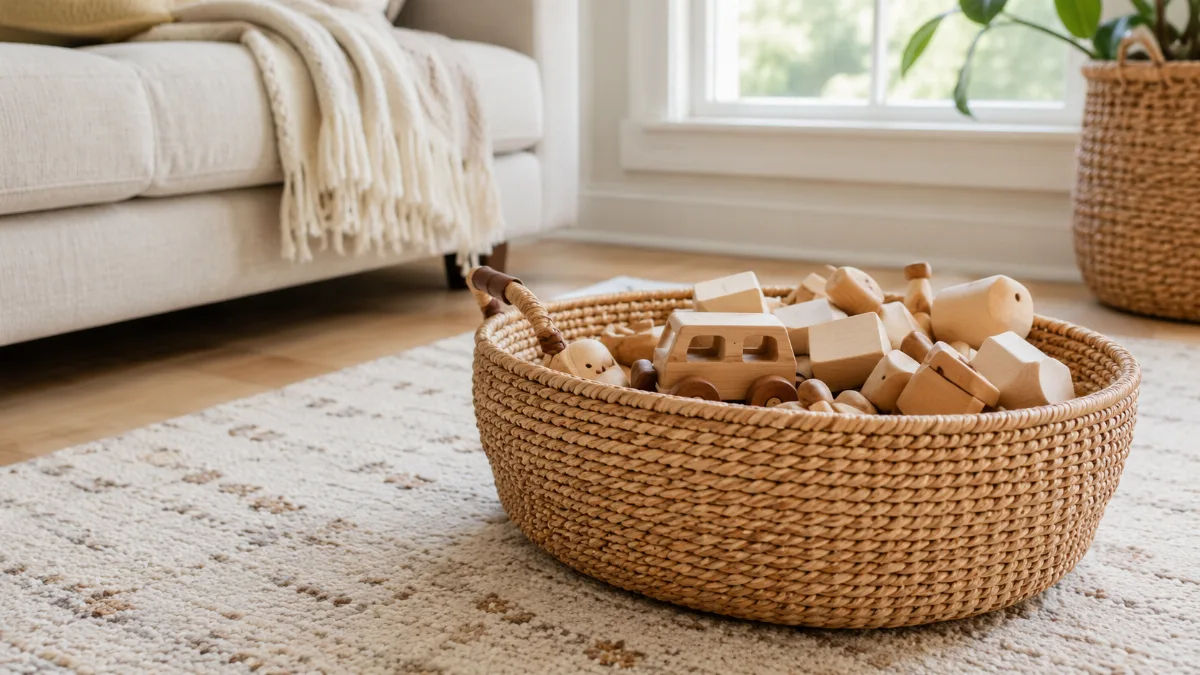
  • Enhanced Problem-Solving and Imagination: Fewer toys mean kids have to use their brains more. A simple block becomes a phone, a car, a piece of cake.

They learn to adapt and invent. Instead of a toy car that only drives, they get a block that can be anything they imagine, including a car.

Clara once used a colander as a hat for her stuffed bear. I mean, come on, that's pure genius right there.

  • Reduced Overwhelm and Decision Fatigue: Toddlers, like us, get overwhelmed by too many choices. Imagine a closet full of clothes and you have to pick the perfect outfit.

For them, a playroom stuffed with toys can feel the same way. When there are fewer toys, the choice is simpler, and they can get straight to playing without the brain drain.

It means less frustration for them, and honestly, less whining about "nothing to do."

  • Less Conflict: This one was a revelation for me. When there's less stuff, there are fewer things to fight over. Duh, Eleanor, right?

Before, it was a constant battle over who got what sparkly unicorn. Now, with fewer of those specific, coveted items, they're more likely to share or find a different way to play together.

It's not perfect, don't get me wrong. My kids still bicker. But it’s definitely not over the sheer volume of stuff anymore.

How to Actually do It

Okay, so you're probably thinking, "Eleanor, this sounds great, but how the hell do I even start?" Trust me, I get it.

The thought of tackling a mountain of toddler toys can feel more daunting than childbirth.

But we're going to take this one step at a time. No need to clear out everything in one go and send your kids into a toy-less spiral of despair.

This is a process, not a one-and-done mission. Give yourself grace, mama.

Step 1: Observe First (don't Just Dive In)

Before you bag up a single toy, just watch your kids for a few days. Pay attention to what they actually play with.

What do they gravitate towards? Which toys are always left in the bottom of the basket, untouched for weeks?

You might be surprised. That expensive, battery-operated spaceship? Probably gathering dust. Those simple blocks? Possibly a daily staple.

I did this for a week, and it was eye-opening. Turns out, Leo spent 80% of his play time with about 10% of his toys.

The rest was just visual noise, getting in the way.

Step 2: the Initial Purge (be Ruthless, but Realistic)

Alright, it's time to get down to business. Grab some bins or bags: one for "keep," one for "donate/sell," and one for "store away" (for rotation).

Start with the obvious stuff. Broken toys, toys with missing pieces, things that are clearly age-inappropriate (either too young or too old).

That baby rattle your 4-year-old hasn't touched in three years? It can go. The toy with a wheel missing? Toss it. No point holding onto junk.

Next, duplicates. How many sets of Magna-Tiles do you really need? I had three. THREE! Why? I don't even know, just accumulated over time.

Pick the best set and let the others find a new home. You'll thank me later.

Step 3: Introduce the Toy Rotation Concept

This is the secret sauce, folks. Toy rotation isn't about getting rid of everything. It's about making a smaller selection of toys available at any given time.

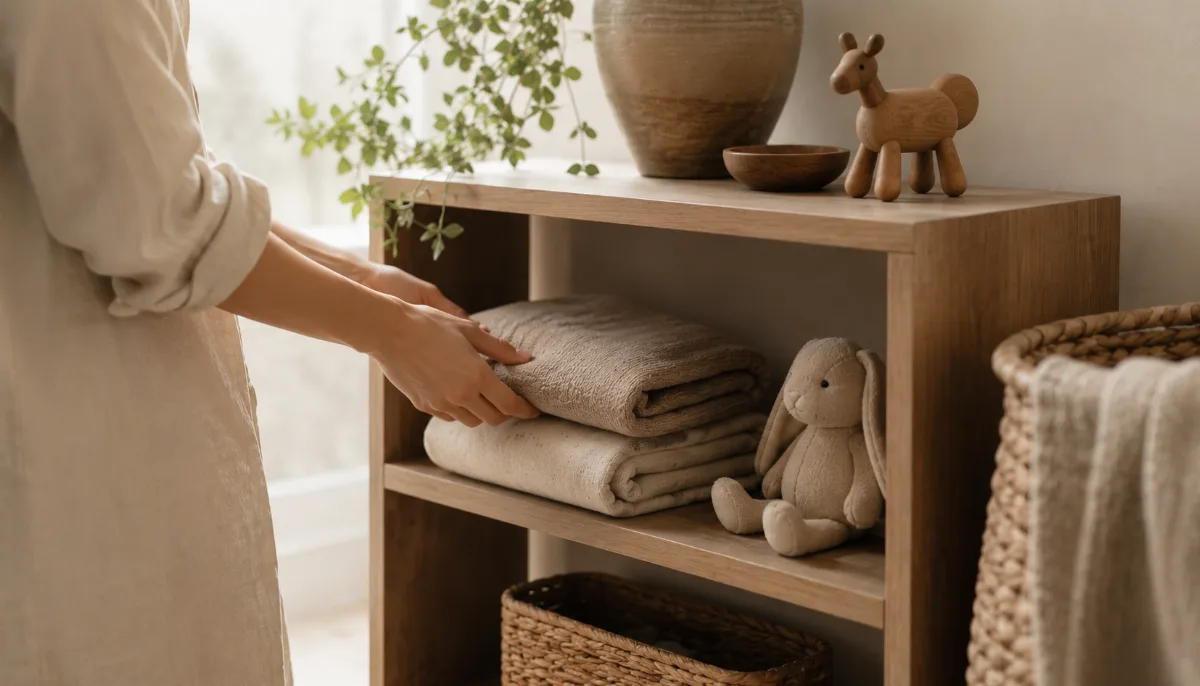
The "out of rotation" toys are stored away, out of sight. When you bring them back later, they feel fresh and new again to your kids.

It's like getting new toys without spending a damn dime.

After my purge, I had about 20% of the toys I started with. Then I decided what would stay out, and what would go into "storage."

It's a balance. You don't want too few, where they have nothing to do. But definitely not too many, where they're overwhelmed.

Step 4: Create a Simple Storage System for "out of Rotation" Toys

You need a place for the toys that aren't currently available. This can be as simple as clear plastic bins in a closet, under a bed, or in the garage.

The key is out of sight, out of mind. If your kids can see them, they'll ask for them constantly, and the whole point is defeated.

I use three large bins. One for blocks/construction, one for pretend play items, and one for smaller manipulative toys. I label them, because Mom Brain needs all the help it can get.

It makes swapping them out so much easier. Trust me on this one; a good system saves your future self a lot of grief.

Step 5: Decide on Your Rotation Schedule (don't Overthink It)

There's no magic number here. Some people rotate weekly, some monthly, some every few months.

I started with every two weeks, mostly because I wanted to see if it would stick. Now, I tend to do it when I notice play starting to dwindle, or when I'm just sick of looking at the same damn puzzles.

Maybe it's every three weeks. Maybe it's when a particular season changes and I want to bring out different themed items. It's flexible.

Don't beat yourself up if you forget for a month. Just rotate when it feels right for your family. The point is to keep things fresh, not to add another item to your never-ending to-do list.

Step 6: Involve Your Kids (age-appropriate, of Course)

For younger toddlers (1-2 years), you can mostly do this yourself. They won't really notice the change, or if they do, they'll adapt quickly.

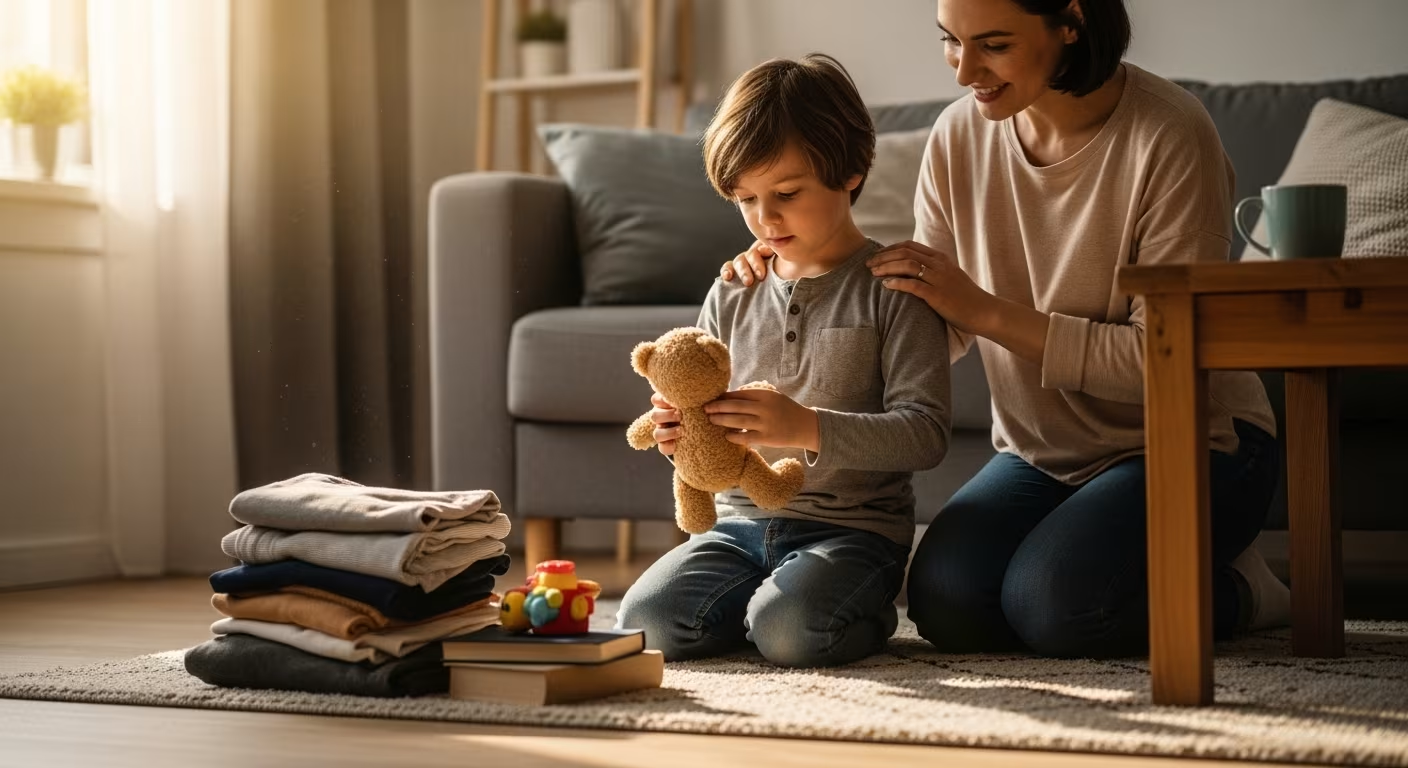
For older toddlers and preschoolers (3+ years), you can involve them in the process. Ask them, "Which toys aren't you playing with much right now? Maybe we can put them away for a bit and bring out some others?"

When I first involved Leo, he was a little resistant. "But I love ALL my cars!" he insisted. We picked a few to keep out, and put the rest in a special "sleeping" box.

When those "sleeping" cars reappeared a month later, it was like Christmas morning all over again. They quickly learned to appreciate the novelty.

Step 7: Managing the Influx of New Toys (gifts, Holidays, Etc.)

This is probably the biggest challenge, right? Birthdays, holidays, generous grandparents. New toys will come into your home.

My strategy is usually one in, one out. If a new toy arrives, we talk about which existing toy might be ready to "take a break" and go into rotation storage.

For big holidays, I try to communicate with family beforehand. "We're really focusing on experiences this year," or "If you're thinking of a gift, we'd love contributions to a museum membership or a book."

It doesn't always work perfectly. My mom still buys more plastic than I'd like. But it helps manage expectations and reduces the sheer volume of stuff coming in.

Making It Stick / Common Mistakes

Okay, you've done the purge, you've got a system. Now, how do you keep this up without burning out or feeling like a toy dictator?

It's not always easy. There are definitely pitfalls.

One of the biggest mistakes I made at the beginning was expecting instant perfection. I thought one big decluttering session would magically solve all my problems. Nope.

It’s an ongoing process. Just like laundry or dishes, toys will constantly need management.

"True play isn't about having all the things. It's about doing all the things with what you have."

Mistake 1: Doing It All at once and Burning out

Don't try to clear out the entire playroom, bedroom, and living room toy zones in one afternoon. You'll end up exhausted and resentful.

Break it down. Maybe focus on just the blocks one day, then the cars the next. Or tackle one small area. Even 15 minutes of focused decluttering can make a difference.

I learned this the hard way after trying to KonMari my entire house in a weekend. I ended up crying over a pile of unmatched socks. Pace yourself.

Mistake 2: Not Having a System for New Toys

As I mentioned, gifts are inevitable. If you don't have a plan for them, you'll be right back where you started in a few months.

Stick to your "one in, one out" rule. Or, if a new toy is coming, explain that we'll be putting an older toy away to make space for the new one.

This teaches kids about making choices and appreciating what they have, rather than just endlessly accumulating.

Mistake 3: Guilt over Taking Toys Away

This is a huge one for moms. We feel guilty. We think we're depriving our kids. Society tells us more is better.

Remind yourself of why you're doing this. You're creating a calmer, more stimulating environment for them. You're fostering creativity, not stifling it.

My kids rarely even notice when I swap toys out. And when they do, they're usually excited by the "new" old toys coming back into play.

You're not a bad mom for curating their play space. You're a thoughtful, intentional mom.

Mistake 4: Expecting Instant Results

Your toddler isn't going to suddenly become a zen master of creative play overnight. It takes time for them to adapt to a new normal.

There might be some pushback initially. There might be a few days where they wander around looking for something specific. That's normal.

Stick with it. Within a week or two, you'll likely start seeing the benefits: longer periods of independent play, less conflict, and a generally calmer atmosphere.

Be patient with yourself and with them. This is a journey, not a destination.

Frequently Asked Questions

Won't My Kids Just be Bored Without All Their Toys?
Honestly, no. Or, rather, they might experience a little boredom at first, but that's actually a good thing! Boredom is often the birthplace of creativity. They'll learn to invent their own fun rather than relying on endless external stimulation.
What if Grandparents or Other Family Members Keep Buying Lots of Toys?
This is super common and a tough one to navigate without sounding ungrateful. I try to gently suggest alternatives like experiences (zoo membership, art classes), books, contributions to a college fund, or even clothes they actually need. If toys still arrive, I keep the "one in, one out" rule for our household, and some go directly into the rotation storage.
What Kind of Toys Should I Keep out During a Rotation?
Focus on open-ended toys that encourage imagination: blocks, play silks, simple dolls/animals, art supplies, puzzles, dress-up clothes, cars, or things that can be used in multiple ways. Avoid anything too specific or battery-operated that does all the playing for the child. Think classic, simple, durable.
How Long does the Initial Decluttering and Setup Take?
It really depends on how much stuff you have and how quickly you make decisions. For me, the initial purge took about 3-4 hours spread over two days. Setting up the rotation storage was another hour. Don't feel pressured to do it all at once; even a 30-minute session can make a huge dent.
Is This Really Worth the Effort for an Already Overwhelmed Mom Like Me?
YES. A thousand times yes. The initial effort might feel like another chore, but the payoff in terms of less clutter, less cleanup, less sibling squabbling, and more engaged, creative kids is absolutely worth it. It actually reduces overwhelm in the long run by simplifying your daily life.
My Toddler has a Security Blanket or Special Stuffed Animal, Will I have to Get Rid of That?
Absolutely not! Comfort items are completely different from general toys. These are vital for emotional regulation and attachment. They are always exempt from any decluttering or rotation. Keep those close and cherished, no questions asked.

The Bottom Line

Ultimately, having fewer toys isn't about being perfectly minimalist or depriving your kids. It's about being thoughtful.

It's about creating an environment where they can truly thrive, where their imagination isn't drowned out by a sea of plastic junk.

Start small, mama. Pick one small bin of toys to sort through. See how it feels. You might just find a little more peace, and a lot more creative play.

Your kids (and your feet) will thank you. ❤️