
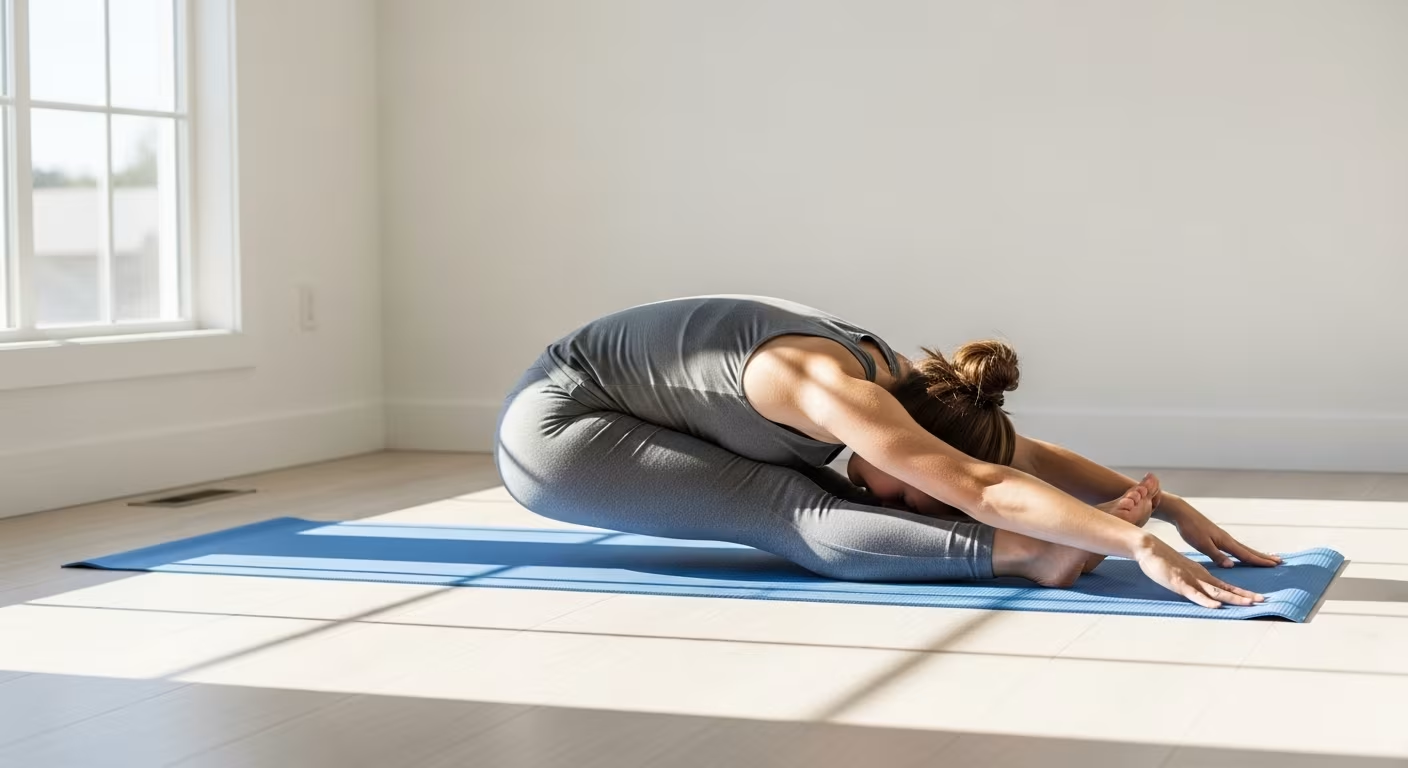

Why Home Yoga Works
A yoga studio offers genuine advantages: instruction, community, a dedicated space, and accountability structures. It also creates friction: scheduling, commuting, membership fees, and the social performance of practicing in a group. For many people, these friction points reduce practice frequency more than the advantages increase it.
Home yoga eliminates the friction. The practice can happen at any time — early morning, late evening, a fifteen-minute gap between other commitments. It requires no travel, no scheduling, no social readiness, and no financial commitment beyond the initial cost of a mat. For people building a new yoga habit or maintaining an existing one without the support of a community, the friction reduction is the primary benefit.
What You Actually Need

The minimum equipment for a home yoga practice is a yoga mat and enough floor space to extend the mat with arms reach above, below, and to each side. That is the complete requirements list.
A yoga mat provides grip and cushioning for the hands, feet, and knees in poses where they contact the floor. On a carpeted surface, a mat provides a defined practice area rather than grip. A sticky mat on a hard floor is the most functionally important version; on carpet, a thinner mat that does not slide is preferable.
Blocks and straps — the most common additional props — extend accessibility. A block shortens the reach distance in forward folds and supported poses; a strap extends reach for flexibility-limited poses. Both are inexpensive and genuinely useful for people with limited flexibility. They are not prerequisites for beginning.
Finding Instruction Without a Subscription
Free instruction for home yoga practice is available in quantity and quality that did not exist a decade ago. Video platforms carry complete yoga sequences from qualified teachers across every style and duration. Search terms specifying style (hatha, vinyasa, yin, restorative), duration (ten minutes, thirty minutes, sixty minutes), and level (beginner, intermediate) produce specific and usable results.
The constraint with free video instruction is the absence of feedback on alignment and form — a real limitation that studio instruction addresses. For people new to yoga, occasional in-person sessions supplement the home practice with form correction that video cannot provide. For experienced practitioners who know their alignment tendencies, video instruction is fully adequate.
Building a Consistent Home Practice
Consistency in home yoga practice comes from reducing the threshold to beginning. A mat kept out and ready rather than stored in a closet means the practice can begin without setup. A consistent time of day removes the daily decision of when to practice.
The time decision is worth making deliberately rather than leaving as flexible. A practice designated for mornings before other activity begins is more likely to happen than one designated for "sometime during the day." Not because mornings are inherently superior but because a specific time anchor removes the daily negotiation about when to fit it in.
Duration is less important than frequency. A fifteen-minute practice six days per week produces different results over a year than an hour-long practice once per week. The shorter daily practice accumulates more total practice time and, for many people, is more sustainable because it makes smaller demands on the daily schedule.
The Home Practice Versus Studio Practice
Home practice and studio practice are not mutually exclusive and work well in combination for many practitioners. Studio classes provide instruction, alignment correction, the motivating effect of a community, and exposure to sequences and styles that home practice might not generate on its own. Home practice provides the frequency and flexibility that studio scheduling cannot match.
The most sustainable combination for many people is regular home practice — five to six days per week — supplemented by occasional studio classes for instruction and community. This uses the studio for what it does distinctively well without relying on it for consistency that the scheduling friction works against.
Building a Home Practice That Lasts
Yoga studios offer structured class times, a dedicated environment, and the social aspect of practicing alongside others. These are genuine advantages. They are also the source of friction that causes many people to stop attending: classes start at fixed times regardless of the week's schedule, the commute adds fifteen to twenty minutes each direction, and sustaining a studio practice requires ongoing financial commitment.
A home practice removes all of this friction in exchange for requiring internal structure. The trade is worthwhile for most people if they establish a consistent time and location. The same spot in the same room at the same time each day creates context cues that make beginning easier over time. The practice starts when you step onto the mat, not when you decide whether to go somewhere.
Beginning with ten minutes rather than an hour removes the initial commitment barrier entirely. Ten minutes of breath work and basic postures practiced daily produces more benefit than an occasional hour-long session. The daily habit is the primary variable; duration increases naturally as the habit stabilizes over weeks and months of continued practice.
Choosing Instruction Without Overcomplicating the Decision
The volume of available online yoga instruction is large enough to create decision paralysis if approached without a clear strategy. Choosing one instructor or one structured program and following it consistently for eight to twelve weeks produces better outcomes than sampling widely across multiple sources.
Consistent instruction from a single source allows each session to build on the previous one, which is how yoga instruction is designed to function. After twelve weeks with one source, the student has enough foundational context to evaluate what that instruction emphasized and what it missed, and to make an informed choice about whether to continue or supplement with a different approach. This is a more useful position than the one reached by sampling six instructors in six weeks without enough exposure to any of them to develop genuine continuity.
The content itself — breath coordination, alignment principles, progression through foundational postures — is relatively stable across quality instruction sources. The platform is secondary to the consistency of practice. A free resource practiced consistently delivers more than a premium subscription used sporadically. The practice produces the benefit; the platform is delivery infrastructure for getting the content to the practitioner. Choosing simply and starting promptly is more useful than researching options indefinitely before beginning, because the first sessions reveal more about what the practice requires than any amount of prior comparison. Many people who have been comparing options for weeks find that two sessions of any instruction source clarify what they actually need more than all their prior research combined.
The complete equipment list:
| Item | Status | Note |
|---|---|---|
| Mat | required | sticky on hard floor; thin non-slide on carpet |
| Floor space | required | arm's reach beyond the mat on all sides |
| Blocks + strap | helpful, not prerequisites | extend reach for limited flexibility |
| Studio membership | optional | friction often outweighs the benefits it adds |


Comments
No comments yet.