
How to Help a Reluctant Partner Get on Board with Decluttering

Okay, let's just rip the band-aid off. You’ve probably tried to declutter before, right? Maybe you’ve even made some amazing progress in your own little corner of the house.

But then you look around and BAM. The living room is still drowning in his old magazines. The garage looks like a tornado hit a sporting goods store. And suddenly you feel like you’re trying to bail out a leaky boat with a teacup.

You love him, bless his heart, but getting your partner on board with decluttering can feel like herding cats. Maybe he’s sentimental. Maybe he’s a collector. Or maybe he just genuinely doesn’t see the mess.

I’ve been there. Still am, sometimes. Mark and I have had more "discussions" about old golf clubs and mysterious boxes than I care to admit. It’s draining.

So today, we’re going to talk about how to tackle this without starting a full-blown marital spat. We’ll cover why it feels so impossible, how to actually start making tiny moves, and what to do when he still just... doesn’t get it. No magic wand, just real talk and practical steps. Let’s do this. 👋

Why This Actually Matters

Look, it's not just about having a pretty, clutter-free house for Instagram. Though, let’s be real, that’s a nice bonus.

For me, the mess felt like a constant mental drain. Every time I walked into our overloaded garage, I felt this little ping of dread. Another thing to deal with. Another thing I couldn't ignore.

When our first was born, I remember tripping over a box of Mark's old college textbooks just trying to get to the stroller. In the middle of a sleep-deprived haze, I swear I almost cried.

That feeling of overwhelm? It adds up. It's not just physical clutter; it's mental clutter that steals your peace, your time, and honestly, your patience with everyone.

When we finally started making inroads, even small ones, I noticed a huge difference. I wasn’t spending 20 minutes looking for that one specific wrench Mark swore was in the toolbox.

Our evenings felt less frantic because we weren't shuffling piles of stuff just to sit on the couch. We even saved a little money because we stopped buying duplicates of things we already owned but couldn't find.

It's about creating space for what truly matters. Space for your family. Space for calm. Space for not losing your damn mind every time you open a cabinet.

Understanding the Resistance (it's Not Always Malice)

Before you launch into battle, it’s helpful to understand why your partner might be clinging to their stuff. It’s rarely about trying to annoy you, even if it feels that way.

Think about it. We all have different relationships with our belongings. For some, it's about security. For others, nostalgia. For still others, it’s just pure inertia.

The Many Faces of "no"

My Mark, bless his heart, is a "just in case" guy. He keeps old power cords from electronics we don't even own anymore. "You never know when you might need an obscure 15-year-old USB-B to Firewire cable, El!" Yeah, okay.

  • The "Just In Case" Hoarder: This person keeps things because they might need it someday. Future potential, no matter how slim, trumps current space. They’ll likely have duplicates of things too, just to be safe.
  • The Sentimental Soul: Every object tells a story. That chipped coffee mug from college? Priceless. That faded concert t-shirt from 2003? Pure gold. Letting go feels like losing a memory or a part of their past.
  • The "I'll Get To It" Procrastinator: This isn't necessarily about attachment. They just genuinely plan to sort it, fix it, or use it... eventually. The pile grows because "eventually" never seems to arrive, and their plate is already full.
  • The "Blind Spot" Partner: They literally don't see the mess. Or rather, they have a much higher tolerance for visual clutter than you do. What makes your eye twitch just registers as "stuff" to them. This one is tough, because it's hard to argue with someone who doesn't perceive a problem.
  • The "Control Freak" (ironically): Sometimes, resistance comes from feeling controlled. If they feel like you're imposing your standards on their possessions, they'll dig their heels in. Nobody likes being told what to do, especially about their own stuff.

Understanding which type (or types) your partner leans towards can help you frame your approach. You wouldn't talk to a sentimental person the same way you'd talk to a procrastinator, right?

I know it's exhausting to have to analyze it. But a little empathy here can save you a lot of grief later. Promise.

How to Actually do It (without Losing Your Mind)

Alright, let’s get into the nitty-gritty. This isn't a one-and-done kind of deal. It's more like chipping away at a very stubborn rock. With a tiny, plastic hammer.

Step 1: Start with Yourself (and Your Stuff)

I know, I know. You wanted to tackle his ancient comic book collection. But trust me on this. Your partner is way more likely to observe and potentially join in if they see you making progress first.

Start with a drawer, a shelf, or a small closet that is unequivocally yours. Or maybe a shared space where most of the mess is yours, like the pantry if you do most of the cooking.

My first big win was my own closet. I had clothes I hadn't worn since before having kids. That's a good five years of clothes I was just holding onto, "just in case."

When Mark saw me fill three bags for donation, he was curious. He didn't say much, but he noticed I seemed lighter, happier. And I had actual space for clean laundry.

Show him the benefits, don't just tell him. Action speaks volumes, even if it’s just a whisper at first.

Step 2: Communicate, Don't Confront

This is probably the hardest step, honestly. Because when you’re fed up, it’s easy to snap. "Why do you need all this junk?! It’s driving me crazy!" (Been there, screamed that.)

Instead, try to pick a calm moment. Not when you’re actively tripping over something. Not when you’re already stressed about dinner or homework.

Use "I" statements. Talk about how you feel. "I feel overwhelmed by the amount of stuff in the garage. It makes it hard for me to find what I need."

"I'd really appreciate it if we could make some space in here, so I can actually park my car." Or "I feel anxious when the living room is constantly cluttered."

Avoid blame. Avoid ultimatums. Just express your needs and feelings. Ask him what he thinks about the space. You might be surprised by his answer.

Step 3: Find a Low-stakes, Communal Starting Point

Once you’ve had a calm conversation, suggest a small, shared area. Think about things that aren’t deeply personal. The junk drawer. The linen closet. The entryway table.

For us, it was the ridiculous amount of takeout menus in our kitchen drawer. We'd saved dozens of them over the years. We only ever ordered from three places.

We spent 10 minutes, tossed 90% of them, and shredded the rest. It wasn't life-changing, but it was a win. We made a tiny, visible dent together.

Choose something that will give you both a quick, satisfying result. This builds momentum and shows him that decluttering isn't always a painful, all-day affair.

Step 4: the "container" Method (his Stuff, Your Rules)

Okay, so your partner has stuff they insist on keeping, even if it's not being used. The collection of old car parts. The 20 pairs of running shoes. The box of obscure board games he hasn't touched in years.

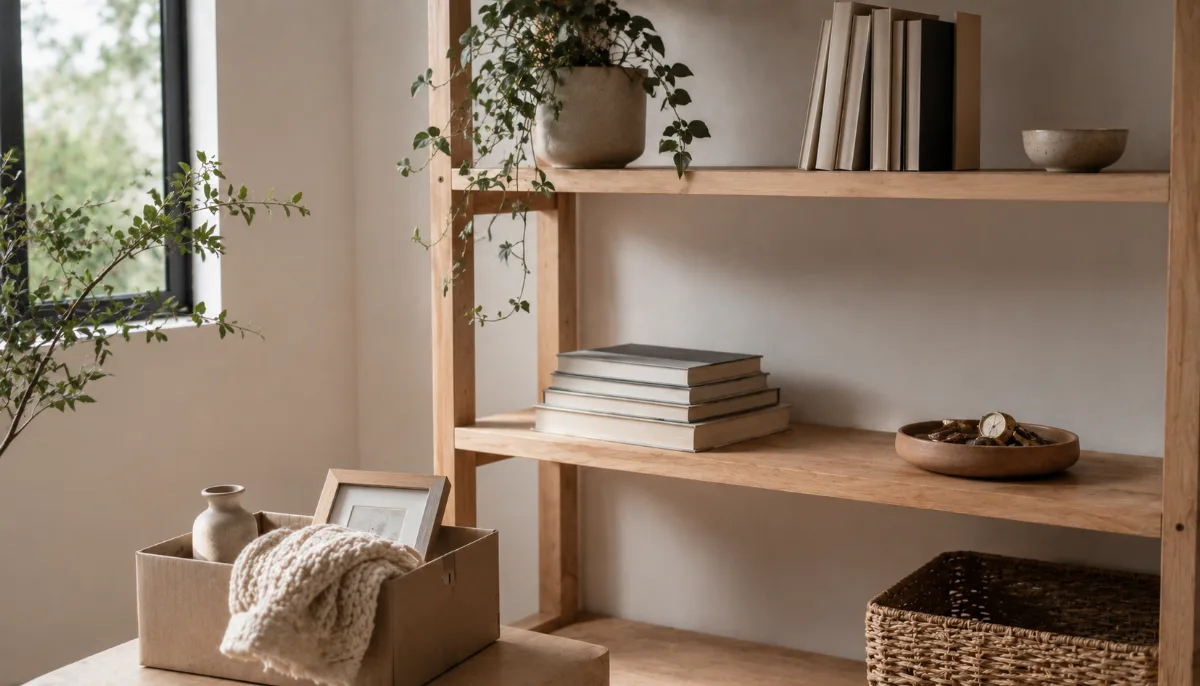
Instead of trying to force him to get rid of it, suggest containing it. Get a designated bin or a specific shelf for his "special" items.

Tell him, "Hey, I get that these things are important to you. How about we get this bin/shelf just for your old car parts? That way they’re all together, and we can still use the rest of the garage."

This creates a boundary. It respects his ownership while still creating order. It also makes him consciously choose what actually fits in that container. He can't keep everything if the space is limited.

Mark has a "man box" (his words, not mine) in the basement now. It holds old concert tickets, a few sentimental comic books, and some random gadgets. It's out of sight, and it means the living room isn't constantly littered with his treasures.

Step 5: the "one Year" Box (for the "just in Case" Guy)

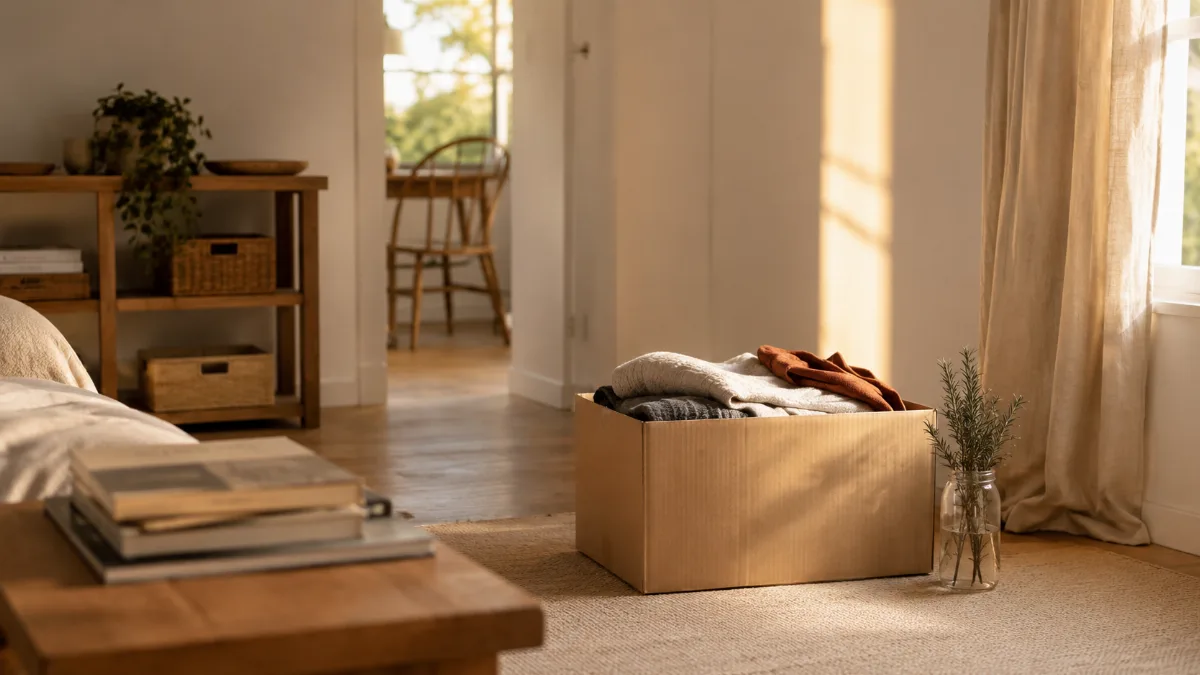
This one is brilliant for the "I might need it someday!" partner. Get a box. Label it with today's date, plus one year. Then, for items he's on the fence about, put them in the box.

Anything that hasn't been touched in that year gets donated or tossed. No discussion. No re-evaluation. It just goes.

My rule with Mark was: if you don’t remember it’s in the box, you don’t need it. We did this with a whole crate of old tools and car accessories he hadn't used in three moves. After a year, he didn't even notice they were gone.

It takes the immediate pressure off and proves, over time, that most of those "just in case" items are really "never gonna use it" items.

Step 6: Make It About Their Interests (seriously)

Instead of framing it as "decluttering," frame it in terms of something they care about. Does he love to host friends? "Imagine how much easier it would be to have people over if we had a clear living room!"

Is he into hobbies? "If we got rid of these old boxes, you’d have so much more space for your actual woodworking projects."

Mark loves watching movies. Our TV stand used to be a disaster zone of old remotes, gaming controllers, and tangled wires. I said, "If we clear this out, the whole movie experience will be so much better. Less visual noise."

Suddenly, he was motivated. He didn't want to declutter, but he wanted a better movie night. Sometimes, you just gotta translate it into their language.

Step 7: Celebrate Small Wins (don't be a Nag)

When he does participate, even in the smallest way, acknowledge it. "Hey, thanks for helping me with the kitchen drawer. It makes such a difference!"

Positive reinforcement goes a long way. Nobody wants to feel like they're constantly doing something wrong. If every conversation about stuff is a complaint, he’ll tune you out.

Did he take out the donation bags? Mention it. Did he move that one annoying pile? Give him a sincere "thank you."

It sounds basic, but in the thick of family life and endless to-do lists, it’s easy to forget to just say "good job." Especially to your partner.

Making It Stick / Common Mistakes

Getting a reluctant partner to declutter is just the first hill. Keeping the clutter at bay? That’s the whole damn mountain. It requires consistent effort and a little foresight.

One of the biggest mistakes I made early on was trying to do it all at once. I'd go on a decluttering rampage, feel great for a week, and then everything would just pile back up. It was disheartening, and it made Mark even more resistant.

Another pitfall is assuming he'll just "get it" once he sees the benefits. Sometimes they do, sometimes they don't. It's a process of gentle nudging, not a one-time revelation.

"You can't force someone to see the problem, but you can create an environment where the solution becomes undeniable."

Here’s the thing: you have to change your habits too. If you’re bringing in new things constantly, or if your stuff is still accumulating, it's hard to make a case for his stuff to go. Lead by example, always.

Establish clear homes for things. When everything has a place, it’s easier for both of you to put things away. If something doesn't have a home, it’s more likely to become a random pile.

And accept that there will always be some stuff. You’re not aiming for a museum. You’re aiming for a functional, peaceful home. There will always be a work-in-progress somewhere. That’s just life with kids and partners.

Frequently Asked Questions

What if He Just Refuses to Even Talk About It?
That's tough, and it means he's probably feeling cornered or defensive. Back off on the direct conversations for a bit. Focus entirely on Step 1: declutter your own stuff and areas.

When he sees your space become calmer and more functional, he might start to wonder how you did it. Or at least, he'll see that you're not just complaining without doing anything yourself.

He Says He "needs" Everything, Even if He Hasn't Touched It in Years. What Then?
This is where the "Container Method" (Step 4) and the "One Year Box" (Step 5) really shine. You're not forcing him to get rid of anything. You're simply containing it or giving it a trial period.

It shifts the focus from "getting rid of" to "organizing and testing." Most people are more open to organizing than they are to outright purging.

How do I Stop New Clutter from Coming in from His Side?
Ah, the constant influx! This requires a gentle but firm "one in, one out" rule, if you can establish it. For example, "If you get a new shirt, an old shirt has to go."

You can also subtly redirect gifts or purchases. "That's a cool new gadget, honey! Where do you think we can store it, since the shelf is pretty full?" Making him find the 'home' for new items can make him think twice.

How Long does This Whole Process Take to Actually See Results?
Oh honey, it's not a sprint, it's a marathon with lots of snack breaks. You might see small, noticeable results in communal areas within a few weeks if you're consistent with tiny efforts.

For significant, lasting change, especially with a reluctant partner, you're looking at months, maybe even a year or more. It’s about building new habits and trust, not just clearing out stuff.

Is This Worth It if My Partner is Just Never Going to be a Minimalist?
Absolutely, 100% yes. You're not trying to turn him into Marie Kondo. You're trying to create a more functional, less stressful home for you and your family.

Even if he only agrees to clear out one closet, or keep his tools contained, that's still a win. Every little bit of cleared space and reduced mental load is worth it. You deserve a calmer home, regardless of his ultimate minimalist philosophy.

The Bottom Line

Getting your partner on board with decluttering isn't about control or changing who they are. It’s about creating a living environment that supports both of your well-being, reduces stress, and makes family life a little easier.

It’s a long game. It needs patience, communication, and a whole lot of leading by example. But every tiny win, every cleared counter, every empty bin? It adds up. And it’s a damn good feeling.

So, pick one small area. Have one calm conversation. Try one tiny step today. You’ve got this. ❤️