

The Home Gym Overkill Problem
The aspirational home gym — squat rack, barbell and plates, cable machine, cardio equipment, pull-up rig — serves a specific type of serious strength athlete well and provides far more than most people need. It also costs more than a decade of gym membership and requires space that most homes do not have available.
The home gym culture that produces these aspirational setups also produces the more common outcome: a single piece of cardio equipment that functions as a clothes rack within three months of purchase, acquired in a burst of motivation that did not sustain itself.
A minimalist home gym starts from a different question: what is the minimum equipment that covers the majority of training needs for the specific training goals? This question produces a much shorter list and a much more achievable setup.
The Foundational Equipment List

For most people training for general fitness, the minimum effective home gym consists of a few items that together cover the full range of training patterns.
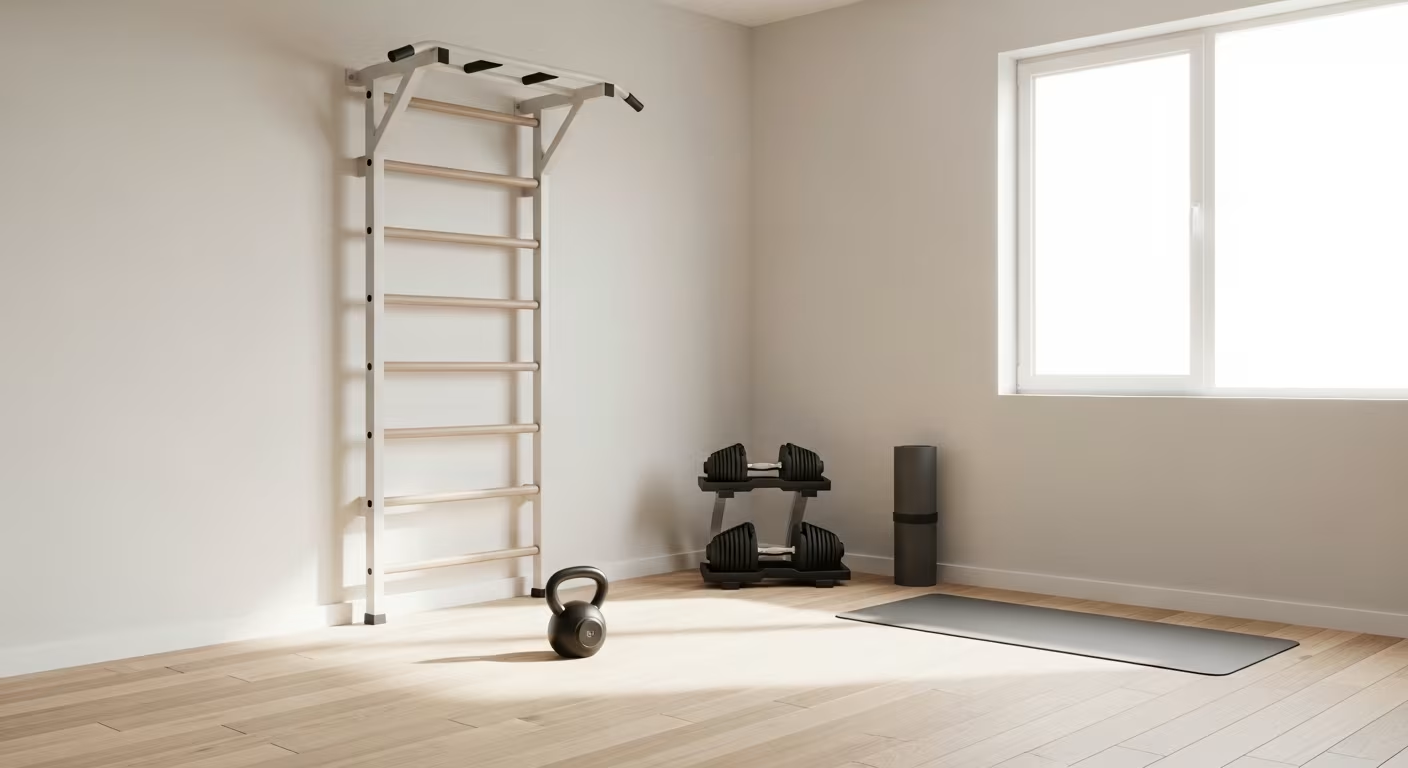
A pull-up bar — either a doorframe mount or a wall-mounted fixed bar — enables all vertical pulling movements and, used low for rows, horizontal pulling. This single piece of equipment addresses the pulling pattern that bodyweight training alone cannot cover effectively.
A set of adjustable dumbbells or a small rack of fixed dumbbells provides resistance for unilateral movements, pressing variations, and accessory exercises. A medium weight range covers most general fitness needs; the specific weights depend on current strength levels.
A resistance band set covers mobility work, assisted movements during skill development phases, and some isolation exercises that dumbbells do not serve as well. Bands are inexpensive, take no storage space, and are among the highest-value items per dollar in home gym equipment.
What You Do Not Need

The list of home gym equipment that provides marginal benefit relative to its cost is substantially longer than the list of genuinely useful items. Cardio machines at home serve one function and one function only; the same cardiovascular benefit is available from walking, running, or jumping rope outside, at no equipment cost.
A power rack and barbell are genuinely useful for serious barbell strength training and genuinely unnecessary for general fitness purposes. The equipment solves a specific problem — loading the squat, deadlift, and press with heavy external weight — that most training goals do not require solving with barbell-specific equipment.
Specialized cable machines, functional trainers, and multi-station units address the variety available at a commercial gym. A well-designed program using a pull-up bar, dumbbells, and resistance bands covers the same movement patterns with less space and less cost.
Space and Setup Considerations
A functional home gym does not require a dedicated room. A pull-up bar in a doorframe, a set of adjustable dumbbells that store beside a piece of furniture, and a mat that rolls out for use and stores against a wall represent a complete home gym that occupies essentially no permanent space.
For people who have access to a dedicated room or garage space, a more permanent setup is possible. The minimalist principle still applies: equip for actual training needs rather than for aspirational training or for training variety that will not be used consistently.
The Total Cost Comparison

A minimalist home gym — pull-up bar, adjustable dumbbells, resistance bands, and a mat — can be assembled for a fraction of the cost of one year's gym membership at most facilities, with equipment that will outlast many years of use. The cost comparison becomes more favorable with each passing year that the equipment is used consistently.
The gym membership provides access to equipment variety and instruction that the home gym does not, and for some people and some training goals, the gym provides irreplaceable advantages. For people whose training goals are well-served by the minimalist equipment list, the home gym provides superior long-term value.
Organizing the Space for Consistent Use

A home gym that requires significant setup and teardown before and after each session creates friction that reduces usage frequency over time. Equipment should be stored in a way that allows training to begin within sixty seconds of deciding to train. A pull-up bar mounted in a doorframe, a set of dumbbells on a floor shelf, a mat rolled near a clear wall — these require no preparation. Resistance bands stored in a drawer that must be retrieved and organized before each session will be used far less consistently over months of regular training.
If space constraints require equipment to be stored rather than kept ready, choosing gear that sets up and breaks down in under two minutes preserves most of the convenience benefit. Adjustable dumbbells that fold compact, bands that hang on a hook, and a mat that rolls easily maintain accessibility without requiring permanent floor real estate.
The location should also have adequate ventilation, particularly for cardiovascular training. A small fan or an open window handles this well. Poor air quality during training is uncomfortable enough to shorten sessions and reduce the enjoyment of the space over time, which compounds into reduced training frequency.
Investing in Quality for the Pieces Used Most
Home gym equipment purchased at the lower end of the price range often fails within two to three years under regular use. Barbell collars slip, band attachments fray, and foam mats compress and lose their cushioning. The cost of replacing inexpensive equipment twice often exceeds the cost of quality equipment purchased once.
The two or three pieces used in nearly every session justify the most investment. A pull-up bar, a set of adjustable dumbbells covering the required weight range, and a durable mat are used in the majority of training sessions. Spending proportionally more on these items than on supplemental equipment used occasionally is sensible allocation that pays off over years of use.
Second-hand commercial equipment from gym closures or individual sellers offers quality at significantly reduced prices. Commercial gym equipment is built to withstand daily use by many people and typically outlasts home-grade alternatives purchased new. Checking local resale platforms before purchasing at retail frequently produces better equipment for less money, and supports the longer-term economics of maintaining a functional home training environment for years without replacement costs. A few minutes of research at this stage is worth considerably more than the time spent dealing with equipment that fails under regular use. The difference in durability between commercial-grade and consumer-grade equipment is most apparent in the pieces that take the most load — the bar, the bench if one is used, and the dumbbell adjustment mechanism.



Comments
No comments yet.