
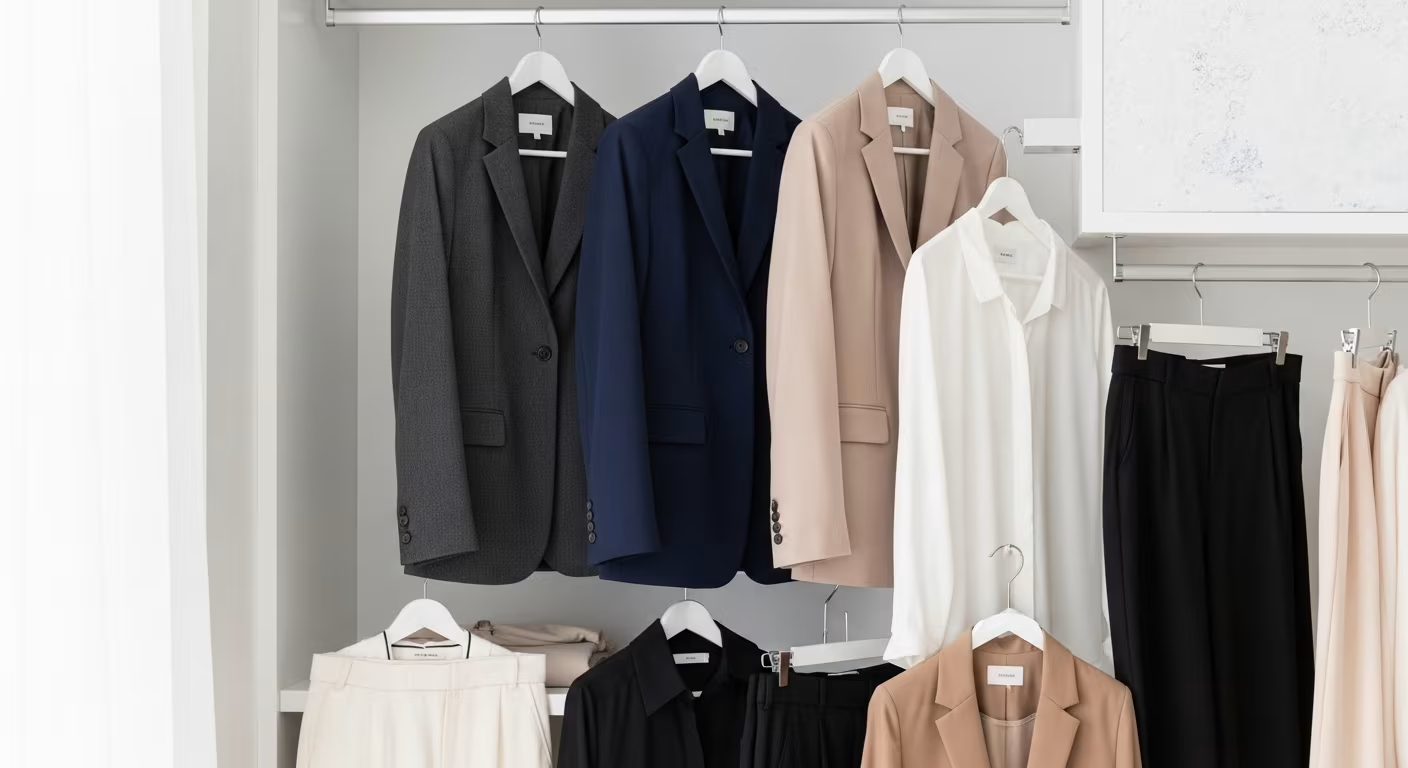

The Professional Wardrobe Problem
Most working people own more clothes than they need for work and still report the feeling of having nothing to wear. The closet is full of impulse purchases, sale items that seemed practical, pieces bought for a context that no longer applies, and items waiting for an occasion that has not arrived.
Getting dressed for work from this kind of wardrobe is decision-making under uncertainty, every morning. Which of the many available pieces actually work together? Which are appropriate for today's specific schedule? Which are clean?
The paradox of choice is real here. More options do not produce more satisfaction or more ease. They produce more decision fatigue and more frequent outcomes of dressed but dissatisfied — wearing something adequate rather than something chosen with any confidence.
What a Minimalist Work Wardrobe Actually Contains

The minimum viable professional wardrobe for a standard working week consists of complete, ready-to-wear outfits for each day, plus enough variation to avoid wearing the same combination twice in the same week. This is a lower number than most people's wardrobes contain.
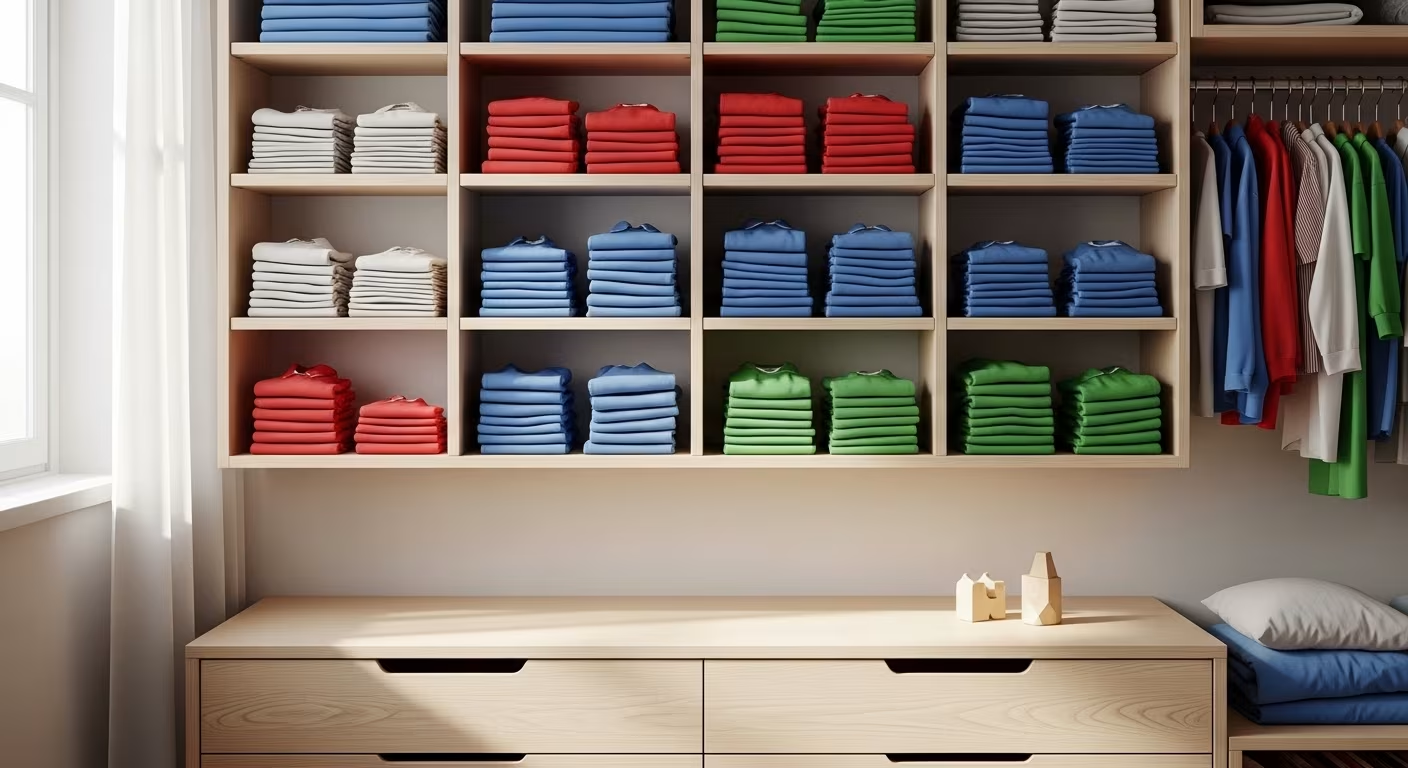
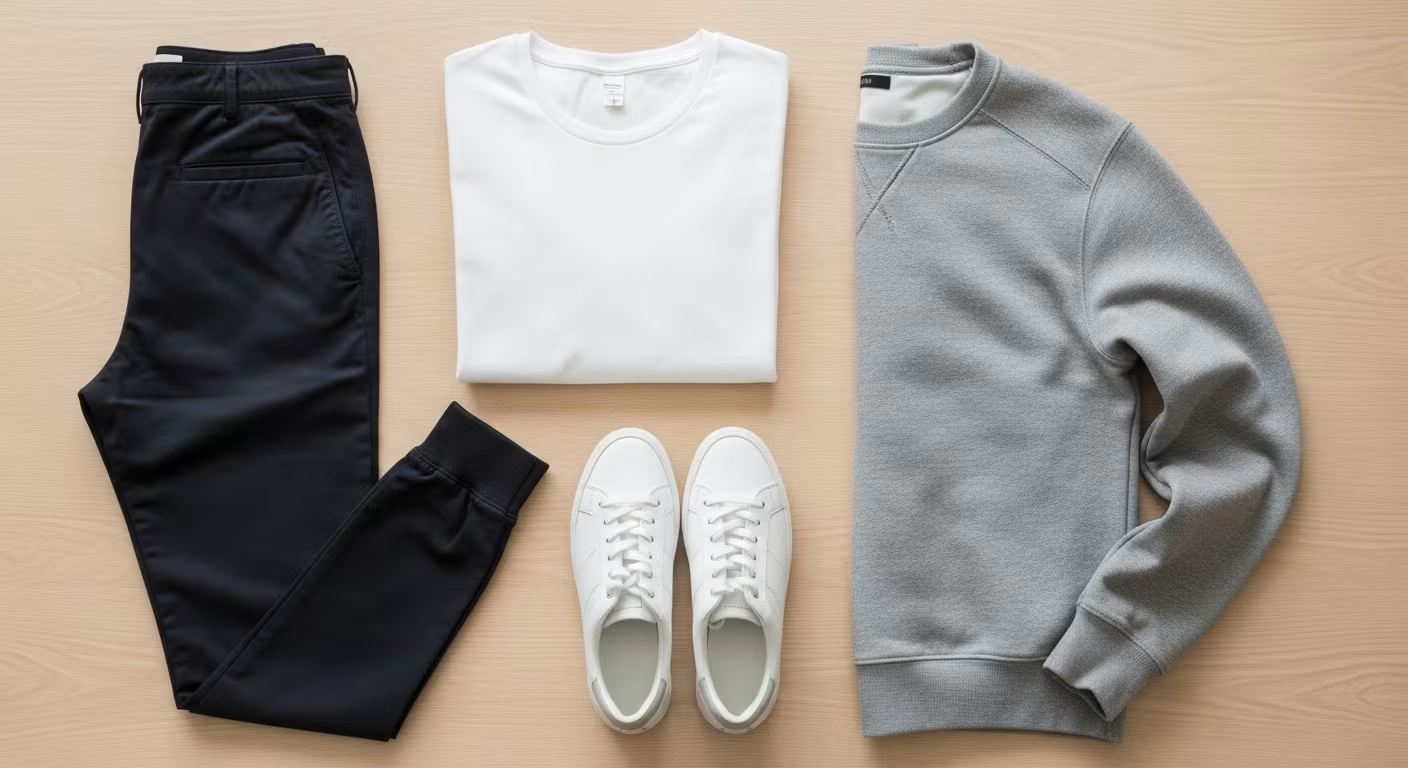
For a five-day week: five distinct outfits. For additional flexibility: pieces that combine across outfits, so that fifteen pieces produce twenty-plus combinations rather than five fixed outfits. The constraint that enables this is color palette discipline — all pieces in the same neutral palette combine easily, multiplying outfit options without multiplying piece count.
The specific pieces depend on the professional context. A formal office context requires different pieces than a creative or casual one. The principle applies regardless: identify the actual requirements, build to those requirements, and stop.
The Role of Fit
Fit is more important than quantity in professional dressing. One well-fitting garment produces a more polished and confident appearance than three ill-fitting ones. Most off-the-rack clothing fits most people imperfectly in some dimension — trousers that are the right length but too wide in the seat, blazers that fit the shoulders but are too long in the body.
Basic tailoring adjustments — hemming trousers, taking in the waist of a blazer — are relatively inexpensive compared to the cost of the garment and produce substantial improvement in how the piece looks when worn. A tailored well-fitting piece from a mid-range brand typically looks more professional than an unfitted piece from a higher-end brand.
Building a minimalist workwear wardrobe is an opportunity to address fit systematically. When the total piece count is low, the cost and effort of fitting each piece well is proportionally smaller and the impact on the overall appearance is proportionally greater.
Workwear Uniforms

A particular version of minimalist workwear is the work uniform — the same combination, or near-identical versions of the same combination, worn every day. This approach is associated with various well-known people who cite it as a way to remove a daily decision that carries no productive return.
A work uniform removes the morning decision entirely and ensures that the appearance is consistent and considered rather than variable. The limitation is social — colleagues notice repetition in a way that a more varied wardrobe does not produce. The appropriate degree of uniform varies by context: a highly visible public role may not suit a strict uniform, while a role primarily involving one's own work rather than client-facing interaction may accommodate it well.
A softer version of the uniform — wearing the same style or structure of outfit each day while varying colors and specific pieces — captures most of the decision-reduction benefit while avoiding the social friction of literal repetition.
Shopping for Workwear Deliberately

A deliberate approach to workwear purchasing starts from a current inventory of what is actually being worn to work. Taking stock of the last three months of working outfits — which pieces appeared most frequently, which have not been worn at all — identifies the actual functioning wardrobe within the larger one.
Purchasing decisions start from gaps in this functioning wardrobe rather than from impulse toward attractive items. If the functioning wardrobe lacks a neutral trouser that works with several existing tops, a neutral trouser is the purchase. If the functioning wardrobe has three white shirts and all are in use, a fourth white shirt is not an obvious need despite being an attractive and familiar item.
The Long-Term Workwear Budget
A smaller, better workwear wardrobe typically costs less in total over several years than a larger wardrobe of cheaper pieces with higher turnover. The calculation is straightforward: fewer pieces needed, each replaced less frequently because each is worn more and of higher quality, versus many pieces needed, each replaced frequently because of wear or the impulse to add more.
The initial transition — building a deliberate workwear wardrobe from a full closet of accumulated clothing — may involve purchasing a few better pieces to replace many cheaper ones. The ongoing cost after the transition is typically lower than the ongoing cost of the previous approach.
The Getting Dressed Decision in Real Time

The cognitive cost of the morning getting-dressed decision is higher than it appears from the outside. The decision involves assessing weather, schedule, physical condition, mood, and the impression one wants to make — then selecting from available options while managing time pressure before the day begins.
A large, incoherent wardrobe makes this decision harder than a small, coherent one. When everything available is appropriate for the context and day's schedule, the decision reduces to preference and mood rather than suitability assessment. This is a much simpler decision. The minutes saved per morning accumulate to meaningful time over a year, and the reduction in decision fatigue at the start of the day has effects on the quality of the first decisions of the workday.
Work From Home and the Workwear Question
Remote work has changed the professional wardrobe question for a large portion of the workforce. The full professional wardrobe built for five days per week in an office may represent substantial overcapacity for someone now in the office two days per week or not at all.
The honest assessment of the current work context — how many days in office, what formality level is genuinely expected, what the actual social visibility of clothing is — produces a much more accurate picture of what a workwear wardrobe needs to contain than any general rule. Many remote workers find that their actual professional wardrobe needs are far smaller than what they maintained during full-time office attendance, and that the clothing maintained for a context that no longer applies represents significant closet space that could otherwise be freed.
A professional wardrobe that accurately reflects current context requires far less maintenance and far less space than one built for a work life that no longer applies.
The work-wardrobe arithmetic:
| Number | Meaning |
|---|---|
| 5 outfits | a complete standard week, decided in advance |
| ~15 palette-matched pieces | 20+ combinations instead of 5 fixed looks |
| The enabler | one neutral palette — everything pairs with everything |
Comments
No comments yet.