


Why Toy Sorting Usually Ends in Tears
Nearly every toy purge that turns into a standoff has the same root cause: it was done to the child instead of with them. Bagging up toys while a four-year-old is at preschool avoids the argument in the moment, but the child notices the gap, feels the loss sharply, and quietly learns that their things can vanish without warning. Sorting in front of the child while making all the decisions yourself lands almost as badly, because children can tell the difference between being consulted and being managed.
The version that produces the least conflict and the longest-lasting result treats the child as a real participant, with age-appropriate authority over their own belongings. It is slower than a parent working alone after bedtime, and it takes more patience. What you get in return is a child who has practiced deciding what they actually use, which is a skill worth far more than a tidier playroom.
Match the Role to the Age
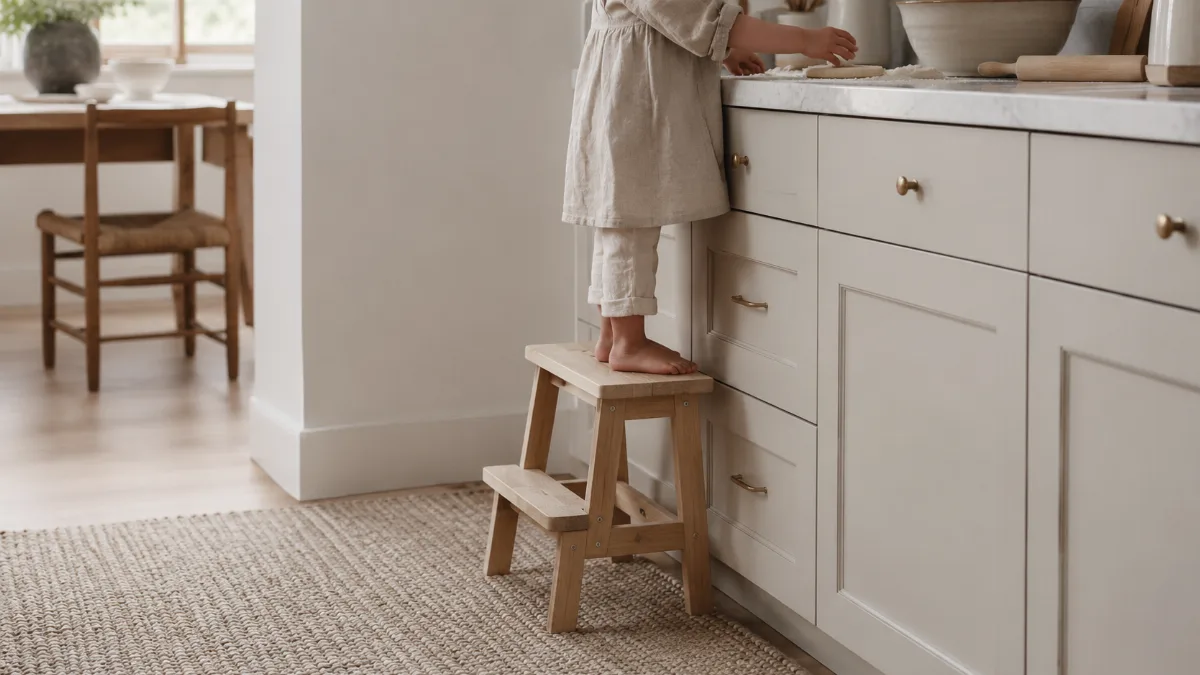
How much a child can meaningfully decide depends on where they are developmentally. A toddler under three cannot yet weigh keep-or-release choices, and does best with a parent quietly removing ignored items a few at a time. The two-year-old who never notices the departure of a toy untouched for months is not missing a chance to practice; the skill simply is not online yet.
From roughly four to seven, children handle concrete yes-or-no questions well: "Do you still play with this?" works far better than "Would you miss this?" A four-year-old cannot reliably answer a hypothetical about their future feelings, but they can tell you whether a toy still feels fun today. By eight and up, children can weigh when they last used something, whether they have outgrown it, and whether another kid might enjoy it more, and they can take part in the donation itself.
| Age range | What the child can decide | How to frame it |
|---|---|---|
| Under 3 | Little to nothing yet | Parent removes ignored items gradually and quietly |
| 4 to 7 | Simple keep-or-release, one item at a time | Present-tense questions: "Do you still play with this?" |
| 8 to 11 | Outgrown vs. current, and who else might use it | Involve them in choosing a donation spot |
| 12 and up | Full sort of their own space with light guidance | Hand over the category; set the container limit together |
Rotation Instead of Full Removal
When a child is attached to more toys than the space can comfortably hold, rotation offers a middle path. Roughly half the toys go into a bin in a closet for a month or two. When they reappear, they feel new, and the set that had been out becomes the stored group. The active number of toys in play drops without anyone having to release anything permanently.
Rotation also does quiet groundwork for later decisions. Items that were never asked about during their weeks in storage are much easier to let go of afterward: the child has already lived without them and found it fine, so the question of donating them stops feeling like a threat.
A practical way to run it is to split the toys into two roughly equal groups, keep one out and the other in a lidded bin somewhere out of sight, and swap them on a loose monthly schedule. When the stored group returns, it draws real enthusiasm precisely because it has been absent, and a five-dollar bin of forgotten toys buys the same novelty a child usually gets from something new on a shelf. Keep the truly loved handful, the security blanket, the one dinosaur that goes everywhere, permanently in rotation rather than storing it; the point is to cycle the wide middle of the collection, not the anchors.
Make Donation Feel Like Giving

The words you use around releasing matter more than the sorting itself. Framing donation as giving toys to children who do not have them, concrete and other-child-centered, turns the release into a generous act rather than a loss. A four-year-old told that their outgrown picture books will go to a kid who will love them is working from a completely different emotional frame than one who only registers that the books are gone.
Closing the loop physically helps the frame stick. When age and temperament allow, dropping the items at the donation site together lets the child see them arrive somewhere real instead of simply disappearing. The next round gets easier because the child now knows where the toys go. This is a habit built across many small experiences, not installed in a single conversation.
Let the Container Set the Limit
The most durable structural fix is a defined boundary by category: one shelf holds all the books, one bin holds all the stuffed animals, and the size of the container defines how many are kept. When something new arrives, the child decides what leaves to make room, rather than the collection creeping upward forever.
This turns the limit into a fact about the space instead of an argument with a parent. The shelf holds what fits; within that, the child has genuine say over what stays. It also teaches something that pays off across adult life: space itself is a resource, and choices have to fit inside it.
When the Child Says No
The hard case is the item a parent thinks should go and the child insists on keeping. The most workable rule is to err toward keeping anything the child feels strongly about, even when it looks unused. Forcing out something the child experiences as a loss buys resistance that makes the next session worse. The clear exceptions are safety hazards, broken items with sharp edges, and things genuinely outgrown with no attachment, which can simply leave.
Items the child claims to love but has not touched in months are a judgment call. Leaving them for a later session, after more conversation, preserves the child's dignity in the process and protects the collaborative relationship that makes every future sort easier. Our guide to involving children in decluttering goes deeper on building that trust over time.
Keeping It From Rebuilding
The usual failure after a good sort is the slow return of the same volume over the following months, mostly through gifts. Sharing your approach with the relatives who give the most, before birthdays and holidays, cuts the unsolicited additions. A short, specific wish list handed to gift-givers produces more items the child will actually use and fewer that have no place to live. It is worth cross-checking against University of Tennessee Extension.
The ongoing system is far lighter than the first sort: donate outgrown items as the child grows, let the storage limit hold the quantity steady, and run a brief seasonal check for what has quietly fallen out of play. Built this way, the second toy purge is smaller than the first, and the third smaller still, because the inflow is finally under control. Our companion piece on getting kids involved from an early age lays out how to make the habit stick across childhood.



Comments
No comments yet.