

A guest room feels welcoming not because it's stocked with everything a visitor might conceivably want, but because the few right things are present, easy to find, and the room itself is restful enough to actually sleep in. Most over-furnished guest rooms manage the opposite: crowded surfaces, drawers full of the household's overflow, a closet half-given to off-season storage. The comfort gets buried under the clutter.
Setting up a minimalist guest room isn't about stripping it to bare walls. It's about removing what the guest didn't come for — the overflow, the decorative excess, the storage that migrated in from other rooms — and making what's left genuinely comfortable.
Clear the overflow first
The most common reason a guest room doesn't feel welcoming is that it moonlights as the household's secondary storage. Off-season clothes, boxes still unpacked from the last move, holiday decorations, the exercise bike nobody rides — all of it drifts into the guest room because it's the space that isn't used daily, which makes it the easiest place to absorb excess.
Before decorating anything, everything that isn't there for the guest has to leave. Off-season storage belongs in a wardrobe with a dedicated section, a building storage unit, or out of the home entirely. A guest room used for storage isn't a guest room; it's storage with a bed in it. Once it's cleared, most guest rooms turn out to be perfectly comfortable already — the bones were fine, the job was mostly subtraction.
The bed is the real investment
Everything else in the room is secondary to how well the guest sleeps. A comfortable mattress, clean bedding in good condition, and enough pillows matter far more than art, decor, or how much furniture fills the corners. For a room that gets irregular use, a medium-firm mattress suits the widest range of sleepers — soft enough for side sleepers, supportive enough for backs. Much of this echoes UConn Extension.
The pillows are worth thinking about specifically: two per sleeper, ideally in different firmnesses, so the guest can build the arrangement that works for them. A spare blanket folded in the wardrobe rather than piled on the bed gives options without adding visual clutter. Bedding in white or neutral tones does real work here — it signals hotel-style freshness, the unspoken message that the sheets were laundered for this arrival rather than left over from the last one.
You don't need a premium mattress for a room used a dozen nights a year. A mid-range foam or hybrid in the two-to-five-hundred-dollar range is entirely adequate, and a well-reviewed mattress topper can rescue an older bed that has gone soft in the middle without the cost of replacing it. What matters more than the price tag is that the bed doesn't sag toward the center and the sheets are genuinely clean; guests notice both immediately and forgive almost everything else.
Concrete specifications matter more here than style. A queen mattress is 60 by 80 inches and fits most spare rooms with 24 inches of clearance on at least one side; a full at 54 by 75 inches works where the room is under 10 feet wide. If the room doubles as an office, a daybed with a trundle keeps the footprint at roughly 39 by 75 inches when closed.
For bedding, two things are worth the money and the rest is not: a mattress protector and a mattress topper. A 2 to 3 inch topper turns a mediocre spare mattress into a comfortable one for a fraction of replacing it. Keep two full sets of sheets per guest bed so a set is always ready while the other is in the wash, and choose a duvet with a washable cover rather than a comforter that needs a commercial machine.
Somewhere to put their things
The frustration guests mention most is having nowhere to set their belongings. Someone arrives with a bag and needs a place for it, a drawer or a stretch of closet rod for what they'll unpack, and a surface for the small daily things — phone charger, watch, glasses.
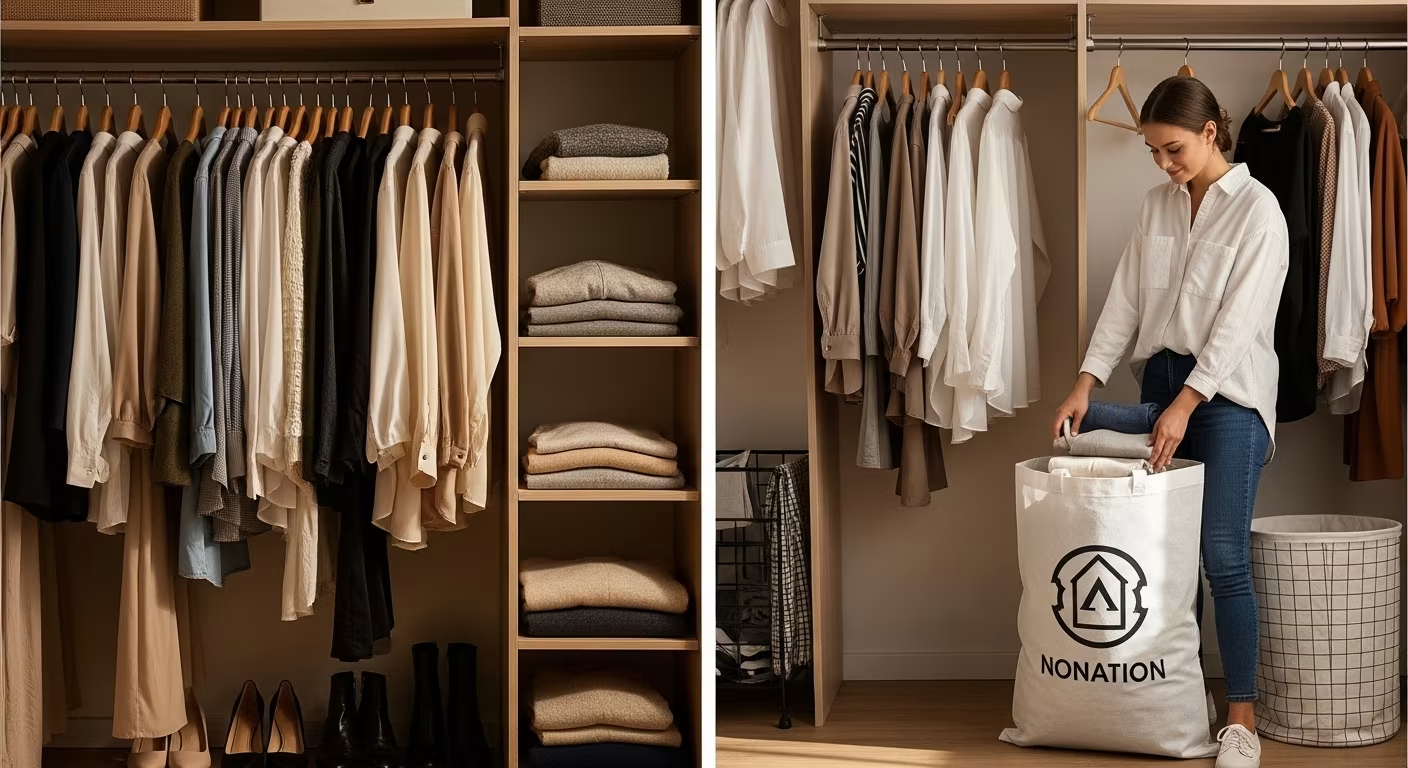
A closet with a cleared section handles the unpacking: not an empty wardrobe, just a few free hangers and a drawer or two. A luggage rack or a clear patch of floor by the closet handles the bag. A bedside table with a genuinely clear top handles the everyday items. The clear-surface approach applies directly to that nightstand: a lamp, a glass of water, and nothing else. The guest fills the rest; the empty surface is the welcome.
Guests need surprisingly little, and it is specific: 4 to 6 empty hangers on a rail or hook, one clear drawer or a 12-inch shelf, a luggage rack or a bench at least 24 inches wide so the suitcase does not live on the floor, and two hooks behind the door. That is the whole list. A wardrobe half full of your own out-of-season clothes reads as "you are in someone else's storage room" no matter how the bed is made.
One more item does more work than its size suggests: a small tray on the nightstand for a phone, glasses and keys. Without it, those things end up on the floor or migrate around the house.
Light, natural and after dark
Natural light makes any room feel more welcoming during the day, but it's the after-dark lighting that decides the experience during the hours the room is most used. Overhead-only light gives a bedroom a clinical, unrestful quality. A bedside lamp — warm-toned bulb, a shade that diffuses rather than spotlights — changes the evening feel of the room more than almost any other single change.
Blackout curtains or a solid blind let guests sleep past sunrise whatever the season, which is one of the most practical hospitality upgrades available for very little money — a set of blackout panels runs twenty to thirty dollars and outlasts a decade of visits. A small detail that punches above its cost: a nightlight or a lamp the guest can reach without getting out of bed, so a two-a.m. trip to an unfamiliar bathroom doesn't mean fumbling along a strange wall in the dark. A guest who can darken the room, find a switch by feel, and turn on a soft lamp is a guest who sleeps well and leaves rested.
What the room doesn't need
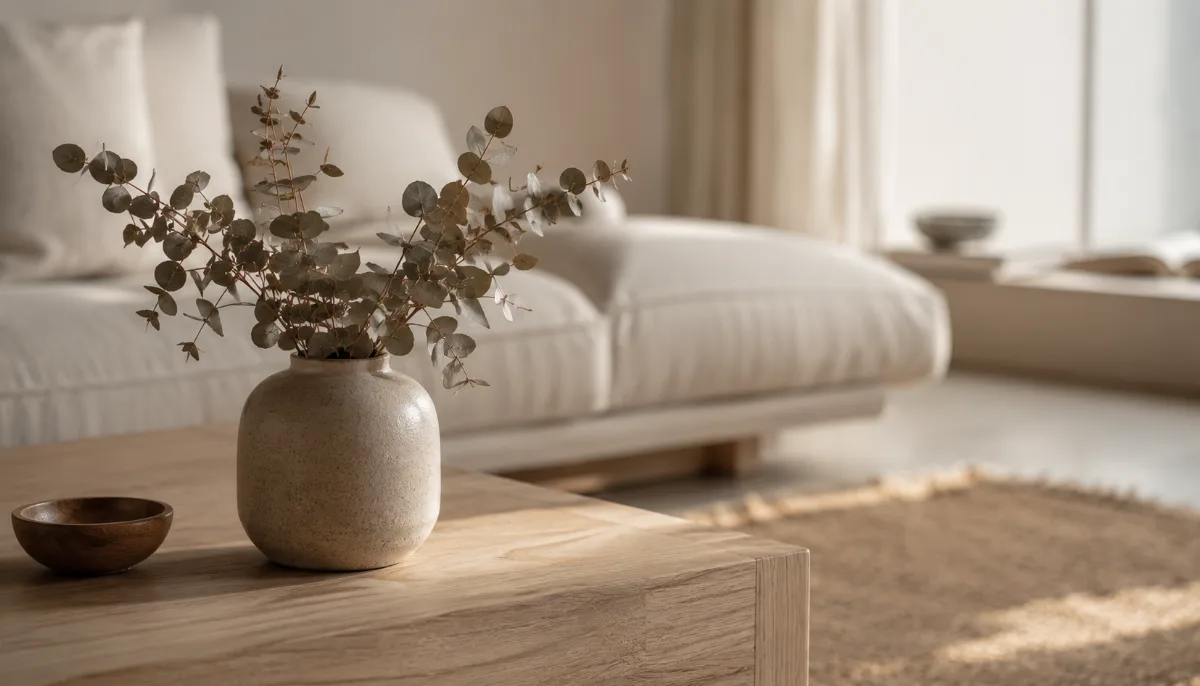
Plenty of standard guest-room additions do nothing for the guest. A full television setup — most people use their own device or don't watch anything in a guest room. Rows of decorative objects on every surface, which add visual noise without benefit. The stack of throw pillows that has to be removed before anyone can sleep. A minibar-style arrangement that eats surface space and rarely gets touched.
A useful test for each item: does this make the guest's stay better, or does it just make the room look more like a guest room to your own eye? Anything in the second group can go. The room that genuinely serves a visitor is almost always simpler than the room performing hospitality for the host's benefit. The decorative pillow arrangement, the framed inspirational quote, the bowl of potpourri on the dresser — these perform the idea of hospitality without doing any of its work, and a guest quietly moving them aside to find somewhere for a phone and a watch is the clearest sign they were never for the guest at all.
Small comforts worth including
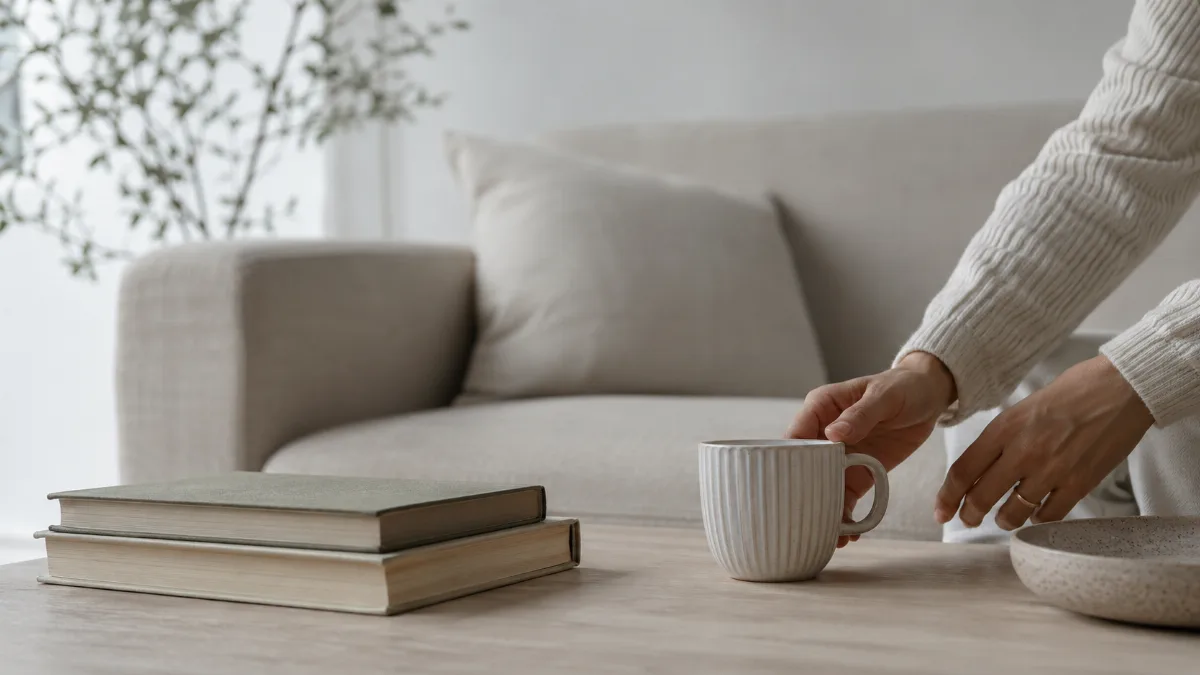
The additions guests actually appreciate take almost no space. A phone charger left in the room, quietly rescuing anyone who forgot theirs. Extra towels somewhere visible and reachable rather than requiring a request. A full-length mirror. A clear path to the bathroom that doesn't mean navigating furniture in the dark. None of these crowd the room, and each removes a small friction.
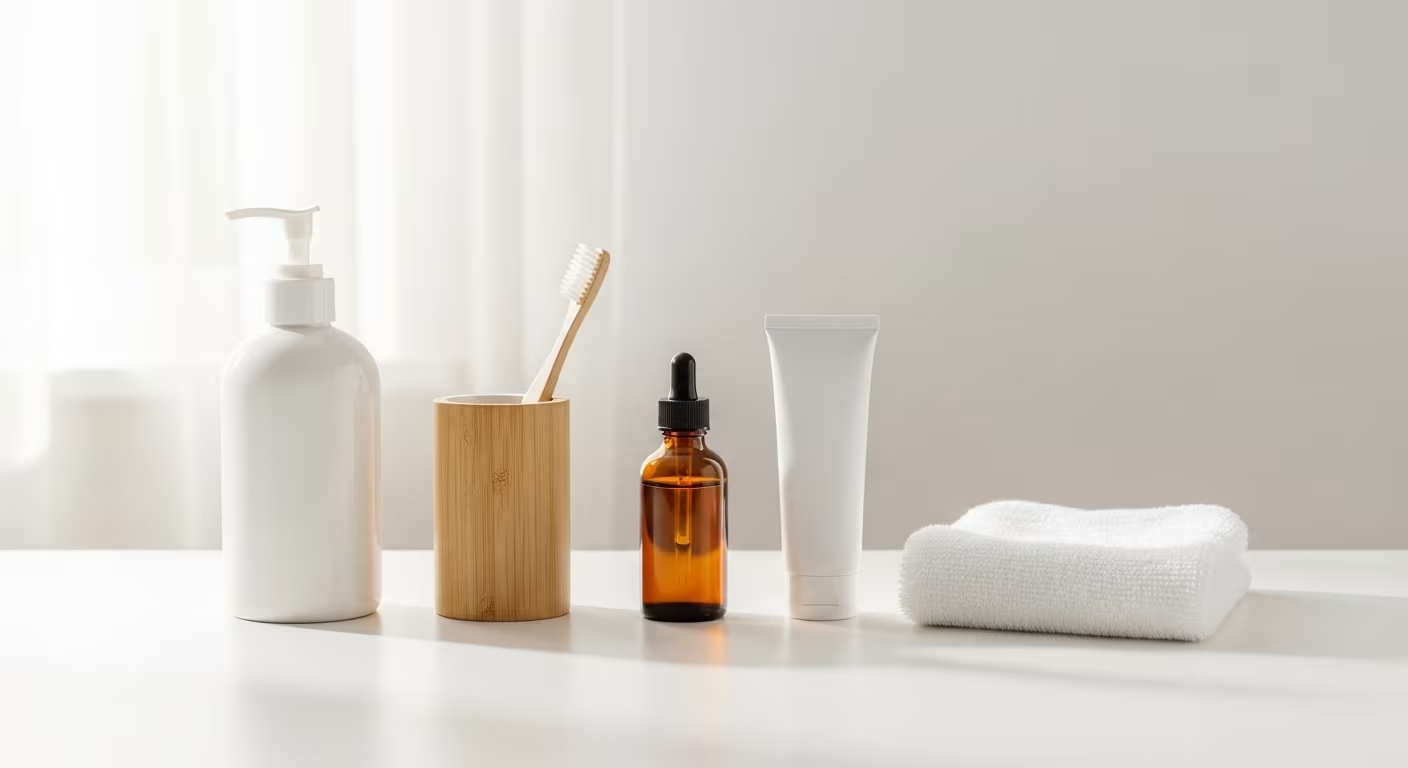
A short card with the wifi password and a few household notes — how the shower works, roughly when breakfast happens, where the towels are — spares the guest the awkwardness of asking and can be written once and reused for every visit. Small as it is, that card tends to be the thing guests remember, because it answers the questions they'd otherwise feel they were imposing by raising. If you host often, a small basket of just-in-case items — a spare toothbrush, travel toothpaste, a phone cable or two of the common types — covers the things people most reliably forget to pack, and it lives in a drawer between visits rather than cluttering a surface.
The list that covers almost every guest, and costs little to assemble: a carafe or bottle of water with a glass, a spare phone charger with both common cable types left plugged in, a folded extra blanket at the foot of the bed, a small mirror, a wastebasket, and a card with the wifi network name and password written out. The wifi card is the single most appreciated item on that list and the one most often forgotten.
For a stay longer than two nights, add a towel set per guest (one bath, one hand, one washcloth) placed on the bed rather than in a cupboard they would have to ask about.
Temperature and air
Two comfort factors are easy to overlook and quietly decisive: temperature and ventilation. A room that runs too warm produces poor sleep even on an excellent mattress. A room the guest can't adjust — no window that opens, no fan, no reach to the thermostat — leaves them worse off than the furniture would suggest, and unlikely to say anything about it.
A small fan left available but not forced on them, and a window that opens independently of the rest of the house, go a long way. A one-line note on how to adjust the temperature removes the guest's uncertainty about whether they're even allowed to. The guest room that sleeps well — right temperature, controllable light, comfortable mattress, manageable noise — is the one visitors mention when they thank you, because a good night's sleep in someone else's home is rarer than it should be, and more appreciated than any amount of decorative effort.
Guest room dimensions:
| Element | Number | Note |
|---|---|---|
| Queen mattress | 60×80 in + 24 in clearance one side | fits most spare rooms |
| Office-double daybed | ~39×75 in closed (trundle) | — |
| Mattress rescue | 2–3 in topper | fraction of replacement cost |
| What guests need | 4–6 empty hangers + one clear drawer | specific, small |

Comments
No comments yet.