
The KonMari Method vs the Minimalist Method Which Works Better

Remember that feeling when you couldn't find your keys because they were buried under a mountain of baby toys, school papers, and that damn half-finished craft project? Yeah, me too. It used to be my everyday reality. I'd stand in the middle of a room, just staring at all the stuff, feeling totally overwhelmed.

It felt like my house was actively fighting against my brain. And my sanity? Barely clinging on.

Today, we're gonna talk about two big names in the decluttering world: KonMari and plain old minimalism. Everyone talks about them like they’re the only two options, right? But which one's actually going to save your sanity when you're already running on fumes?

Let's figure it out together. I'll share what I've learned, what worked for me, and what honestly just made me want to hide in the pantry with a bag of chips.

Why This Actually Matters

Okay, look. This isn't just about pretty shelves or a clean countertop. It's about your precious time, your mental load, and honestly, your ability to just breathe in your own home. Before I started tackling our clutter, I used to spend three hours every Saturday just moving stuff around.

Not even cleaning it, just relocating it from one overflowing spot to another. That’s three hours I could have been at the park with my kids, or honestly, just napping on the couch. Think about that. Three hours. Every. Damn. Week.

All that stuff wasn't just physical clutter. It was mental weight. Every time I saw a pile, it was another tiny reminder of something I "should" do, another thing I was failing at. It sucked up my energy, my joy, and made me feel constantly behind.

Getting a handle on our belongings, whether through KonMari or minimalism, fundamentally changed how I felt about my home. It became a place to recharge, not just another chore list. It really is that big of a deal.

The Basics: Two Paths to Less Stuff

When you hear "decluttering," usually these two pop up. But they're not interchangeable. They're actually pretty different in their approach, even though they both aim for a less cluttered life.

Let's break down what each one actually means, without all the guru jargon. You don't need another philosophy degree to figure out how to fold laundry.

The KonMari Method: The Joy Sparker

Alright, let's start with Marie Kondo. Her book, The Life-Changing Magic of Tidying Up, basically started a global movement. You probably know the main gist: if it doesn't "spark joy," you get rid of it. But it's more than just that.

It's a very specific, almost ritualistic process designed to be done all at once. Like a big, intense purge.

Here’s the rundown of KonMari’s core ideas:

  • Tidy by Category, Not Location: This is huge. Instead of tackling one room, you gather all of your clothes from everywhere in the house. Then you do all your books, then all your papers, and so on. It’s meant to show you just how much you actually own.
  • Follow a Specific Order: You start with clothes, then books, then papers, then "komono" (miscellany like kitchen stuff, tools, toys), and finally, sentimental items. The idea is that you build your "sparking joy" muscle on the easier categories before tackling the hard stuff.
  • The "Spark Joy" Test: This is the famous part. You pick up each item, hold it, and ask yourself, "Does this spark joy?" If it does, you keep it. If not, you thank it for its service (yes, really!) and let it go. It's a very intuitive, feeling-based decision.
  • Everything Has a Home: Once you decide what to keep, every single item needs a designated spot. And once it's in its spot, you put it back there every time. No more random piles.
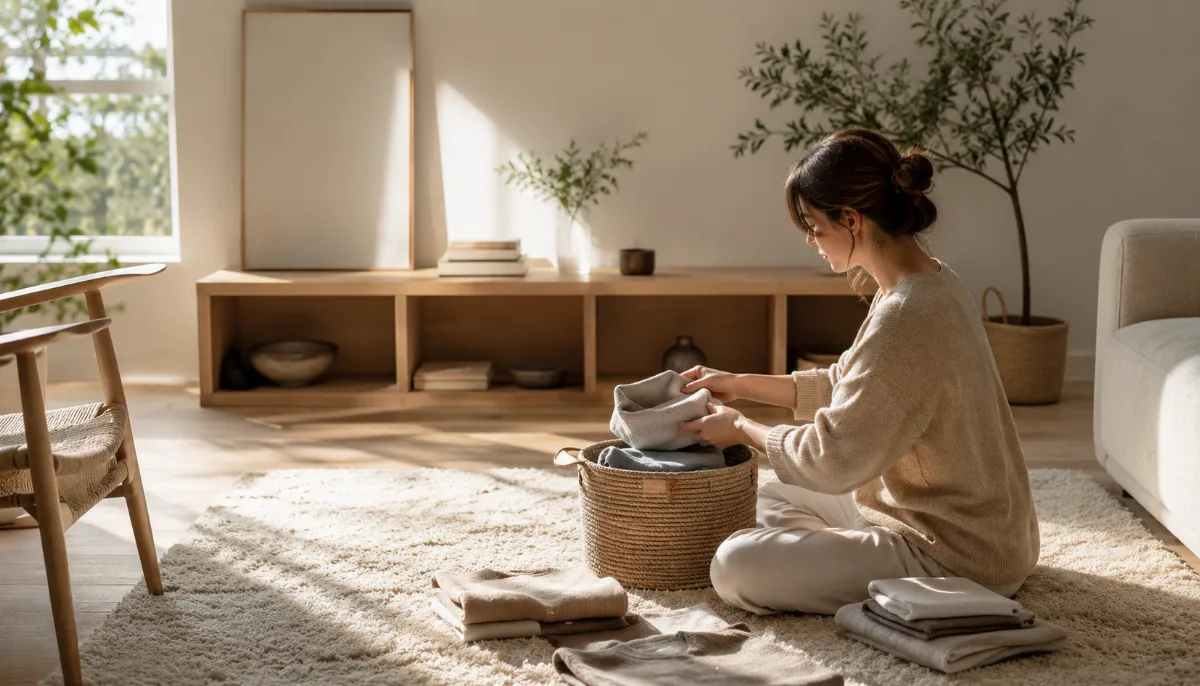
  • The KonMari Fold: This isn't strictly necessary for the philosophy, but it’s a big part of the practice. Her method of folding clothes vertically in drawers is designed to maximize space and make everything visible. It’s pretty brilliant for certain things, but also kinda time-consuming.

When I first heard about KonMari, I thought, "Thanking my socks? Girl, I barely have time to find matching ones." But there's a real method to her madness. It's about developing a relationship with your belongings and being really intentional.

It’s meant to be a one-time, big event that completely resets your relationship with stuff. Like ripping off a band-aid.

The Minimalist Method: The Intentional Life

Then there's minimalism. This isn't one person's method, it's more of a philosophy. It's about living with less intentionally. The core idea is that less stuff means more time, more money, more energy, and more freedom for what truly matters to you.

It's not about emptying your house and living like a monk. It's about getting rid of the excess to make space for what you value.

Here are the key tenets of a minimalist approach:

  • Less is More: This is the mantra. It’s about recognizing that owning too much can actually detract from your life, not add to it. You question every item's purpose.
  • Intentional Living: Minimalism encourages you to be very deliberate about what you bring into your life. You're not just decluttering old stuff, you're preventing new clutter from entering. This often extends beyond physical items to time, commitments, and digital clutter.
  • Values-Based Decisions: Instead of "sparking joy," the question often becomes, "Does this item serve my values?" If your value is spending more time with family, does this item help or hinder that? If it's financial freedom, does this item support that goal?
  • Function Over Form (Usually): While aesthetics can still be important, the primary focus is often on the utility and purpose of an item. Is it useful? Do I need it? Does it simplify my life?
  • No Strict Rules or Order: Unlike KonMari, there's no set method for minimalism. You can start anywhere. A drawer, a closet, a category. It's more of an ongoing process, a way of living, rather than a single event.
  • Not About Deprivation: A common misconception is that minimalists can't own anything nice or have hobbies. Not true! It's about having just enough for a rich, fulfilling life, rather than being burdened by excess.

For me, minimalism started with the absolute chaos of baby number one. We had so much gear, so many clothes, so many things people said we needed. It was overwhelming.

Minimalism offered a way out of that feeling, a way to reclaim our space and time, without having to thank a stained onesie. It's more about continually curating your life.

How To Actually Do It: What Works for a Tired Mom

Okay, so you get the theory. But how do you actually apply this when you're knee-deep in toddler tantrums and school permission slips? This is where the rubber meets the road. Both methods offer powerful tools, but they feel very different in practice.

I’ve tried both, sometimes in desperate combination, and I’ve learned a few things about what’s actually sustainable when you’re not a celebrity with a full-time assistant.

Step 1: The Starting Point – Mindset & Prep

This is where the approaches really diverge.

If you’re doing KonMari, you commit. You set aside a big chunk of time – maybe a weekend, maybe a few weeks. You mentally prepare for a huge overhaul. You visualize your ideal home. Then, you gather all your clothes into one giant pile. I’m talking every sock, every bra, every t-shirt from every closet, drawer, and laundry basket. It’s supposed to be shocking. And honestly, it is. When I did this with my clothes, I almost wept at the sheer volume.

With minimalism, the starting point is often less dramatic. It’s more about identifying your why. Why do you want less stuff? What do you want more of? More time? More money? Less stress? You might start by picking just one small area that's driving you nuts – maybe the junk drawer, or the medicine cabinet. There's no big pile, no grand visualization. Just a gentle intention.

My take? If you have the energy for a big reset, KonMari's initial commitment can be really powerful. But if you’re already exhausted, minimalism’s "start small" approach feels a lot less intimidating. I chose small. I had to.

Step 2: The Physical Decluttering – Asking the Hard Questions

This is the core action for both.

With KonMari, you pick up each item from your massive category pile. You hold it. You feel it. You ask, "Does this spark joy?" It's a gut feeling. If it's not a clear "yes," it's a "no." Then you thank the item and put it in the discard pile. It forces you to connect emotionally with your belongings. It can be surprisingly draining, especially when you have to make 200 "joy" decisions for your kids' clothes.

With minimalism, the questions are usually more practical. "Do I use this regularly?" "Does this add value to my life?" "Do I have a duplicate I don't need?" "Is this item serving my current goals?" It's less about emotion and more about utility and purpose. You might set a specific number, like "I only need 5 pairs of jeans." Or, "I only want one mixing bowl."

I found KonMari's "spark joy" really hard with baby stuff. Did that burp cloth spark joy? Hell no, it sparked memories of spit-up. But was it useful? Absolutely. Minimalism's practicality often makes more sense for the utilitarian items of family life.

Step 3: What to Do With the "Keep" Pile – Storage and System

You've decided what to keep. Now what?

KonMari is big on meticulous organization. Everything has a home. Clothes are folded into perfect little rectangles and stored vertically in drawers so you can see everything at a glance. Pantry items are decanted into matching containers. This isn't just about tidiness; it’s about respecting your belongings and making it easy to put things away. It looks beautiful in photos, I won't lie.

Minimalism is generally more flexible. The goal is easy access and ease of maintenance. So, you might still use bins or drawer dividers, but the folding might be less precise. You want systems that work for your family, even if they aren’t picture-perfect. The focus is on reducing the amount of stuff first, so that whatever you do keep is easier to manage.

Honestly, KonMari folding is amazing for adult t-shirts and jeans. For toddler socks? Forget about it. I need "shove it in the drawer quickly" kind of organization. Minimalism wins here for practicality in a busy household.

Step 4: Dealing with Sentimental Items – The Emotional Minefield

This is always the toughest category. For everyone.

KonMari tackles sentimental items last. By this point, you've practiced your "spark joy" muscles on easier categories. The idea is that you're better equipped to make these emotional decisions. You still hold each item, you still ask if it sparks joy, and you still thank it if you let it go. It's a very intentional farewell.

Minimalism doesn't have a specific "sentimental category" in its process. You just encounter these items as you go. For minimalists, it often comes down to choosing a select few items that truly represent a memory or person, rather than keeping every single thing. A common strategy is the "memory box" – one designated container for all your most cherished items. If it doesn't fit, you have to curate.

My kid’s first painting? His hospital bracelet? These items are damn hard to get rid of. The KonMari approach of addressing them last can be helpful because you’ve built momentum. But the minimalist approach of setting a boundary (like "one box only") is also incredibly useful to prevent sentimental clutter from growing endlessly. I have my "memory box," and anything new has to displace something old. It's tough, but it works.

Step 5: The "No Going Back" Rule – Preventing Future Clutter

This is crucial for both methods if you want the effects to last.

For KonMari, the expectation is that once you’ve done the big reset, you rarely need to declutter again. Your "joy" filter should be so finely tuned that you only bring items into your home that genuinely belong. You're supposed to be so clear on what you need and love that you stop acquiring excess.

For minimalism, it's an ongoing practice of intentional consumption. You adopt a "one in, one out" rule, or you just pause before every purchase and ask, "Do I really need this? Does it align with my values?" It's a constant vetting process, a lifestyle choice.

I think KonMari's promise of "never decluttering again" is a bit optimistic for families. Kids grow, needs change, new things come in. Minimalism’s continuous, mindful approach feels more realistic for preventing future clutter in the long run. There will always be some stuff coming in, so you need a system to manage it.

Step 6: Involving the Family – A Unified Front (or Not)

This is where things can get tricky.

KonMari is primarily focused on the individual. Marie Kondo encourages you to lead by example and only tidy your own belongings. You don't declutter other people's stuff. So, while you can teach your kids the "spark joy" concept for their things, the initial big purge is often done solo. This can be great if your partner isn't on board, but it also means their clutter is still there.

Minimalism can be more of a family philosophy. It's about creating a shared environment that serves everyone's values. You can have family discussions about what's important, what everyone needs, and how to manage shared spaces. It allows for more collaboration and negotiation, which is necessary when everyone has stuff.

Getting my husband on board was a challenge, regardless of method. I started with my own stuff, and then, as he saw the benefits (less nagging from me, more clear surfaces), he slowly came around. For kids, toy rotation is a great minimalist strategy. KonMari works for their clothes, but "sparking joy" with a 5-year-old and 47 broken plastic toys is a whole different ballgame.

Step 7: Maintaining the System – Life Happens

No system is set-and-forget, especially with kids.

KonMari suggests that because everything has a home, and you've decluttered so thoroughly, maintenance is easy. You simply put things back where they belong. The intensive reset makes it easy to keep things tidy.

Minimalism acknowledges that life is messy. You're going to have seasons where clutter creeps back in. The maintenance is about checking in regularly, doing mini-declutters, and continually reassessing your needs. It's about building habits rather than relying on one big event.

I think maintenance is the real challenge for both. For KonMari, if you fall off the wagon even a little, it can feel like a huge failure. For minimalism, it’s more forgiving. It’s okay if things get a little out of hand, you just reset and keep going. That feels much more achievable to me.

Making It Stick / Common Mistakes

Okay, so you've done the work, you've decluttered. How do you keep it from all piling back up? And what are the sneaky traps that can trip you up? Trust me, I've fallen into every single one. My biggest mistake was trying to be perfect.

The "Reversion" Trap

Whether you go KonMari or minimalist, the biggest threat is reversion. Life happens. New toys come in for birthdays. School papers multiply like rabbits. Before you know it, those clear surfaces start getting cloudy again.

For KonMari, the intense nature of the initial purge means if you don't stick to the "everything has a home" rule, it can feel like the whole thing fell apart. For minimalism, if you're not constantly mindful of what comes in, the clutter just slowly creeps back. You have to stay vigilant.

The "What If I Need It Later?" Dilemma

This is a killer for everyone. That ugly sweater your aunt gave you, that kitchen gadget you used once, those baby clothes your second kid might wear. The fear of needing something later can paralyze your decluttering efforts.

KonMari's "spark joy" helps you push past this by focusing on current feelings. Minimalism encourages a more practical "replace if needed" mindset. Honestly, how often do you truly regret getting rid of something? Probably less often than you think. And if you do, can you borrow it? Buy it used?

Perfectionism is the Enemy

Oh, how I hated this trap. I thought my house had to look like a Pinterest board, otherwise I was failing. This is especially true with KonMari's beautiful imagery. But striving for perfection is exhausting and unsustainable.

A truly minimalist home might look sparse to some, and that's okay. A KonMari home might feel too rigid for a family with young kids. The goal isn't an empty house or a showroom. It's a house that serves your life, not the other way around. It's a living, breathing space.

"The goal isn't an empty house. It's a house that serves your life, not the other way around."

Ignoring the "Why"

If you declutter just because everyone else is doing it, or because you think you "should," it won't stick. You have to connect it to your personal values and goals. What do you want more of in your life? More time with family? Less stress? Financial freedom?

Keep that "why" in mind. It's your fuel for getting through the tough decisions and for maintaining your progress. For me, it was wanting more time to actually play with my kids, instead of picking up after them.

Trying to Declutter Others' Stuff

This is a huge no-no, for both methods. You can’t force anyone else to declutter. It only creates resentment. Lead by example. Start with your own things. Show them the benefits. Eventually, your partner or kids might get curious and want to try. Or not, and that’s okay too. Just manage your own space.

It’s a tough lesson to learn, especially when your husband’s "collection" of obsolete tech gadgets makes your eye twitch. But it's vital for keeping the peace.

Frequently Asked Questions

I get asked these questions all the time, usually when a fellow mom is looking at her overflowing toy basket with a desperate look in her eye. So, let’s tackle them head-on.

Which method is better for busy moms?
Okay, for busy moms, I lean towards a minimalist approach, especially if you’re just starting out or short on time. KonMari is amazing for a complete reset, but it requires a lot of dedicated energy upfront that many moms just don't have.

Minimalism allows you to start small, chip away at it, and integrate it into your everyday life. You can focus on one drawer, one shelf, one category, and build momentum without feeling like you have to sacrifice an entire weekend. It's more forgiving.

Can I combine KonMari and minimalist principles?
Absolutely, and I'd argue this is often the best approach for real life! I've totally done it. You could use the KonMari "spark joy" test for your clothes category for that big initial purge. But then, for your kitchen gadgets, you might adopt a more minimalist, practical "do I use this weekly?" approach.

The beautiful folding? Maybe for your own closet. But your kid's drawer? Just get the clean clothes in there, damn it. Taking the best from both methods gives you the most flexible, sustainable system.

What about kid’s toys? Do they "spark joy"?
Oh, kid toys are a beast. Trying to get a toddler to understand "spark joy" is, frankly, hilarious. For toys, I find minimalist principles and toy rotation work best. Declutter regularly with your kids, asking "Do you play with this?" or "Is this broken?"

Then, rotate toys every few weeks. Put most of them away, keep a small selection out. It keeps playtime fresh, reduces visual clutter, and helps kids actually play with their toys instead of being overwhelmed. It’s pure magic.

How long does this take to see results?
With KonMari, you can see dramatic results pretty quickly because it's so intensive. You might clear out entire categories in a weekend. For a whole house, it could take weeks or months of dedicated effort, but the transformation is obvious.

With minimalism, results are more gradual. You might notice your junk drawer is finally manageable after an hour. Over a few months, you'll start to feel a general lightness in your home. The biggest result isn't always visible, it's the mental space you gain. So, it varies wildly.

Is it worth the effort when things just get messy again?
One hundred percent yes. Even if things get messy again (and they will, you have kids!), the foundational work changes everything. You have less stuff, so even a mess is smaller, easier to clean, and less overwhelming.

Plus, you’ve built habits and changed your mindset. You'll bounce back faster. It's like working out: you don't stop just because you'll eventually lose definition. You do it for the ongoing benefits. Your home becomes a tool for your life, not a source of stress.

The Bottom Line

So, KonMari or minimalism? Which one works better? Honestly, for a tired mom juggling a million things, neither one is a perfect, one-size-fits-all solution. They both have their strengths and their challenges.

KonMari is incredible for a big, decisive overhaul. If you have a weekend (or a few days) and the energy to commit, it can fundamentally reset your relationship with your belongings and give you a fresh start. It’s like hitting the reset button on your entire house.

Minimalism, on the other hand, is a lifestyle. It’s a sustainable, ongoing way to live with less, focusing on what truly serves your life and values. It’s more flexible, more adaptable, and easier to integrate into the daily chaos of family life. It’s like a daily dose of sanity.

My advice? Don't pick one. Take what you need from both. Use KonMari's intensity for categories that are truly overwhelming, like your closet. Then, embrace minimalism's practical, intentional mindset for everything else, and for keeping new clutter at bay.

You don't need a perfectly decluttered house. You need a house that helps you live your life, that supports your family, and that doesn't add to your mental load. Find what works for you. Start small. Pick one drawer. You got this. 👋