


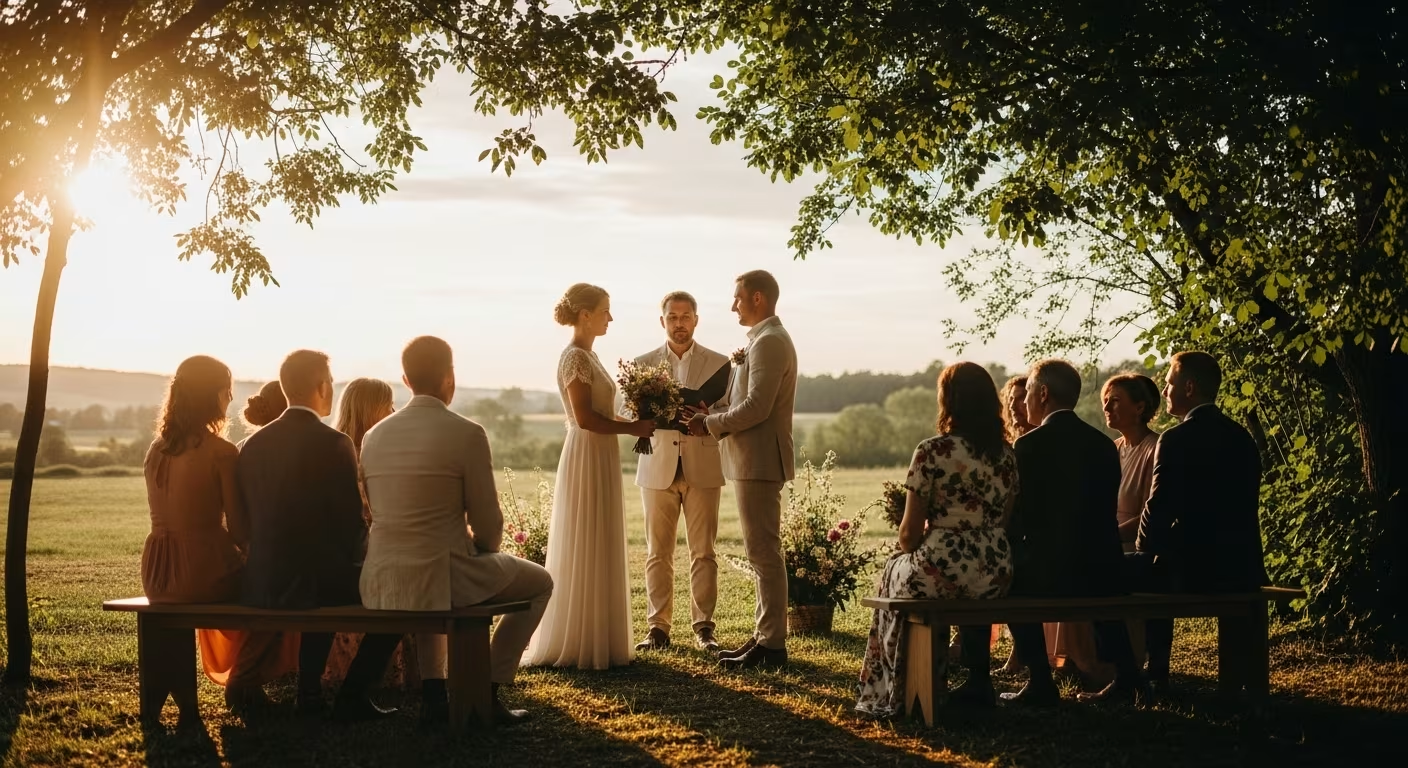
The average American wedding costs over thirty thousand dollars, according to wedding industry surveys — a figure that represents roughly a third of the median annual household income spent on a single day. The commercial wedding industry has a considerable interest in framing this as normal and necessary. The evidence that spending at this level produces a better wedding is thin. What makes a wedding genuinely good is available at a fraction of the cost.
What Actually Drives Wedding Costs Up
Wedding costs are primarily driven by three factors: the number of guests, the venue, and the catering. These three categories account for the majority of most wedding budgets. Everything else — flowers, photography, music, attire, cake — is secondary in cost and in impact on the day's quality.
The guest list is the primary lever. Every additional guest adds cost to catering, seating, invitations, favors, and venue capacity requirements. A wedding with sixty guests costs roughly half what a wedding with one hundred and twenty guests costs, in a relationship that's nearly linear. The decision about guest count is the most consequential budget decision a couple makes.
Venue choice has a similarly outsized impact. Venues with in-house catering or preferred vendor requirements lock couples into pricing they can't negotiate around. Venues without these requirements — friends' properties, parks with permit requirements, community spaces, family farms — allow the couple to bring in their own catering, which can reduce food costs significantly.
Where Cuts Produce Better Results

Some wedding expenses directly improve the day's quality. Others are driven by convention without corresponding impact on experience. Identifying the difference is the work of wedding planning that most planning guides don't emphasize.
Photography is the one wedding expense that most couples report being glad they prioritized. The day is over in twelve hours; the photographs persist. A skilled photographer who understands documentary-style work produces images that genuinely reflect the day. This is worth investing in.
Flowers, on the other hand, are expensive, time-sensitive, and attended to primarily by the people arranging them rather than by the guests. Seasonal, locally sourced flowers are a fraction of the cost of out-of-season imported arrangements and look equally beautiful in photographs. Wildflowers in mason jars cost almost nothing and read as deliberately chosen.
The Guest List as the Central Decision
The guest list decision is uncomfortable because it requires choosing which relationships to prioritize and which to omit. Most couples find this conversation genuinely difficult. It is also the most important conversation in wedding planning, because it determines the majority of what the wedding costs and significantly affects the quality of the day.
A smaller wedding allows the couple to spend genuine time with every person present. A large wedding means the couple spends the entire reception moving between tables without extended time with any individual guest. The intimacy of a smaller gathering typically produces a better experience for both the couple and the guests.
The decision to invite parents' professional contacts, distant relatives, or family friends the couple barely knows often comes from social pressure rather than genuine desire to include these people. Naming the pressure explicitly — "we feel obligated to invite X" rather than "we want X at our wedding" — makes the decision clearer.
Attire Worth What It Costs

Wedding attire is subject to the same cost escalation as everything else in the wedding market. A dress sold as a wedding dress costs significantly more than a white or ivory dress sold as a formal dress, regardless of the garment's construction or materials. The same principle applies to suits and other attire.
Specific alternatives worth investigating: sample sales at bridal boutiques, which carry designer gowns at substantial discounts; vintage or secondhand bridal attire; formal dresses sold outside the wedding category; and rental options for suits and accessories. The garment worn on the wedding day is remembered in photographs rather than in receipts.
Creating Meaningful Moments on a Budget
The wedding moments most consistently reported as meaningful in retrospective accounts are not the expensive ones: they're the vows, the first dance, the dinner speeches, the specific photographs, and the moments of genuine connection with specific people. None of these require a specific level of spending to produce.
Personalizing the ceremony — writing vows, choosing readings that mean something specific, including something particular to the relationship — produces more emotional resonance than a generic ceremony performed with expensive flowers. The couple's voice in the ceremony costs nothing.
The Honeymoon vs. the Wedding

Many couples who spent significantly more than they planned on their wedding report, in retrospect, wishing they'd allocated more money to the honeymoon and less to the wedding day itself. The wedding is twelve hours; the honeymoon is the beginning of the marriage. A wedding that came in under budget by thoughtful cutting leaves resources for travel that can be genuinely restorative rather than deferred until finances recover from the wedding.
The Photography Decision
Photography is the one wedding expense that most couples report wishing they'd invested more in rather than less, in retrospect. The day is experienced once; the photographs are the artifact that persists. A skilled wedding photographer who shoots documentary-style — capturing what actually happened rather than staging what looks good — produces images that reflect the day as it was.
The price range for wedding photography is wide. Photographers early in their careers often charge significantly less than established photographers while producing technically competent work. Photography students at the advanced level, or photographers who primarily shoot other types of events and want wedding portfolio work, can produce excellent results at lower cost than dedicated wedding photographers.
What to look for: a portfolio that includes natural-light indoor work, candid moments, and genuine emotion. What to look past: posed couples at landmarks — those are the images photographers use to market, not necessarily the images that will matter to you in ten years.
The Ceremony vs. the Reception

Most couples spend more money and attention on the reception than the ceremony. In retrospect, many report that this allocation was reversed from what they would have preferred. The ceremony — the vows, the exchange, the specific moment — is the reason everyone came. The reception is the celebration of what happened in the ceremony.
A ceremony with meaningful, personally written vows; a setting that means something to the couple or simply has good light; and the people who matter most present for it costs almost nothing to produce. The words spoken matter more than the flowers arranged around the speaking.
The reception doesn't need to match the ceremony's intimacy or significance. A casual dinner, a backyard gathering, or a restaurant buyout can serve the function of celebratory gathering without requiring the full production of a traditional wedding reception.
Giving Yourself Time to Enjoy the Day
The couples who report the most positive memories of their wedding days are consistently those who had enough time to be present rather than managing logistics throughout. A wedding that runs on a tight schedule, with vendors to coordinate and a program to execute, produces a couple managing an event rather than experiencing a celebration.
Building slack into the schedule — longer windows between events, fewer mandatory transitions, time for the couple to be alone together for fifteen minutes mid-day — produces a wedding experience that the couple actually inhabits rather than supervises from the outside.



Comments