

What Cycling Actually Requires
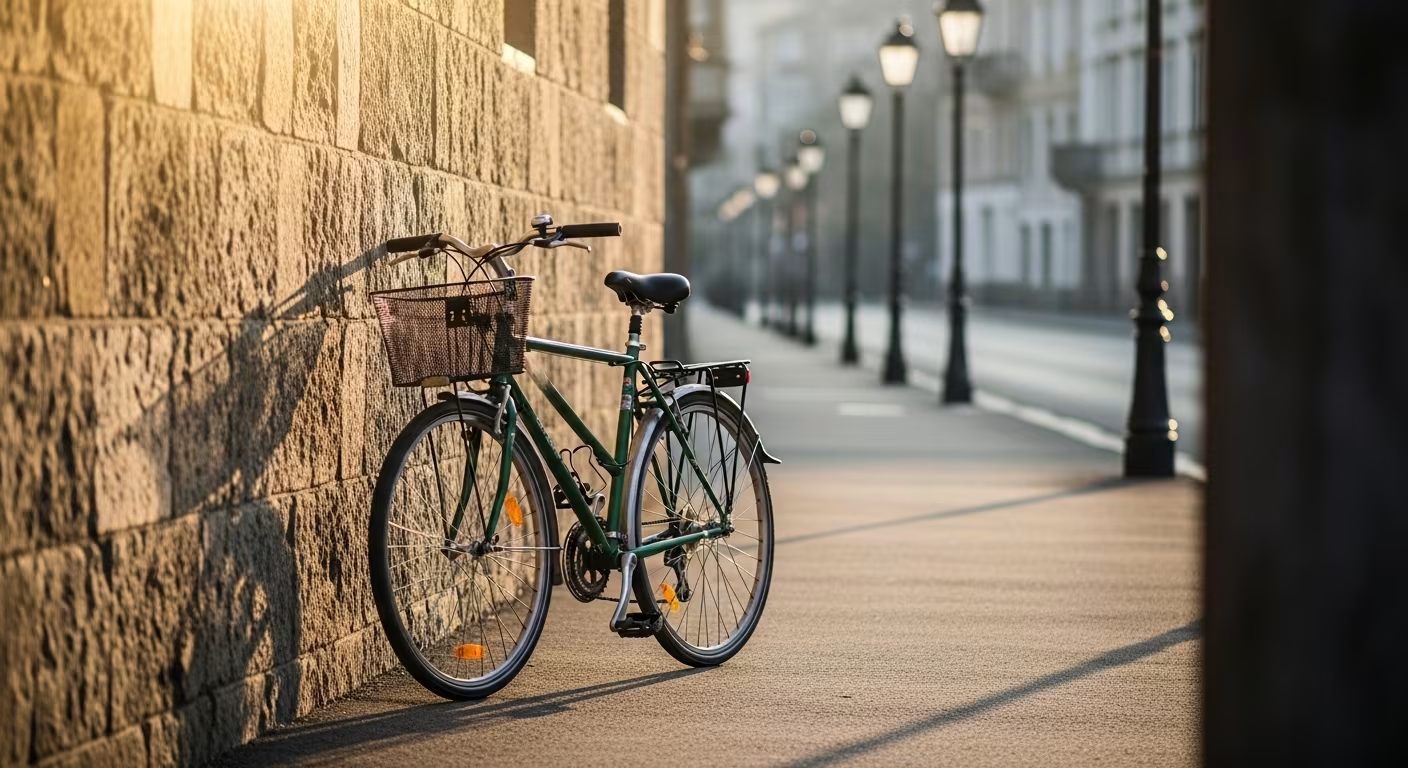
Cycling culture emphasizes equipment to a degree that obscures what the activity actually needs. A bicycle in sound mechanical condition, clothing appropriate for the temperature, a helmet, and a route — these four things cover the requirement for health-producing cycling. Nothing else is necessary to begin accumulating the cardiovascular, metabolic, and musculoskeletal benefits that cycling produces reliably and consistently.
Performance cycling, sportive participation, competitive racing, and long-distance touring add equipment requirements progressively. But cycling for health — twenty to sixty minutes of moderate effort on a regular schedule — has minimal material requirements. A commuter bike, a hybrid, a mountain bike used on road, or an older road bike in good mechanical condition all accomplish the same physiological result.
The gap between what cycling requires and what the sport's retail culture presents as necessary is large. Most of the equipment that fills this gap — specialist clothing, performance components, cycling computers — affects performance at competitive levels and adds marginal benefit, if any, to training for health.
The Mechanical Condition Question

A bicycle in good mechanical condition is non-negotiable. Worn brake pads reduce stopping distance. A loose headset makes steering imprecise. A stretched chain accelerates wear on the cassette and chainrings. A punctured tire that is ridden on damages the rim. These are safety and reliability issues, not performance ones.
Basic maintenance keeps a bike functional with minimal time and money. Cleaning and lubricating the chain regularly is the highest-impact maintenance task on any bicycle. Checking brake pad wear and cable tension periodically prevents the gradual degradation of stopping power that happens unnoticed until it becomes a problem. Checking tire pressure before rides prevents rolling resistance that wastes effort and punctures that interrupt them.
Learning to fix a puncture and adjust brake and derailleur cables covers ninety percent of on-road mechanical situations. These skills take a few hours to acquire from video instruction and a basic tool kit. A multi-tool, a spare inner tube, tire levers, and a pump or CO2 inflator represent the minimum roadside repair kit. Everything beyond this is for mechanical failures that rarely occur.
Choosing Routes for Training

Routes determine the training effect cycling produces. Flat routes at steady pace build aerobic base and are appropriate for longer, lower-intensity rides. Rolling terrain with moderate hills adds interval-like intensity as effort spikes on climbs and recovers on descents. Hilly routes with sustained climbs build leg strength alongside cardiovascular conditioning.
Urban cycling for commuting or errand running produces incidental fitness accumulation without dedicated training sessions. A twenty-minute ride to work and back adds forty minutes of moderate exercise daily without requiring additional time allocation. Over a week, this represents a substantial fitness stimulus embedded in transport that would have happened regardless.
Trail and gravel cycling on unpaved surfaces adds technical demand and muscular variety compared to road cycling. Surface irregularities require more stabilization from the core and arms. Reduced tire pressure on rougher surfaces provides natural shock absorption but requires more leg force per pedal stroke. Off-road cycling on appropriate terrain is a viable complete fitness activity without requiring a specialized mountain bike.
Building Cycling into a Regular Schedule
Cycling for health benefits from frequency more than duration within any single session. Three to four rides per week of thirty to forty-five minutes each produce better long-term fitness than one long weekend ride. The weekly volume is similar, but the more frequent exposure to the training stimulus produces more consistent adaptation.
Consistent scheduling — cycling on specific days at specific times — prevents the gradual erosion of frequency that happens when rides are planned opportunistically. A morning ride before work, a lunch ride on days when time allows, or an after-work ride that replaces a sedentary evening are all patterns that can survive the competition of a busy week.
Joining a casual group ride occasionally adds the social element that many people find sustains motivation over time. Local cycling clubs often offer rides at multiple pace levels, and the commitment to meeting a group at a set time and place provides the external accountability that helps frequency remain consistent during periods when individual motivation fluctuates.
What Performance Equipment Does and Does Not Do

Clipless pedals and cycling shoes improve pedaling efficiency by allowing force through the complete pedal stroke rather than only the downward push. For riders logging more than four to five hours per week, this efficiency gain becomes meaningful. For someone riding three thirty-minute sessions per week for health, flat pedals with any shoe work essentially as well and require no special footwear.
A cycling computer or GPS device provides pacing data, route navigation, and performance metrics. These tools are useful for people who want to structure training precisely — monitoring heart rate zones, tracking elevation, measuring power output. They add cost and complexity without meaningfully affecting the fitness outcomes of moderate recreational cycling.
Padded cycling shorts address saddle discomfort on longer rides. For rides under an hour, a quality saddle with a modest amount of padding on any shorts is usually sufficient. Padded shorts become more relevant as ride duration increases beyond sixty to ninety minutes regularly. Buying one pair of quality cycling shorts before expanding the kit further is sensible prioritization.
Long-Term Development as a Cyclist

Fitness on a bicycle develops measurably within the first four to six weeks of consistent riding. Perceived effort at a given pace decreases, average speeds increase on familiar routes, and the cardiovascular cost of climbs that were initially hard becomes manageable. These improvements reflect real physiological adaptation and continue developing for months.
Plateaus occur when the training stimulus stops changing. Riding the same route at the same effort level repeatedly will eventually stop producing new adaptation as the body becomes efficient at that specific demand. Introducing variety — longer rides occasionally, a hillier route once per week, or brief hard efforts interspersed in a steady ride — maintains the progressive stimulus that drives continued improvement.
The long-term return on consistent cycling is substantial: improved cardiovascular health, stronger legs, better joint function, and the practical benefit of a transport option that does not require fuel or parking. The entry cost, for anyone willing to start with a serviceable used bicycle, is among the lowest of any training activity that produces comparable health outcomes.
Nutrition Around Cycling Sessions
Cycling fueling depends primarily on session duration and intensity. Rides under ninety minutes at moderate effort do not require special nutritional preparation. Normal meals before and after the ride handle the energy and recovery requirements without additional supplementation.
Longer rides deplete glycogen stores progressively. A ride lasting two to three hours at moderate intensity benefits from carbohydrate intake during the ride — something simple like a banana or a small amount of easily digested carbohydrate at the one-hour mark. Waiting until energy noticeably drops before eating during a long ride means dealing with low blood sugar rather than preventing it.
Post-ride nutrition follows the same principles as recovery from any endurance training. A meal containing both carbohydrate and protein within two hours of finishing a longer session supports glycogen restoration and muscle repair. Normal food rather than specialized recovery products handles this effectively for most recreational cyclists.


Comments
No comments yet.