
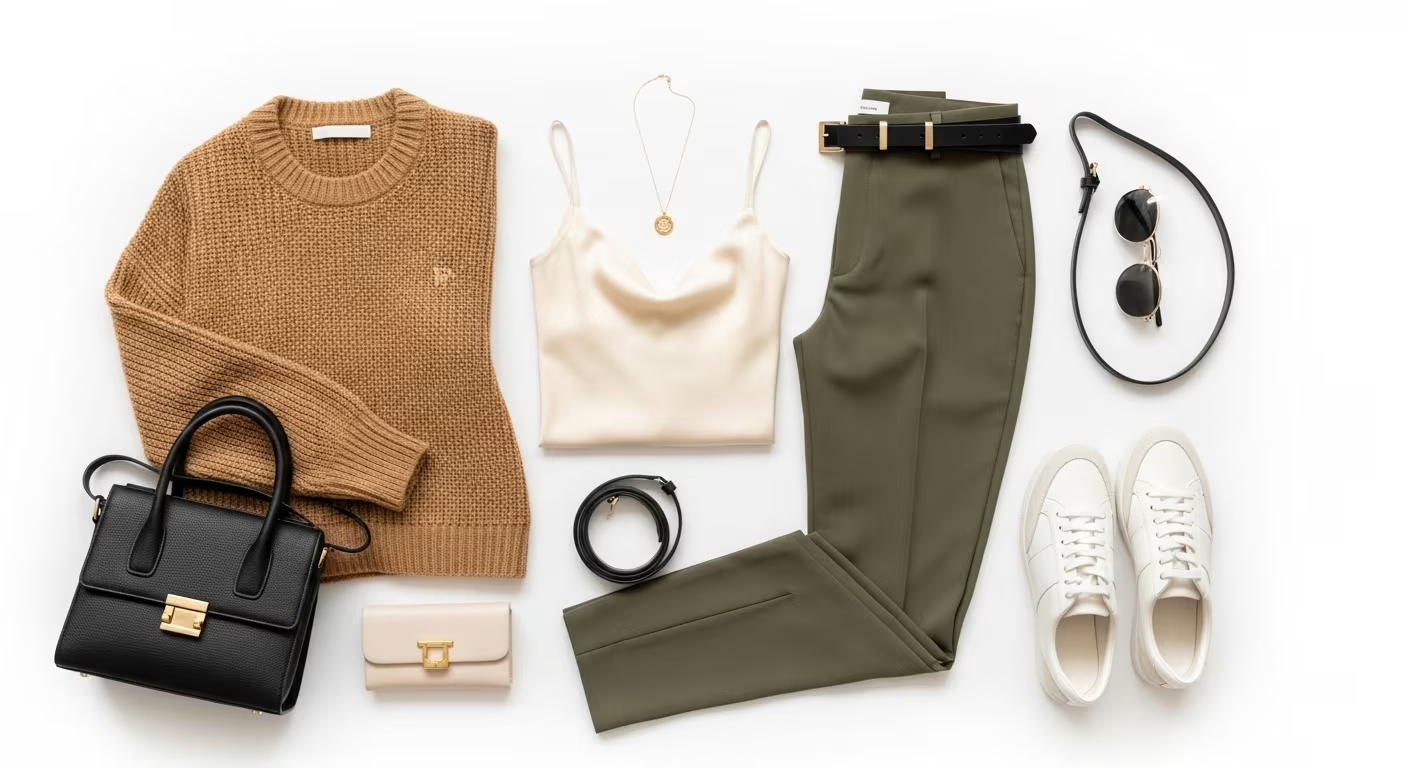

Why Color Is the First Decision
Most wardrobe building starts with specific pieces — a jacket seen in a window, a pair of trousers that fit perfectly — and tries to build outfits around what was already acquired. The result is a closet full of individual pieces that are each attractive but do not combine easily with each other.
The more productive approach reverses the order. Define the color palette first. Then acquire pieces that belong to that palette. Every new piece will combine with every existing one, because they share a color relationship.
This ordering does not require giving up variety or personal style. It requires making one deliberate decision upfront — which colors will constitute the wardrobe — rather than making dozens of individual piece decisions that produce a colorful but incoherent collection.
How Neutral Palettes Work

A neutral is a color that works with other neutrals and with most accent colors. The classic neutrals are black, white, grey, navy, camel, cream, and brown. Within this group, some combinations are particularly cohesive: navy-grey-white, camel-cream-navy, black-white-grey, brown-cream-camel.
The defining property of a neutral is that pieces in the same neutral family can be worn together in any combination. Navy trousers with a grey sweater and a white shirt work. Camel trousers with a cream shirt and navy shoes work. Brown trousers with a camel sweater work. The combinations produce themselves without requiring deliberate outfit construction.
A wardrobe built around two or three neutrals from the same family produces the maximum number of viable combinations from the minimum number of pieces. A collection of fifteen pieces in the navy-grey-white family produces more wearable combinations than thirty pieces spanning all color families.
Accent Colors and How to Use Them
Accent colors appear in a minority of pieces — one to two per wardrobe. Their function is to add variety and visual interest without breaking the combinatorial logic of the neutral base.
Accent colors should work with all the neutrals in the palette. A terracotta accent works easily with camel and cream but awkwardly with navy and grey. A deep burgundy works well with navy and grey but less easily with a brown-camel base. Testing whether an accent color works with the neutral palette before acquiring pieces in that color prevents the common outcome of accent pieces that only work with some of the wardrobe.
Accent colors appear in tops rather than in foundational pieces. A camel accent coat or trouser is a foundational neutral piece, not an accent. An accent appears in a sweater, a shirt, a scarf — pieces where the color is prominent but where the piece is easily replaced when the accent color is no longer desired.
What to Do With Off-Palette Pieces

Any existing wardrobe contains pieces that fall outside a newly defined palette. Some of these are genuinely loved and genuinely worn; most are pieces that seemed interesting when acquired but have proved awkward to combine.
A practical approach: identify the palette, then assess each piece by whether it belongs to the palette and whether it has been worn in the past three months. Pieces outside the palette that have been worn regularly are candidates for the new palette — the palette may need slight adjustment to include a color that is genuinely being used. Pieces outside the palette that have not been worn recently are candidates for release.
This assessment typically produces a significant reduction in the active wardrobe because most clothing that is not being worn reflects previous purchasing decisions that did not fit the person's actual wearing patterns.
Building the Palette in Practice

Choosing a palette for the first time is easier when it starts from observation rather than aspiration. Look at the clothes that are actually worn most frequently. Note the dominant colors. The palette is usually already present in the preferred items — the process is one of identifying and articulating it rather than inventing it from scratch.
If the most-worn pieces span multiple color families with no clear pattern, a choice must be made. The most forgiving starting palette for most people is navy-grey-white, because these three neutrals work together, work with each other, and work with most accent colors. They also work in most professional and casual contexts.
The Purchase Filter
Once the palette is defined, it becomes a purchase filter. Before acquiring any new piece, the question is simply: does this belong to the palette? If yes, it is a candidate. If no, it is not, regardless of how attractive it is in isolation.
This filter eliminates the most common source of wardrobe incoherence — the attractive piece purchased without reference to what it will combine with, which arrives home and does not actually work with the existing wardrobe. The filter is simple, requires no special knowledge, and produces a coherent wardrobe from the accumulation of many individual piece decisions.
When the Existing Wardrobe Spans Multiple Palettes

Most wardrobes that have accumulated organically span multiple color families with no particular coherence between them. The shift to a defined palette requires a transition period during which many existing pieces fall outside the new system.
The transition does not require immediately discarding everything outside the palette. It requires stopping acquisition of pieces outside the palette immediately, and then gradually releasing off-palette pieces as they wear out or are used up. New pieces acquired during the transition belong to the palette; off-palette pieces are retained until they naturally leave the wardrobe through wear.
This gradual transition is more sustainable than an immediate complete overhaul and allows the benefits of palette coherence to become visible as the proportion of on-palette pieces increases. Most people find that within one to two years of consistent palette discipline, the wardrobe has largely self-selected into the palette through natural attrition.
Children's Wardrobes and Palette Discipline
The palette principle applies to children's wardrobes as well, with modification for the different relationship to color that children's clothing involves. A children's capsule wardrobe built around two or three base colors reduces the sorting time at laundry, simplifies the morning dressing decision for both parents and children, and prevents the accumulation of single pieces that work with nothing else.
Children's clothing tends to enter wardrobes more rapidly through gifts and seasonal purchases than adult clothing does. A defined palette for the children's wardrobe provides a filter for gift suggestions and purchase decisions that prevents the chaotic accumulation that commonly results otherwise.
The palette approach produces a wardrobe that is greater than the sum of its parts — each piece multiplied in usefulness by every other piece it can be worn with, rather than constrained by limited compatibility.
Neutral trios that combine themselves:
| Palette | Why it works |
|---|---|
| Navy · grey · white | any two pieces pair without planning |
| Camel · cream · navy | warm base, one anchor |
| Black · white · grey | the no-decision wardrobe |
| Brown · cream · camel | tonal, low contrast |
| The rule | 2–3 neutrals from one family → maximum outfits from minimum pieces |



Comments
No comments yet.