
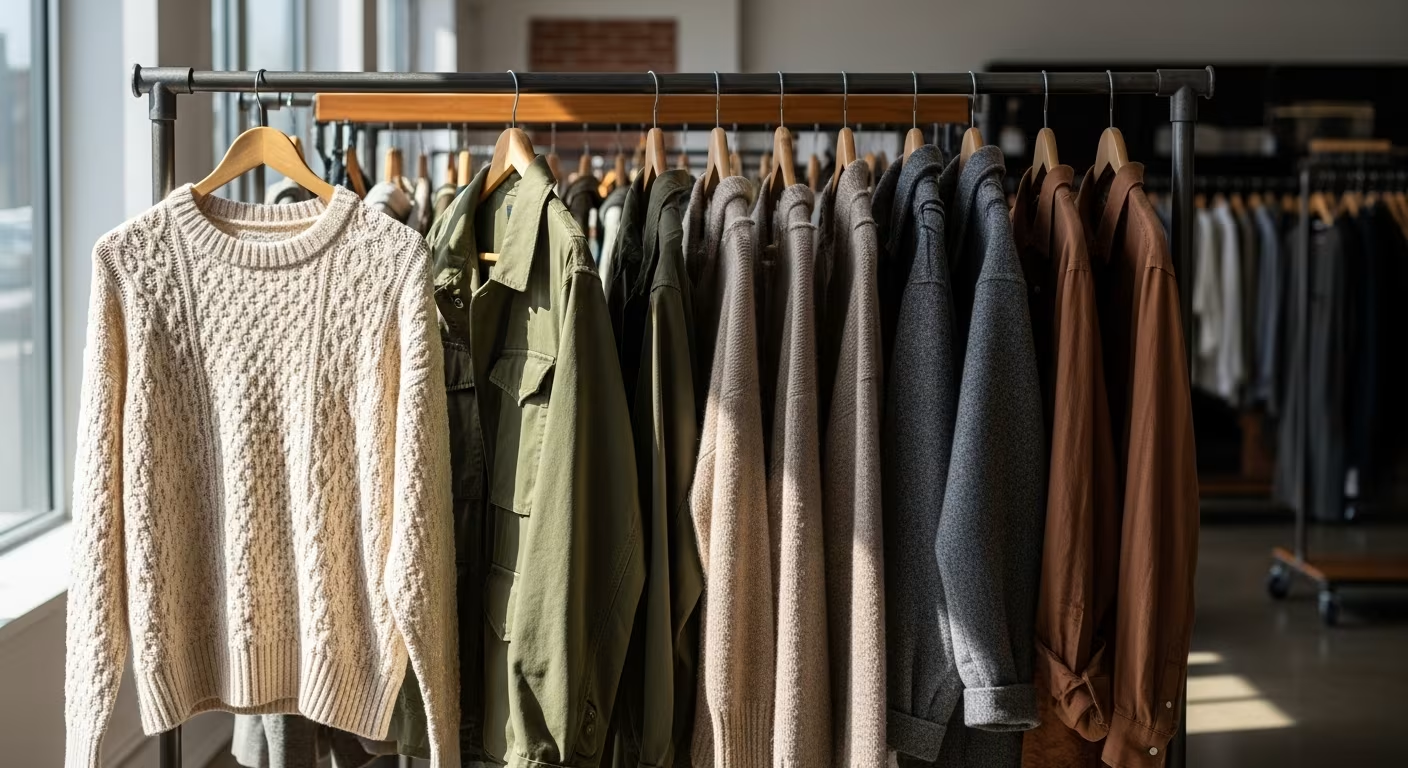

Why Thrifting and Minimalism Belong Together
There is an apparent contradiction between minimalism and thrift shopping. Minimalism is about having less; thrift stores present abundant inventory at low prices. The conditions that make thrift stores enjoyable — volume, variety, discovery — are the same conditions that make intentional selection difficult.
Done without discipline, thrifting is one of the fastest paths to wardrobe accumulation. The low prices reduce the threshold for acquisition: a three-dollar shirt that is not quite right costs less willpower to purchase than a forty-dollar shirt in the same position. The result is a closet full of inexpensive pieces that were each reasonable at the price but collectively produce the same problems as any other over-accumulated wardrobe.
Done with discipline, thrifting serves a minimalist wardrobe well. The same quality of fabric and construction that would cost far more new is available secondhand. Well-made pieces from quality brands appear regularly at thrift stores because the original owners overstocked or changed size. The environmental case for buying secondhand rather than new is strong. The financial case is compelling when specific needs are being filled rather than accumulation being enabled.
The Prerequisites for Minimalist Thrifting

Two prerequisites make thrift shopping compatible with a minimal wardrobe approach.
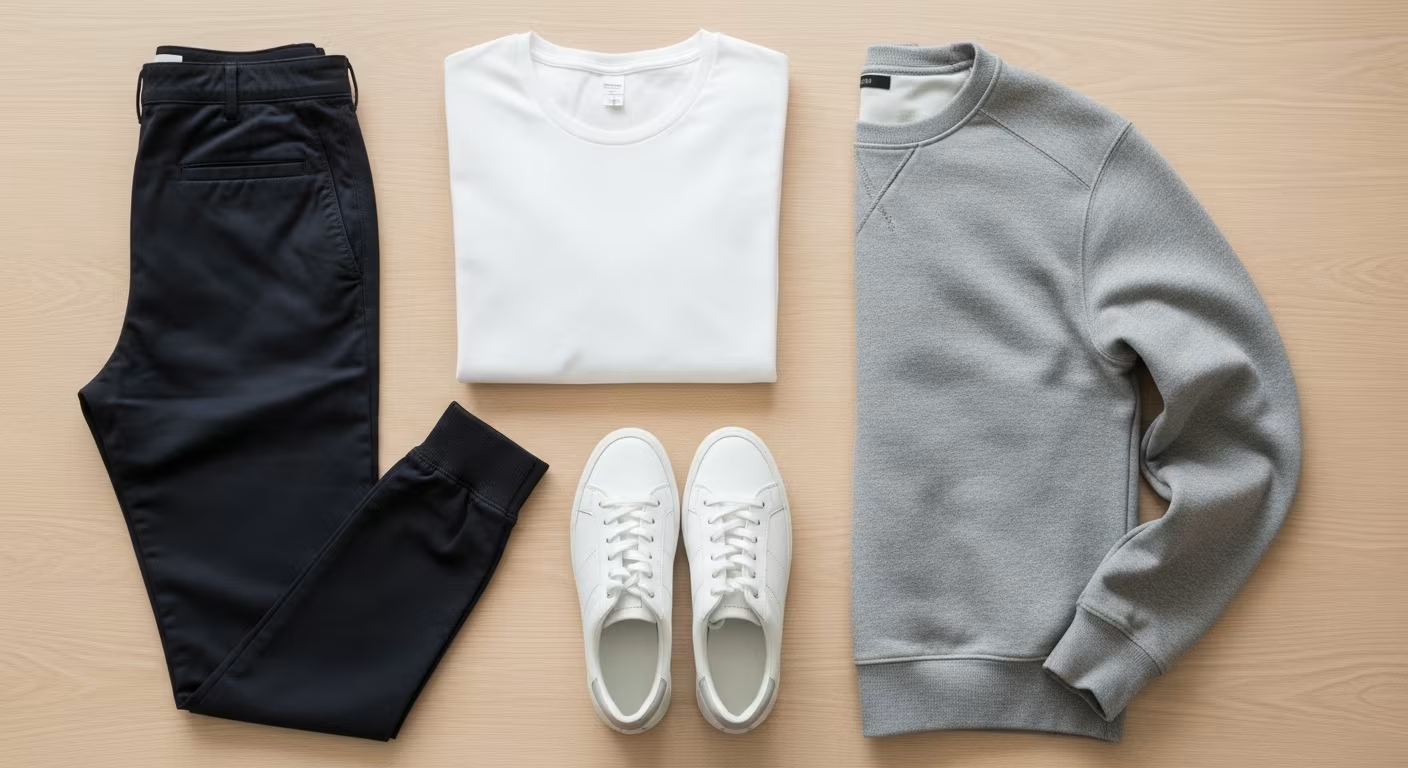
The first is a specific list of genuine needs. Not categories of interest but specific gaps: one neutral trouser in navy, a long-sleeved white shirt in a specific weight, a wool sweater in a mid-grey. The list comes from a wardrobe audit that identified what is missing from the functional wardrobe. Without the list, the thrift visit becomes a browsing exercise that produces acquisitions driven by what is available rather than what is needed.
The second prerequisite is the color palette filter. Every piece that enters a thrift cart must belong to the wardrobe's established palette. A beautiful piece in the wrong color is still in the wrong color when it arrives home. The low price does not fix the palette problem.
How to Shop a Thrift Store Efficiently
Browsing a thrift store without a system is enjoyable but inefficient for a minimalist approach. A more efficient method moves quickly through inventory by filtering first on category and size, then on color, then on condition, and only then on style.
Category and size narrows the field immediately — examining only what fits the specific need and size eliminates most of the inventory. Color narrows it further — only palette-appropriate pieces advance to the next filter. Condition narrows it again — pieces with damage, heavy pilling, staining, or missing hardware are eliminated regardless of price. What remains after these filters is the actual consideration set.
This approach takes less time than general browsing and produces better outcomes because the decision is being made against specific criteria rather than against the general appeal of what is available.
Assessing Quality in a Thrift Context

The same quality signals that apply to new clothing apply to thrift clothing, with the addition of assessing wear. Check fabric at the collar and cuffs — these areas show age first. Check seams for stress or loose threads. Check knit fabric for pilling, which indicates significant previous use. Check closures for function and hardware condition.
A well-made piece with visible wear at the collar has a shorter remaining functional life than the price suggests. A well-made piece with minimal wear may have many years of use remaining. The quality assessment in a thrift context requires looking at both the original construction and the current condition.
The Thrift Find That Does Not Belong
The most common thrifting mistake for minimalists is the exceptional piece at an exceptional price that does not belong to the established wardrobe. A beautiful cashmere sweater in a color outside the palette. A perfectly fitting blazer for a formality level that the person's life does not include. A pair of shoes for an occasion that genuinely never occurs.
The low price makes these pieces feel like missed opportunities when passed up. They are not. A piece outside the palette produces the same wardrobe incoherence as a new piece outside the palette, regardless of what it cost. A piece for a context that does not actually exist will not be worn regardless of its quality.
Passing these pieces is an exercise in the discipline that makes the minimalist wardrobe function. The discipline is easier when the cost of the pass is recognized as a three-dollar decision rather than the perceived loss the mind presents it as.
When Thrifting Replaces Regular Retail

For people whose specific wardrobe needs can be reliably met through thrift shopping — and for many needs in many locations, they can — thrift stores can become the primary acquisition channel. This requires patience: the specific needed item may not be present on any given visit, requiring multiple visits or rotating among stores.
The patience required is different from the spontaneous acquisition of thrift browsing. It is the patience of holding a specific need in mind and checking for it periodically rather than acquiring what is available because it is available. This patience is the practice that makes thrifting and minimalism genuinely compatible.
Building Thrift Shopping Patience
The specific piece that a minimalist wardrobe needs may not be present on any given thrift store visit. Building the patience to hold the need and check periodically — rather than acquiring the available approximation because it is close enough — is the discipline that makes thrift shopping work within a minimal wardrobe system.
This patience is aided by maintaining the specific needs list actively. A written list of what the wardrobe currently lacks, reviewed before each thrift visit and updated as needs are met, keeps the search deliberate. The list also prevents the common pattern of forgetting a genuine need and buying something adjacent instead.
Quality Signals in a Thrift Context

Identifying quality in a thrift environment is a skill that develops with practice. The same signals that indicate quality in new clothing — substantial fabric weight, clean seams with adequate seam allowances, hardware that functions smoothly, reinforced stress points — are present in quality thrift finds.
Learning to feel the difference between quality and cheap fabric by handling many pieces develops a tactile sense that is faster and more reliable than reading brand labels. A brand name indicates origin but not necessarily current condition or quality relative to specific function. The fabric, construction, and current condition of the specific piece are more useful information than the brand.
When to Pass and When to Buy
The minimalist thrift shopper has a clear decision framework: pieces that belong to the palette, fit the size correctly, fill a gap on the current needs list, and are in good condition warrant purchase. Pieces that fail any of these criteria do not.
The hardest case is the piece that meets three of the four criteria. An excellent quality piece at a very low price that is in the wrong color: it fails the palette criterion. The temptation to make an exception is strong; the exception, multiplied across many thrift visits, produces an incoherent wardrobe. The palette criterion applies consistently or it does not function as a filter.
The two prerequisites:
| Prerequisite | What it looks like | |
|---|---|---|
| A specific-gap list | “one neutral blazer”, not “work clothes” | |
| A palette filter | off-palette bargains stay on the rack | |
| The trap | $3 lowers the willpower bar | cheap accumulation is still accumulation |
Comments
No comments yet.